


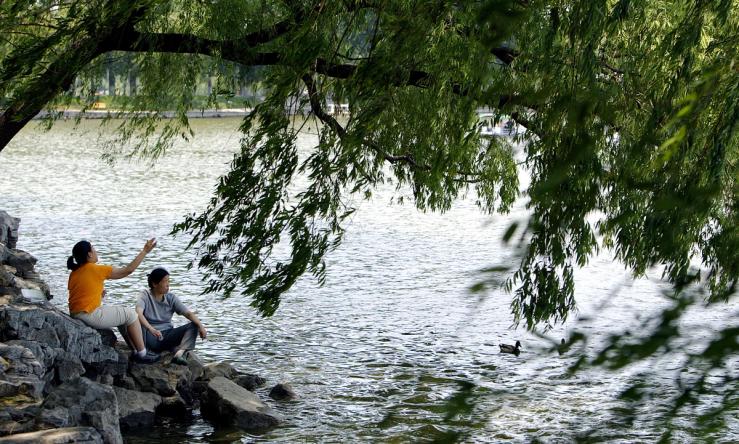
Without the cooling effect of trees, the urban heat island effect across the world’s cities would be twice as hot, a new study by The Nature Conservancy found.
Trees in major cities worldwide mitigate nearly half of the heat effect generated by man-made surfaces such as roads, buildings, and car parks, which absorb and re-radiate solar heat, causing cities to run hotter than their surrounding rural areas. More than 900 million city dwellers, the study found, benefit from ambient air temperatures 0.25°C lower than they would experience without trees, while 200 million enjoy reductions of at least 0.50°C. But this cooling effect is concentrated precisely where it’s less needed, in high-income countries and suburban neighbourhoods.
On top of that, the study projects that current and future tree cover will mitigate only around 10% of the increase in temperatures caused by climate change that is expected by 2050. Governments worldwide should in response prioritize expanding tree canopy in dense, low-income urban areas while there’s still time for those trees to reach their full, cooling potential, the report’s authors said.