




Andy’s view
The CEO of Manus exemplifies China’s entrepreneurial smarts. As Silicon Valley spent billions developing advanced AI models, Red Xiao and his China-based team came up with one of the first — and at the time, many argued, the best — AI assistants to make them practically useful to everyday users.
An advisor who spent time with Xiao recently described him to me as a “very, very thoughtful, super-smart” visionary. The US tech investor Chetan Puttagunta, a partner at the venture firm Benchark that led a $75 million investment round in Manus, called Manus “magical.” Meta saw the wizardry, too, swooping up Xiao’s startup for $2 billion last year.
Yet Xiao’s newly acquired fortune — along with his personal freedom — is now endangered. It turns out that the AI prodigy, unusually perceptive on the future of technology, had a blind spot: His own country.
Chinese entrepreneurs have long had to live with regulatory risk. Excluded from the commanding heights of the economy — banking, energy, transportation — by state monopolies, private players have rushed in to occupy under-regulated new areas of technology. Communist Party officials, meanwhile, often watch and wait, eventually bringing order to the free-for-all with “rectification” campaigns in which business founders personally become targets. Among those who have fallen victim are entrepreneurs who misread the Party’s social priorities, grew too rich and independent, or simply misunderstood their place in the national hierarchy.
Under Xi Jinping, startups like Manus are expected to be part of “Team China” — an all-of-nation effort involving government-funded research labs, giant state enterprises, and academia — to challenge US tech supremacy. Indeed, China’s VC industry has been virtually nationalized: Almost all the top funds are state operated and pursue Xi’s goals, which increasingly means AI.
In Beijing’s eyes, by relocating his startup to Singapore, firing his China-based staff, and closing his Chinese websites and online chatrooms — and then selling his startup to a US tech giant — Xiao had switched sides.
Worse, he had taken with him valuable IP created in China using Chinese data, Chinese software, and Chinese talent.
Xiao and another Manus co-founder are now essentially hostages, reportedly barred from leaving China by “exit bans” while Meta’s lawyers try to figure out how to disentangle the company from its Chinese acquisition.
His is just the latest in a long line of Chinese entrepreneurs who have disastrously failed to read the political winds in Beijing. Jack Ma, the co-founder of Alibaba, got his comeuppance in 2020 when he was incautious enough to mildly criticize banking regulators on the eve of the planned dual listing in Shanghai and Hong Kong of his Ant financial group. Enraged officials pulled what would have been the world’s largest IPO.
Two years later, Chinese officials forced Didi Global, the ride-hailing giant, to delist from the New York Stock Exchange over data security concerns.
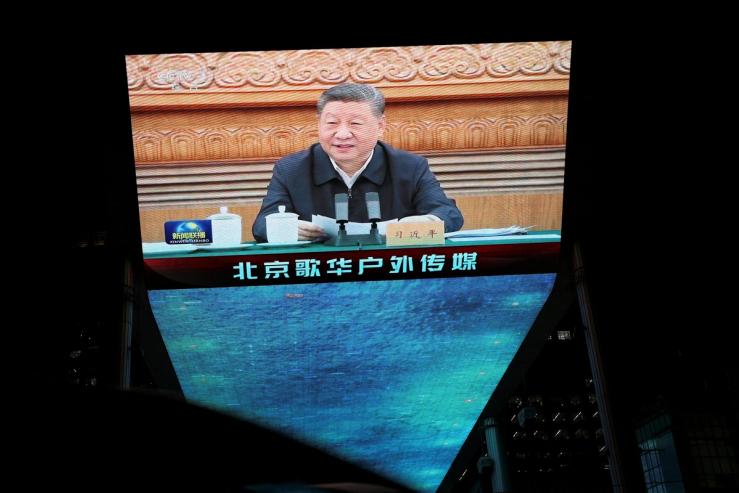
More recently, Liang Wenfeng, the founder of DeepSeek — another homegrown AI sensation — dropped out of sight, shortly after a high-profile televised meeting with Xi. There’s no evidence Liang is in trouble, but his absence has sparked gossip and speculation.
My own memorable run-in with Chinese regulators came while heading The Wall Street Journal bureau in Beijing. Xi had just assumed power, and his first cybersecurity chief summoned Journal editors to a meeting in his office. “You’re in my home,” he snapped, “so you’ll do as I say.” By that, he meant if we wanted to stay in China we’d have to agree to delete any story he objected to on the Journal website. We refused, of course, but Chinese business leaders can’t say no. Years later, at a private dinner in the Chinese capital, I watched one of China’s top state planning officials dress down a collection of brand-name entrepreneurs. “Without the state, you’d all have nothing!” he yelled. The room fell silent.
Today, the message from Chinese regulators to startup founders is unambiguous: Xi is demanding more breakthroughs — “original and disruptive innovation” as he put it to senior economic officials at a conference last week — across the tech spectrum.
His urgency is mirrored in Washington. US Treasury Secretary Scott Bessent told a Journal conference this month, “If we don’t win in AI, then it’s game over.” One way the US could up the ante would be to offer more visas to Chinese startup founders and fund their growth.
After Xiao’s ordeal, at least some of them will be heading for the exits.

Notable
- Trivium China’s analysts dug into the details — and the speculation — surrounding Beijing’s intention surrounding its decision to block the Manus deal.
- The main sin of the Manus team is their naivety, says Substacker Robert Wu.