




The News
The Supreme Court’s weakening of the Voting Rights Act, barely 24 hours old, has kicked off a new redistricting rush, with Republicans and Democrats endorsing plans to wipe out their rivals in the states they control.
Some of the changes now getting discussed could come this summer. Others are already being planned for next year. And unlike the first round of congressional remapping that President Donald Trump launched last year, this time there are few voices urging caution in either party.
“All states that have unconstitutional maps should look at that very carefully,” House Speaker Mike Johnson told reporters on Thursday. “And I think they should do it before the midterms.”
In Johnson’s own Louisiana, which led the effort to curtail race-based redistricting, Republicans moved immediately to eliminate the Democratic House seat that the high court deemed unconstitutional on its Wednesday Louisiana v. Callais decision. In Tennessee, both leading GOP candidates for governor urged the state legislature to eliminate a majority-Black district in Memphis.
Neither southern state has had an all-Republican congressional delegation since the Reconstruction era, after the Civil War, but its GOP lawmakers saw one within reach.
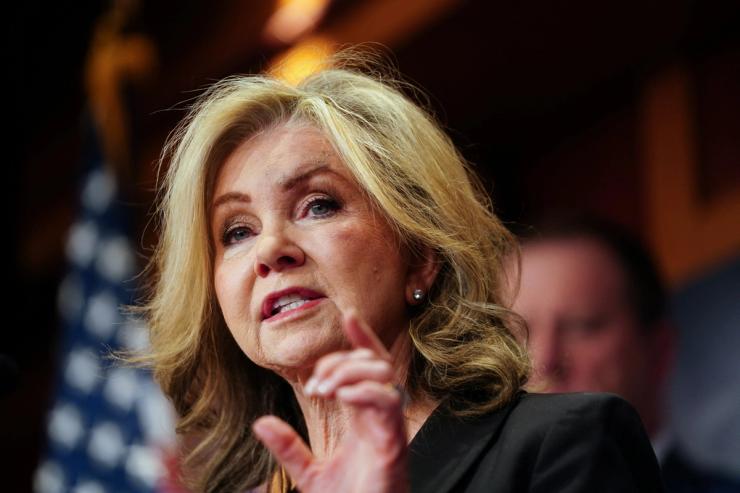
“Come back in, get into special session, and get in there and redistrict,” Tennessee Sen. Marsha Blackburn, the frontrunner for governor, said on Fox News. “This is how we’re going to make certain we can cement President Trump’s majority in the House.”
Democrats, whose seats in Republican-led southern states had been protected by the VRA, were mournful about the 6-3 ruling. But many also urged blue states to take advantage of it by drawing maps that would eliminate as many Republican seats as possible — even if that meant some Black Democrats would run in more competitive districts.
In some states, those changes would mean undoing race-conscious or anti-gerrymanding laws that Democrats had supported. Illinois Democrats, hours after the court’s decision, sidelined an amendment that would have required the state to consider race in redistricting.
That effort, which had passed in the state Assembly, lost its momentum when Democrats realized they’d be asking voters to limit gerrymanders that could benefit their party by expanding their current 14-3 advantage in the state’s House delegation. Democrats’ aggressive new maps in California and Virginia, designed to create 48-4 and 10-1 advantages, are emerging as models.
“I’d take 52 seats from California and 17 seats from Illinois,” said Alabama Rep. Terri Sewell, when the Congressional Black Caucus gathered to react to the decision. “At the end of the day, they’re rigging this election to try to win, and we just can’t sit back here and do nothing.”
In this article:

Know More
Since the Supreme Court’s 1986 decision in Thornburg v. Gingles, which ruled that a state legislative map with no majority-Black seats had a “discriminatory effect” on Black voters, safe seats for Black Democrats have been drawn even when Republicans controlled the process.
That cut both ways in the gerrymandering wars. As local white support for Democrats collapsed, southern states were required to draw some districts that Black Democrats would win. But to Democrats’ disadvantage, Republicans could create overwhelmingly Democratic “vote sinks,” outnumbered by more competitive, GOP-leaning, majority-white seats.
The same rules prevented Democrats in blue states from diluting majority-Black seats to create more winnable districts for their party. But that had already started to change by Thursday morning. Both parties are already fully exploring the advantages they might eke out of maps under the new, looser rules.
In a celebratory video, Mississippi state auditor Shad White said that Callais “could mean the end of the district that was drawn specifically to protect Bennie Thompson,” the state’s sole Black congressman. In South Carolina, GOP Rep. Ralph Norman, who had previously called for eliminating Rep. Jim Clyburn’s Democratic district, said that his party could now “restore balance” and replace it with a competitive seat.
Few Democrats were as ready to propose new maps, right now. But most endorsed the idea of drawing new maps to negate GOP gains, no matter the impact on minority voters.
In New York and Colorado, Democratic governors and gubernatorial candidates suggested that they wanted to undo the nonpartisan redistricting rules they’d supported years earlier. The successful voter-approved new maps in California and Virginia had shown the party how to recant its old opposition to gerrymandering, for short-term gain.
“Don’t let any MAGA extremist fool you about what may ultimately result from this decision, particularly as it relates to the next few months,” House Minority Leader Hakeem Jeffries told reporters on Wednesday. “We’re going to fight back in the deep south and all over the country, and when it’s all said and done, we’re going to win.”

David’s view
Everybody knew that Republicans would work to demolish majority-minority seats in the South if they prevailed in Callais. That was why Louisiana brought the case. The timing of the decision only limits which states can act this year, and which will act later.
Texas can’t go back and re-run its March primary, but Tennessee, where filing for the summer primaries has already concluded, could still delay it.
What’s fairly new is the Democratic willingness to consider diluting the VRA districts. Since 1986 they’ve built a solid foundation for Black politicians, epitomized by Clyburn — who will turn 86 before his November re-election. Justice Samuel Alito might say the need for racial set-asides is over, but Democrats disagree.
And there are parts of Illinois, New York, and California where safe Black districts have been protected even as Democrats hustled to draw more seats they can win. I’m watching to see if that trend shifts now.

Room for Disagreement
Rep. Steve Cohen, Tenn., said that he expected Republicans to carve up his Memphis district as soon as they could and that he would run for reelection even if they did. (He faces an August primary challenge from state Rep. Justin Pearson.)
He didn’t have advice for how Democrats in other states should respond; he had seen how other cities and their Black voters lost clout when they were split into multiple districts to elect more Republicans.
“With this change, their votes will be irrelevant,” said Cohen. “The majority of the district will be rural Republicans, way far from Memphis. The people that win will be concerned about the rural Republicans, where the majority of their districts are, and where their likely or possible support would come from. And Memphis would be an afterthought.”

Notable
- In The New York Times, Reid Epstein talked with the “good government” liberals who advocated for nonpartisan redistricting commissions in blue states, who now think they made a mistake. “If you’re not going to do it nationally, you’re going to have an unlevel playing field,” said Michael Li, a senior counsel for the Democracy Program at the Brennan Center for Justice.