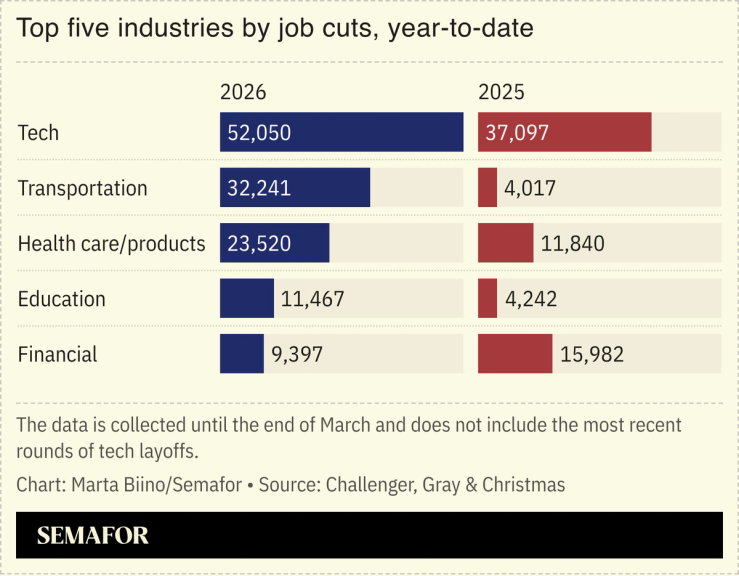
In the past, when tech companies laid off employees, the markets reacted approvingly.
Cutting costs means more profit. But in the upside-down world we live in, Microsoft and Meta both suffered on Wall Street Thursday after news of their layoffs broke. Microsoft closed down nearly 4%, while Meta lost more than 2% (though both were starting to recover Friday).
If you look at this like the layoffs were a desperate move to trade employees for data centers, you might argue the sell-off makes sense.
The truth is that Microsoft, Meta, and other tech giants aren’t really giving up other revenue opportunities when they jettison employees. What they are giving up is padding that makes recruiting a little less painful and expensive.
Tech companies had such rapid growth over the past decade that they were in constant battles for talent with one another. At one point, they even had a “no poaching” agreement in place so they could bring down costs and salaries of employees.
These were the absolute most profitable companies in human history. They had such high margins that they could afford to keep employees around, even if they weren’t really needed. And so they did. The market has yet to come to terms with how few employees tech companies actually need to keep the cash spigots flowing.
Elon Musk said he cut X’s staff by 80%, for instance, and it’s still humming along.
Cutting staff is just one lever tech companies can pull to pay for the $100 billion-per-year data center bills they’re now fielding.
We should expect to see more layoffs, and it’s a good thing for the tech ecosystem. Talent hoarding always had a negative impact. Some of those employees will found startups, and some of those that were laid off will go work for the startups. Big tech companies will be forced to innovate or face disruption — just the way it should be.