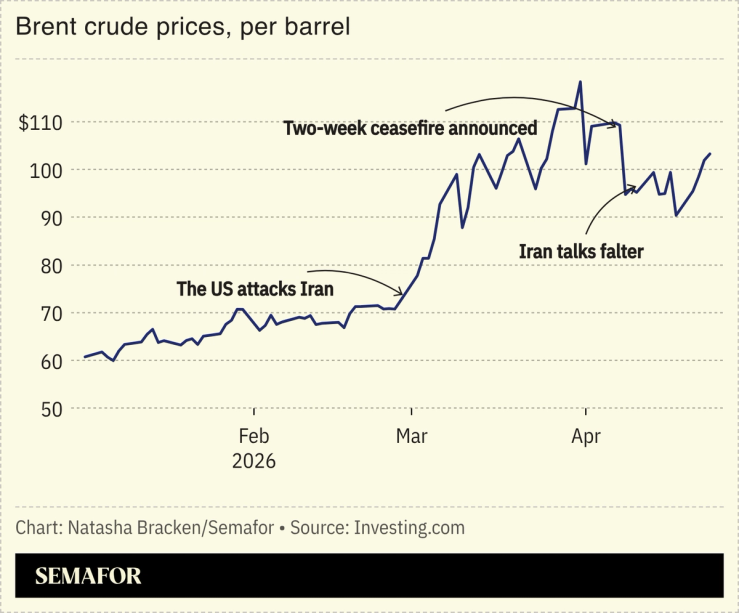
Oil prices held above $100 a barrel on Thursday as peace talks between the US and Iran collapsed before a second round could take place, while Washington and Tehran both sought to assert control over the Strait of Hormuz.
US President Donald Trump indefinitely extended a ceasefire with Iran, but vowed to maintain a blockade on Iranian ports. Tehran, meanwhile, said it would not engage in diplomacy so long as Washington’s blockade remained in place. Tensions in the strait have since deepened: Iran said it had seized two container ships seeking to exit the Gulf through the strait on Wednesday, while the US military intercepted at least three Iranian-flagged tankers in Asian waters, redirecting them from positions near India, Malaysia, and Sri Lanka, Reuters reported.
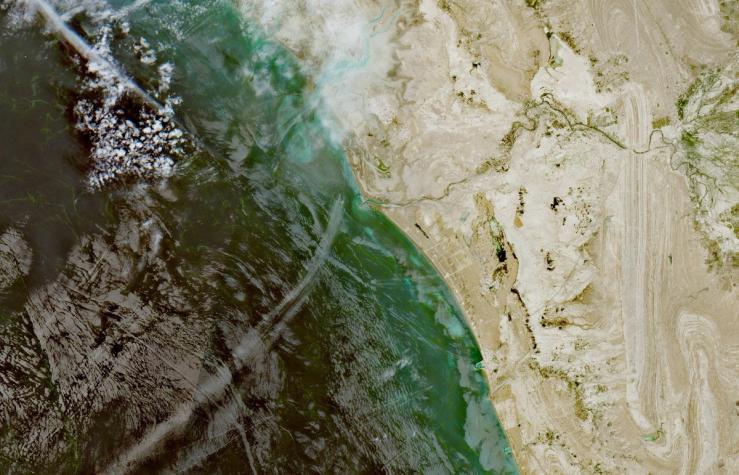
Beyond the disruption the conflict with Iran is causing to global energy supplies — from which the US is not insulated, with gasoline prices rising to the highest level in almost four years — satellite imagery suggests oil spills from the war may soon trigger an ecological catastrophe. Spills in the Persian Gulf are now visible from space after air strikes by all parties hit oil facilities and tankers across the region, threatening marine life and the filtration systems of desalination plants.