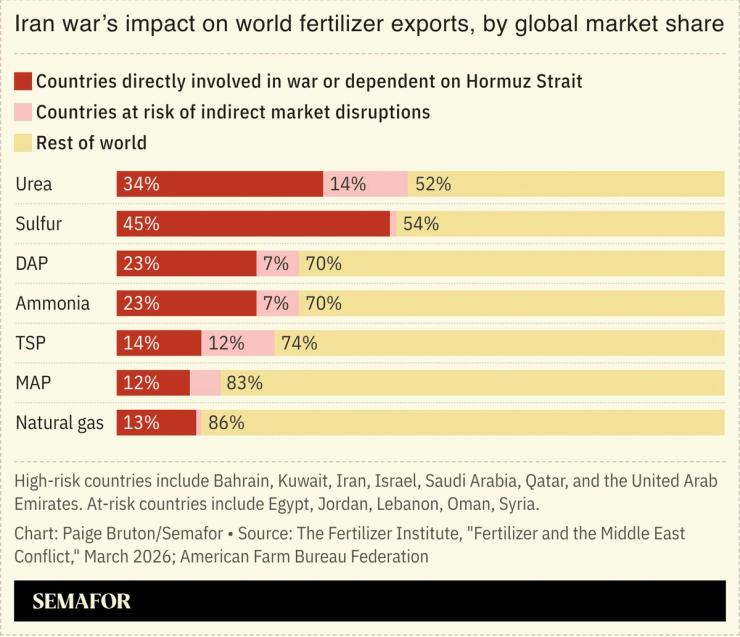
Fertilizer prices are poised to surge even higher, and could take “months and months” to normalize after the Strait of Hormuz reopens, the CEO of a top global producer told Semafor. The price of nitrogen-based fertilizers has more than doubled as the strait closure chokes off one-third of global urea exports and one-fifth of ammonia, the fertilizer’s key ingredients. Yet with tropical countries approaching the year’s first planting season, prices for key commodity crops haven’t yet budged, putting farmers in a bind.
Many will likely choose not to use fertilizer this year, said Ahmed El-Hoshy, chief executive of Abu Dhabi-based Fertiglobe, which will mean food shortages and inflation in the months ahead. When a durable peace is reached, allowing ships to once again traverse the strait, fertilizer companies will still have to wait for natural gas production in the Gulf to ramp up to regain their feedstock supply, which will take months or even years. And, there’s still no alternative fertilizer “that is economically viable at scale,” El-Hoshy said. Meanwhile, climate change continues to put pressure on the food system; a UN report this week warned that extreme heat is pushing farmers “to the brink.”