




The News
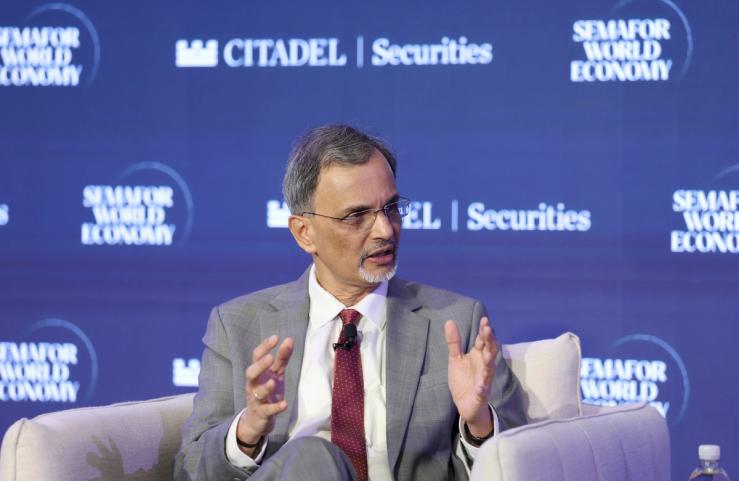
The Indian government’s chief economic adviser expressed confidence Friday that the world’s sixth-largest economy can weather the energy-price shock caused by the Iran war if the ceasefire holds.
“We feel that if the current ceasefire holds and also gets extended indefinitely, by the end of the calendar third quarter, energy supply and prices should normalize, and I think that is something we can absorb,” V. Anantha Nageswaran said at Semafor World Economy in Washington, DC.
The country has adequate stocks of fertilizer for the sowing season, he said, although rising prices of cooking oil are squeezing the poor. Still, the government has the fiscal firepower to provide support for the poor, if necessary, after more than halving its budget deficit in recent years. He described the fallout from the Iran war as “a minor, short term setback” to India’s goal of reducing poverty and expanding its middle class.
Longer term, Nageswaran pointed to India’s effort to diversify sources of energy and reduce its dependence on oil imports. The country recently opened its nuclear energy sector to foreign and private investment and has exempted imported capital goods for the sector from tariffs. “We are approaching this as a long term challenge,” he said. “We have to diversify our energy sources.”
India, the world’s most populous country, is among the biggest importers of crude oil, which contributes about a quarter of its primary energy supply. Imports account for almost 90% of India’s oil consumption.

Know More
Nageswaran said he doesn’t believe AI poses a threat to India’s thriving technology services sector and may instead improve productivity. The global capability centers run by multinational corporations are not “labor intensive so much as technology and capital intensive,” he said. “The real challenge for India is actually therefore outside the AI space, which is how to create jobs in services and manufacturing or trade skills, which are AI insulated, for example, the care economy, children and elder care, culinary skills.”