




Nawaf’s view
Whatever becomes of the ceasefire, one fact is already fixed: Relations between the Gulf and Iran will not return to what they were before this war.
That does not mean the Gulf is entering some permanent, dramatic rupture with Iran. Serious states do not have the luxury of theatrical foreign policy, and geography does not bend to outrage. Iran remains where it has always been, across the water, tied to the Gulf by trade, energy, security, and proximity. At some point, the two sides will speak again. But when that happens, it will not be on the old terms.
For nearly half a century, Gulf states have lived with the reality of the Islamic Republic and built their own doctrine around it. Built on realism, the Gulf learned to live with a difficult neighbor through deterrence, caution, open channels where necessary, and a habit of ‘trust, but verify.’ It was not elegant, but it was workable.
This war has damaged that framework.
The Gulf states, including Qatar, advised against the American-Israeli attack on Iran. They understood exactly what such an escalation could unleash, because the region knows something distant powers repeatedly forget: When war comes to the Middle East, it is the Middle East that pays first.
Iran’s response caused a deep rupture. Within minutes of the attack, Tehran retaliated under the false claim that strikes had come from Gulf countries. The accusation was false, and was impossible to have been verified in that time frame. The allegation and retaliation came almost simultaneously.
That sequence tells the Gulf more than any statement issued after the fact ever could. It tells the region that, in a moment of war, falsehood can become military rationale almost instantly. It tells the Gulf that accusation may come before evidence, and action before truth.
And it is why Gulf doctrine will now begin to shift. It won’t happen overnight, because states don’t abandon half a century of accumulated practice in weeks, But change will come because the old formula was too generous and cautious. What follows this war will be narrower, harder, and more demanding. There may still be trust, but it will require verification of a far more definitive kind.
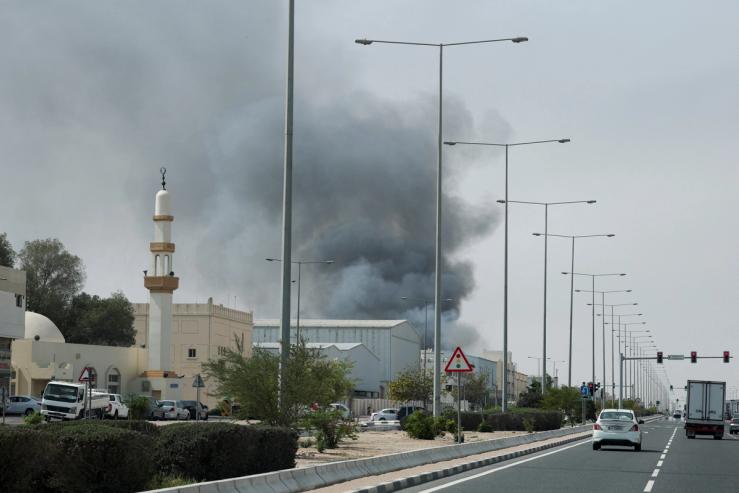
The facts on the ground are driving the change. Iran said it was targeting US military installations. In reality, its attacks killed civilians and damaged airports, power facilities, and water supplies across the Gulf. Tehran’s messaging may have been intended to evade responsibility, but that will not erase what people in the Gulf experienced.
They will remember the strikes. They will remember the disruption. They will remember that even when air defenses work, civilians still bleed.
One of the last casualties of the war came minutes after the ceasefire took effect: a young Qatari girl wounded by debris from an intercepted ballistic missile. Even when a missile fails, the danger still reaches home.
Despite all of this, Gulf countries and Iran will eventually have to talk again. Neither side is going anywhere. But that conversation will come only if Iran chooses to return to the neighborly fold of the Gulf. A ceasefire alone will not restore anything. Familiar formulas cannot simply be revived.
If Iran wants a different future with the Gulf, it has much to prove. It will have to show that its posture of animosity toward the Gulf states is changing in substance, not merely in language. It will have to show that its trigger finger is no longer so quick. It will have to show that it understands the difference between rivalry and recklessness.
The old relationship with Iran was difficult, but familiar. The next one, if it emerges at all, will be colder, stricter, and built on far less faith. That is what this war changed. Not the map. Not the necessity of eventual contact. It changed the threshold of belief. Iran can still speak of a future with the Gulf. But after this war, the Gulf will ask for proof first.
Nawaf M. Al-Thani is the former Senior Defense Official and Defense Attaché of the State of Qatar to the United States, Canada, and Mexico, and former Director of Defense Intelligence Operations in the Qatar Armed Forces. He is the Founder & President of the Washington, DC-based Council on International Mediation.

Notable
- Semafor’s Mohammed Sergie reports on how attitudes towards Iran have changed among Gulf citizens, with many now viewing the country as an enemy to be confronted and contained.