




The News
Health care is not only getting more personalized, but gamified, as consumers increasingly earn rewards for taking care of themselves, two CEOs said.
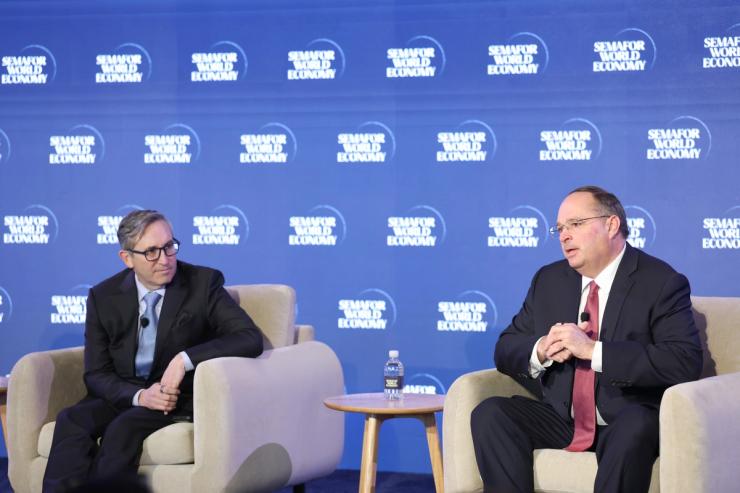
“The hardest thing to do is get people to change [their] behavior,” said Tom Hale, CEO of smart ring company Oura, at Semafor World Economy in Washington, DC.
Several years ago, the company partnered with life insurance firm John Hancock to reward policyholders whose Oura ring delivered healthy data points, like exercising, meditating, and getting enough sleep. Points translate to discounts on life insurance, travel, technology, and shopping.
But according to John Hancock CEO Brooks Tingle, there’s still an element of personalization missing from the experience. “Unless you have diabetes or are over 80 [years old] where it’s customized, we’re all getting the same number of points for the same things,” he said on the panel alongside Hale.
“What our program needs to be doing is” finding the biggest challenge for users and offering outsized prizes when they make improvements. Using his own self-described lack of sleep as an example, he said improving that data over several months should result in an Amazon gift card.
“What is not measured doesn’t change,” he added.
The statement gives insight into how companies — and by extension, consumers — are viewing the future of health. While it’s in someone’s best interest to get health screenings and eat nutritiously, select businesses also benefit from providing that data and rewards to their users, in the form of brand loyalty and continued spending.
Several industries have invested in gamifying their products in recent years, from retailers to rideshare firms.

Know More
Oura’s Hale recently appeared on Semafor’s Compound Interest podcast, where he discussed the company’s move into the health care industry and fought back against the idea of subscription fatigue.
“What [consumers] really mean is there’s too many subscriptions that don’t provide enough value, and they’re emptying your wallet without giving you anything in return,” he said.