




The News
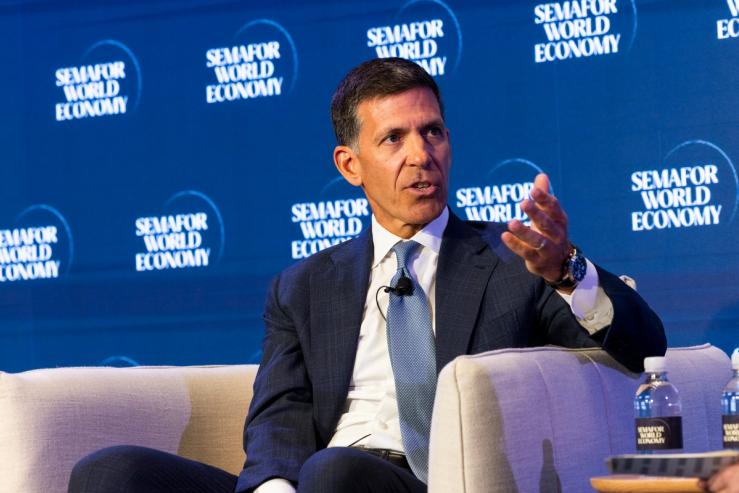
Some private credit managers have misrepresented the liquidity of their funds when pitching them to retail investors — a segment of the market that helped fuel the rapid growth of the $1.7 trillion asset class — John Waldron, the president and chief operating officer of Goldman Sachs said at Semafor World Economy in Washington, DC, on Wednesday.
“Not everybody has marketed their product as clearly as, certainly we would like to see with the clarity that this is really not a liquid product. It’s not semi-liquid. It’s really illiquid,” Waldron said. “Those retail investors, I think, have the perception of more liquidity than is the reality.”
Still, Waldron said there won’t be a big problem in private credit without real economic degradation.
“This is an economy that has been predicted to be in trouble for a long time and shows extraordinary resilience,” Waldron said. “I still see that resilience.” He later added, “This economy is much stronger than the narrative suggests.”
Based in part on first quarter earnings reports by public companies, Waldron said he doesn’t see “any real evidence” of material weakness in the economy. Right now, “confidence is still pretty good. Obviously the longer the war goes, the more people get cautious about their own businesses.”
Waldron said that sentiment remains an “important thing” and that it gets weaker as the Iran war goes on because it ushers in unpredictability and uncertainty. If summer comes, the Strait of Hormuz isn’t open, and oil prices keep climbing, “you’re going to start to see demand destruction,” he said.

Know More
One issue that’s worth paying attention to in the private credit sector revolves around liquidity and retail investors, Waldron said, citing the asset class’s “enormous growth.”
While Goldman focuses on institutional investors, a lot of growth in the industry has come from funds that cater to the retail investors who now comprise about 20% of the US private credit market.
The retail funds have wooed individuals, in part, by setting lower minimum investment levels than those sought by private credit managers that cater to institutions. But the barriers for exiting can be higher; these funds generally limit the amount of money that can be withdrawn to no more than 5% of the fund’s net assets on a monthly or quarterly basis.
“In situations where there’s a sense that there’s undercurrents of trouble in private credit, you could have more redemption pressure where people want their money back and their gates are going up because that’s the way the system works,” he said.