


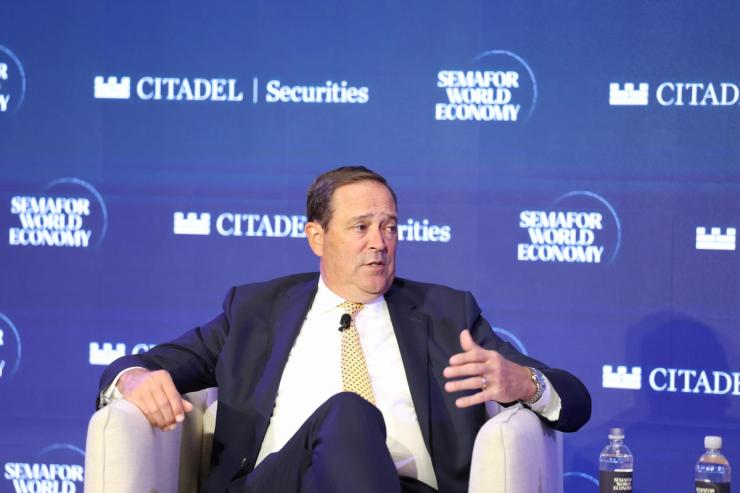
If AI leads to widespread unemployment, it could create “civil challenges,” as seen by the attacks on OpenAI CEO Sam Altman, the CEO of Cisco said.
Chuck Robbins told Semafor World Economy that the psychological impact of AI could create more unrest than rising costs from AI-driven demand. Some of those concerns, he said, are “based in irrational ideology,” but some “probably, over time, may pan out to be true.”
He added that there is an “existential concern about what AI does to society and does to the world.”
A 20-year-old Texas man was charged Monday with throwing a Molotov cocktail-like device at Altman’s home, furthering concern among security experts about the safety of AI CEOs.
The nearer-term consequences of AI, Robbins said, are the impacts on cybersecurity of new models such as Claude Mythos. That, Robbins said, will lead to tech companies finding more vulnerabilities in their own code than customers are able to patch.
When customers face large numbers of security updates, he said, they triage, and some problems never get fixed, “and then you land with Volt Typhoon and Salt Typhoon,” two major recent China-backed hacks.
The arrival of Mythos and similar tools “massively multiplies the number of instances where that occurs,” although longer term, “having those models that we can run our code through before we release it, you’re going to find vulnerabilities we wouldn’t see today.”