




The News
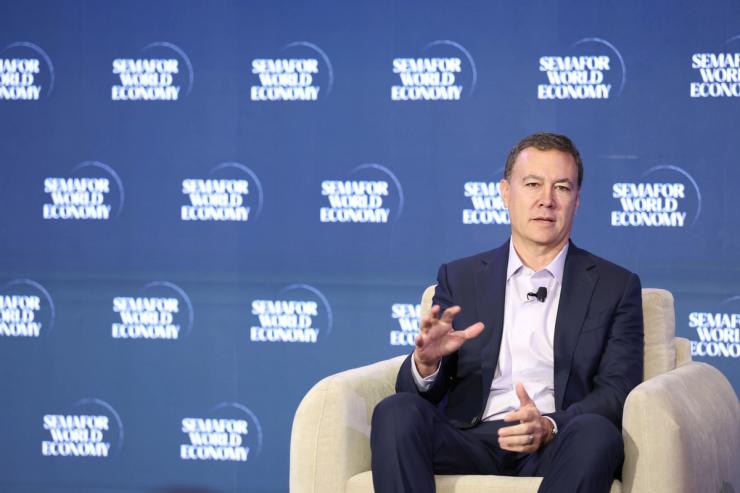
The Trump administration’s 2025 tariffs spree put a dent in Yahoo’s advertising business, said Jim Lanzone, CEO of the internet giant, on Tuesday.
Ads for the automotive industry and consumer packaged goods were the worst hit, Lanzone said at Semafor World Economy in Washington, DC.
“We definitely had an impact from tariffs last April,” Lanzone said. “There was a bit of a challenge there for the market.”
Despite the tariff trouble, the digital ad market grew at double-digit rates overall last year, he added: “I don’t see that stopping.”
Looking ahead, Lanzone said the war in Iran was unlikely to crimp the digital ad market. While brand advertising could feel an impact, search advertising is more insulated because it is performance based. “Performance marketing is the last thing to be cut,” Lanzone said.
There’s a ripe opportunity in the ad business to develop new types of brand advertising that harness artificial intelligence to incorporate new interfaces and user interactions. “We’ll need to adapt, but I believe it can,” he said.
In April 2025, Trump’s “Liberation Day” imposed a baseline of 10% tariffs on most imports, impacting a broad range of consumer products.

Know More
The bigger strategic bet Lanzone is making is on artificial intelligence as Yahoo’s path back to relevance in search — a business it outsourced for nearly two decades. “AI just created this huge window for us to be able to go innovate again on behalf of our users,” he said.
In January, the company launched Yahoo Scout, an AI-powered answer engine built on Yahoo’s trove of 30 years of search query data, using Anthropic’s Haiku model to process results.
Unlike rivals, Lanzone said, Scout actively links back to the publishers whose content underlies its answers — a deliberate design choice he framed as restoring the internet’s original social contract between search engines and the publishers that feed them.