




The News
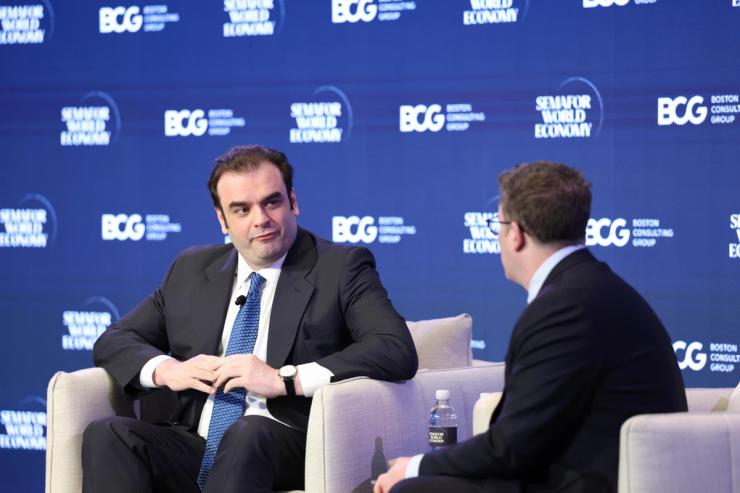
The US failure to consult European allies on its decision to attack Iran won’t break the strong bonds between the longtime partners, Greek Finance Minister Kyriakos Pierrakakis said at Semafor World Economy in Washington, DC, on Tuesday.
“There can be turbulence in that relationship, there are disagreements in that relationship,” said Pierrakakis, who also heads Eurogroup. “But I firmly believe that the strategic interest of both the US and the EU is to have a close and collaborative relationship on every front.”
Stagflation in Europe brought about by the Iran conflict is the “worst case scenario,” but “we’re not yet there,” Pierrakakis said.
He added that while the energy price shock threatens to dampen economic growth and increase inflation, the full impact would only be determined by how long the Strait of Hormuz remains closed.
EU economy chief Valdis Dombrovskis said earlier at Semafor World Economy that Europe was facing a “stagflationary shock,” arguing that the conflict could shave 0.2 to 0.6 percentage points from the bloc’s GDP this year and add one percentage point to the inflation rate.
In November, the European Commission forecast EU growth of 1.4% from 2026 and an inflation rate of 2.1%. The EU depends on imports for almost 60% of its energy needs.

Know More
Pierrakakis also said he looked forward to working with the new Hungarian government under Péter Magyar, who defeated longtime Prime Minister Victor Orbán in elections on Sunday.
“Having pro-European governments elected in European member states is a positive thing,” he said.