



The Scoop
The Hyundai-LG battery plant that was raided by US immigration agents last year is ready to open this month, following a staffing crunch due to the ICE actions and delays.
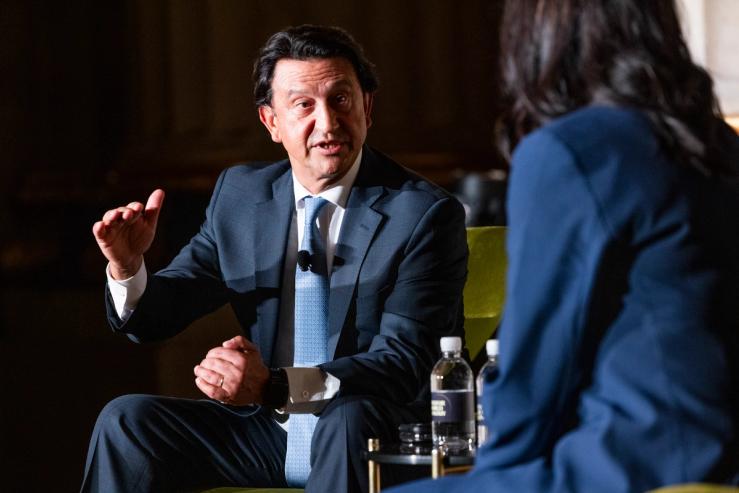
Hyundai CEO José Muñoz said the raid hasn’t changed his strategic plans and that he has three top priorities: “U, S, A.”
“When we do well here, we do well everywhere,” he added at a dinner hosted by Semafor World Economy on Tuesday.
In a spectacle that sparked outrage in South Korea and threatened to derail trade talks with the US last September, US federal agents detained 475 people, mostly Korean nationals, at the $7.6 billion manufacturing complex near Savannah where LG is making battery cells for Hyundai’s electric cars.
During the sweep, ICE agents handcuffed engineers and other workers and pushed them onto buses. Photos of the raid spread around the world, prompting trade partners to question doing business with the US.
White House chief of staff Susie Wiles personally called Muñoz to apologize for the raid, and to say the White House “didn’t know what happened and they were going to do everything they could,” Muñoz said.
Georgia Gov. Brian Kemp also called and said he wasn’t aware of the raid and would try to rectify the situation.
“That was so confusing,” Muñoz said.

Know More
The CEO said he knew time was of the essence to bring people back and open the factory. “We applied the Korean concept, which we call pali-pali; it means hurry, hurry,” he said. “And we were able to catch up. So we are launching on time.”
Hyundai has pledged to invest $26 billion in the US through 2028, a strategy to make more cars for the US using local plants. Right now about 50% of Hyundai cars sold in the US are made in-country, with the remainder made in Korea and subject to profit-biting tariffs.
Some areas of the battery-making process have already begun at the Georgia plant, a 2.5-million square foot facility, which was completed in December 2025 and has more than 500 employees. While technical experts from Korea helped set the factory up, the company says the “vast majority” of the employees who are producing the batteries are local.
Hyundai is a Semafor World Economy partner.