




The News
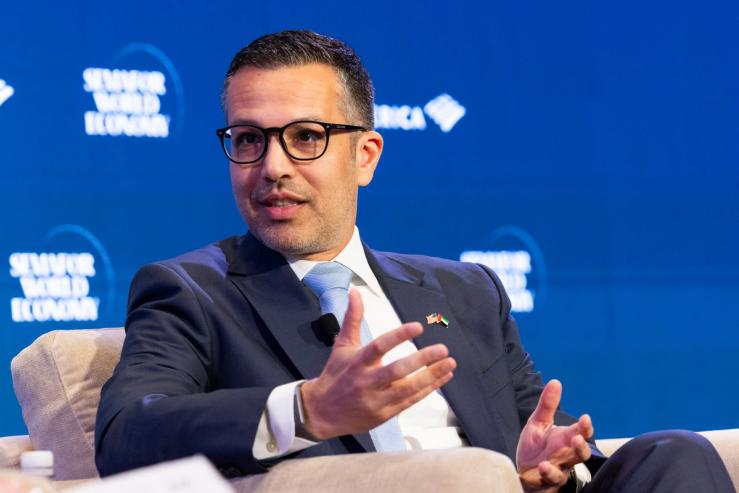
The majority of people have remained in Dubai despite heavy bombardment from Iran amid the ongoing US-Israel war, and domestic spending has nearly recovered, according to the CEO of the Dubai Economic Development Corporation.
While an unsurprising statement from the man charged with attracting investment to the UAE’s largest city, Hadi Badri acknowledged the “surreal moment” the UAE has found itself in after being targeted by Iran before a ceasefire took hold on April 8.
The UAE eliminated 2,800 aerial threats with “very little physical damage” ensuing, Badri said. “It’s more psychological than anything.”
“What makes it even more unusual is the fact that we’ve been going about our daily lives,” he added.
Around 500 flights are coming in and out of the city every day, with Emirates operating about two-thirds as many as before the war, according to Badri.
“Our leadership are going to the malls, engaging with people, demonstrating that things are safe … My wife and I are still able to order pizza and get it delivered in 15 minutes,” he said.

Know More
The economic development body is focused on “the here and now,” Badri said, when asked about the future of the emirate, which over the last two decades has built its economy on financial services, tourism, real estate, logistics, and retail. These sectors have been challenged amid the closure of the Strait of Hormuz and widespread flight disruptions to the region.
A question driving the government’s decision-making is continuing Dubai’s “transformative” prewar trajectory, Badri said, adding that the city has a “track record of coming out of challenges.”
He noted that domestic spending has largely recovered from an initial shock after the first missiles and drones were launched by Iran at the UAE on Feb. 28, and is now “only a few percentage points shy” of pre-conflict levels.
Half a million Iranians live in Dubai. “They’re still here. They’re still participating in the economy. They’re still safe,” Badri said, when asked if they are still welcome in the UAE.
This week, Crown Prince of Abu Dhabi Sheikh Khaled bin Mohamed bin Zayed visited China, where he met with Chinese leader Xi Jinping. The UAE’s relationship to China represents a long-held foreign policy philosophy to not choose sides, Badri said.