


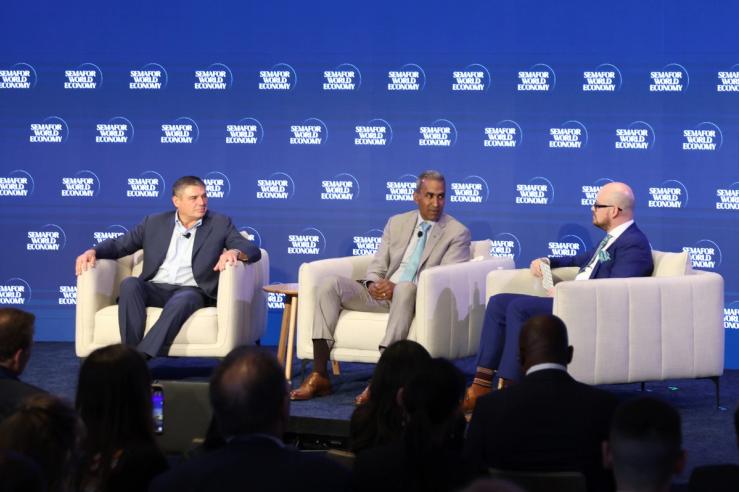
For Lorenzo Simonelli, the key to weathering global turmoil and major supply chain disruptions is redundancy, redundancy, redundancy – and diversification.
The CEO of Baker Hughes told Semafor World Economy in Washington, DC that “as you think about what’s happened with the Strait of Hormuz, it’s going to bring back to the reality that you need infrastructure and redundancy.”
Simonelli said on Monday that we “need to make sure that we don’t have these choke points be the burden of energy supply.”
Jacobs’ Chief Executive Bob Pragada also focused on redundancy as a major takeaway from recent weeks as energy-related companies have been left reeling.
“Today, moving forward, it’s those threats that we probably didn’t think about as much as we did back 20-30 years ago around redundancy and resiliency, as well as cyber protection—that just doesn’t apply to the Middle East, that applies to facilities all over the world,” said Pragada.
Simonelli added that the current conflicts involving Iran and the Strait of Hormuz could actually strengthen the case for more LNG investment
“If you think about the future, natural gas isn’t just a transition fuel. It’s a destination fuel. It can be affordable, sustainable, and secure,” Simonelli said. “What you’re going to see happen is continued development of LNG as being the way in which to transport that natural gas.”