




The News
After a few photojournalists were arrested in the UAE last month, some global newswires stopped publishing original images showing damage from Iranian missile and drone strikes on the country. For weeks, Iran has launched thousands of attacks on Abu Dhabi, Dubai, and Ras Al-Khaimah. But since state media reported the arrest of a journalist on March 17, on-the-ground conflict photography disappeared — just one example of a media crackdown that has swept the Gulf, as well as Israel and Iran, since the start of the war.
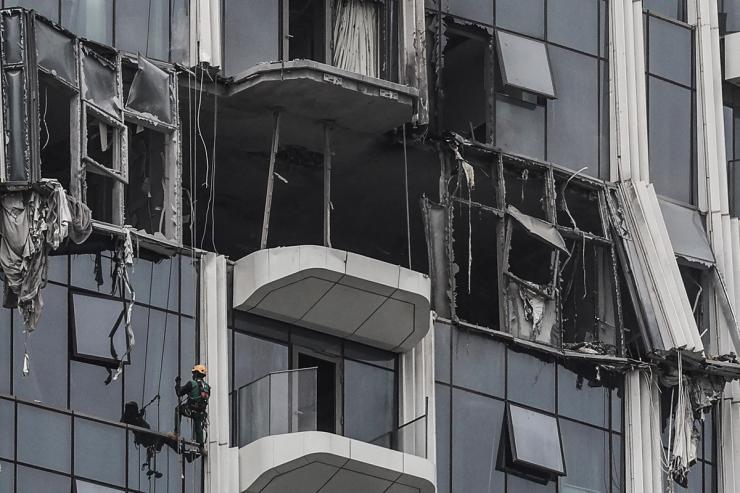
Before the arrests, wire services were publishing vivid imagery of smoke billowing from Dubai International Airport, damage to offices in Dubai International Financial Centre, and debris from an intercepted projectile on a sidewalk outside a hotel. Even photos of emptier-than-usual malls and beaches — evidence of the economic impact — stopped appearing.
The blackout coincided with increasing pressure from UAE authorities — initially seen as targeting social media users — to control the news coming out of the country.
In a statement to Semafor, an official from the UAE Ministry of Foreign Affairs said “journalists work and publish freely in accordance with applicable laws and regulations,” and many “local and international media outlets operate” in the country.
“UAE laws prohibit entering or being present in restricted areas without a permit, even if not accompanied by any other act. They also prohibit taking photographs, preparing maps, recording coordinates, or using any other means of documentation in violation of prohibitions issued by the competent authorities. Such measures are standard practice during periods of heightened security and are intended to ensure stability.”
In this article:

Know More
The UAE is not alone. Since Feb. 28, the first day of the war, press freedom organizations have documented crackdowns across the Gulf as governments sought to manage the visual narrative of attacks in a region seen as a safe haven.
“Photography serves the enemy,” is a hashtag made popular out of Saudi Arabia in early March and “sums up the campaign waged by the authorities to criminalize coverage … under the pretext of protecting national security,” according to Reporters Without Borders.
Kuwait and Bahrain have similarly criminalized filming and sharing footage of Iranian attacks. Meanwhile, a Doha-based journalist told RSF, “It is impossible to go out with a camera in the street.” On the other hand, Qatar’s state-funded Al Jazeera aired a documentary last week that showed extensive damage to an airbase and new footage of the effects of Iran’s airstrikes, including shots of military scuba divers retrieving drone and missile carcasses in the Gulf.
Spokespeople for some of the international news agencies in the UAE said they haven’t prevented its journalists from reporting on the conflict. But one person said complying with local restrictions has made it more difficult to cover the war, and the social media crackdown has reduced the circulation of images showing damaged buildings and intercepted munitions.
The UAE foreign ministry official said journalists must secure “prior official permits before undertaking any filming activities, particularly in sensitive or restricted locations, in order to preserve public safety and maintain security and public order.”

Kelsey’s view
The UAE is one of the biggest economic success stories of our social media age. An online amalgam of conspicuous consumption, natural wonders, and manmade spectacles — like the world’s tallest tower, Abu Dhabi’s Grand Mosque, and even, yes, the vivid green of Dubai Chocolate — has propelled the emirates to superlative measures of tourism and consumer behavior.
In recent years, that online presence has helped it solidify its reputation as a tourist’s paradise, a billionaire’s playground, and a dream home for millions of expats (critics unfollow!).
Indeed, the media blackout speaks to the importance of image-making to the UAE.
Within days of the ceasefire, the country’s Vice President and Prime Minister and Ruler of Dubai Sheikh Mohammed bin Rashid Al Maktoum asked those in the UAE to lift a flag in celebration, generating a fresh wave of pro-emirates content online.
The public spectacle of genuine gratitude and solidarity, combined with the limited visual record of the attacks that preceded it, is already doing the groundwork for recovery.
Government efforts to scrub evidence of a foreign adversary from public view reveal another irony: The success of the UAE’s defense systems has granted relative safety to the journalists and civilians taking, and sharing, pictures of the conflict.

Notable
- Passengers aboard an Etihad flight out of Abu Dhabi were ordered by crew members to put away their cameras when a flight was evacuated before takeoff during a missile alert. Once in the airport, armed soldiers shouted not to take photos or videos, The Wall Street Journal reported.