


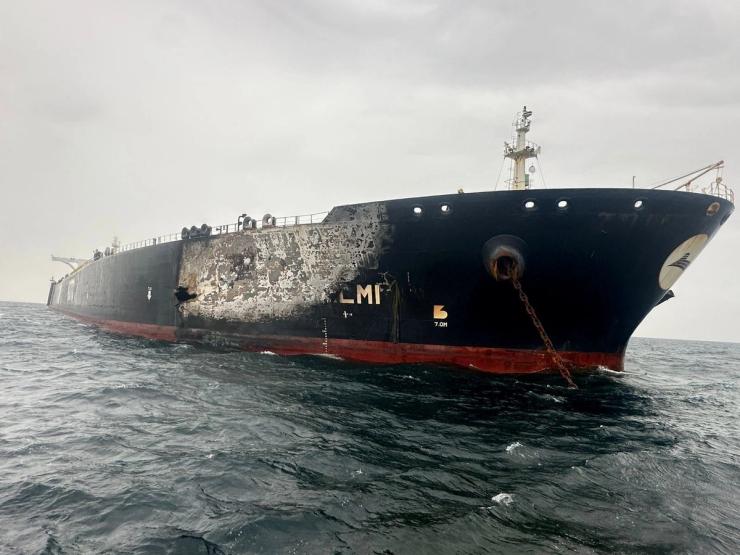
Oil prices climbed above $110 per barrel on Tuesday, as Donald Trump’s deadline for Iran to agree a deal with Washington — set for 8 pm Eastern time — fast approaches, but tensions show no sign of abating. Both Tehran and Washington rejected a 10-point peace plan put forward by Pakistan and other meditators.
Should his deadline be ignored, Trump warned that the US had a plan “where every bridge in Iran will be decimated” and “every power plant in Iran will be out of business, burning, exploding, and never to be used again.” Targeting civilian infrastructure is banned under the Geneva Conventions, but Trump said he was “not at all” concerned about committing war crimes. Tehran’s top military command described the president’s threats as “delusional” and vowed “crushing” retaliatory attacks if the US and Israel continue to target civilian infrastructure.
The impact of the effective closure of the strait and the resulting hike in oil prices varies among Middle Eastern oil producers: Iran still controls the strait, while Oman, Saudi Arabia, and the UAE have alternative routes through pipelines and ports. Countries like Iraq, Kuwait, and Qatar, on the other hand, don’t benefit from that luxury, and are increasingly bearing the brunt.
Finding viable substitutes to the strait will be front of mind for future investors, the UAE’s special envoy for business and philanthropy argued in the Financial Times. “The pipelines will be expanded. The port capacity will be built. The power grids, water systems and trade corridors connecting the region’s economies will be formalised,” he wrote.