Fossil fuel shocks have historically strengthened the case for alternative energy sources, and green hydrogen could again benefit from higher fossil fuel prices — at least temporarily.
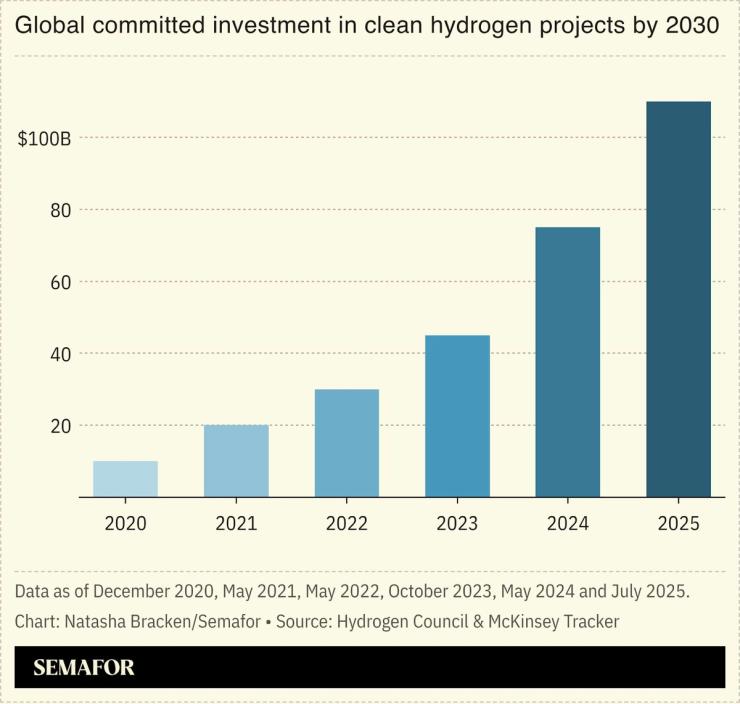
Before traffic was effectively throttled in the Strait of Hormuz, the case for green hydrogen was harder to make. Investors remained wary of uncompetitive pricing, and government incentives in the US had all but dried up under President Donald Trump. In Europe, however, the Iran war could nudge investors and governments toward a more favorable view of the high-cost, low-carbon alternative, as Russia’s invasion of Ukraine did. When prices for energy and ammonia surged in 2022, the EU responded with the REPowerEU Strategy, which set a target of producing 10 million metric tons of green hydrogen domestically by 2030. Hitting that quota seems improbable now, but rising natural gas prices have at least temporarily put blue and grey hydrogen on the back foot, creating, as Pierre-Étienne Franc, CEO of the world’s largest hydrogen infrastructure fund Hy24, put it, a stronger advocacy platform for green hydrogen and greater incentive for governments to move the needle on policy.
Several EU member states are now urging looser production rules to avoid slowing investment, while Italy just secured approval for a €6 billion state aid scheme to support renewable hydrogen. China is already the world’s top hydrogen producer, but its increasingly bullish embrace of green hydrogen in its five-year plan — made more urgent as the country’s reliance on the Middle East for fossil fuels becomes more problematic — could also get things moving. Just last month, Beijing announced a low-carbon transition fund to provide direct financial support for domestic green hydrogen development.