




Reed’s view
Being first isn’t necessarily the same as winning.
Just look at OpenAI. They defined the AI frontier when ChatGPT went mainstream in 2022, but recently, their biggest headlines haven’t been about groundbreaking new models, but rather acquiring niche media startups to feed their data engine.
Meanwhile, their biggest backer is playing a very different game.
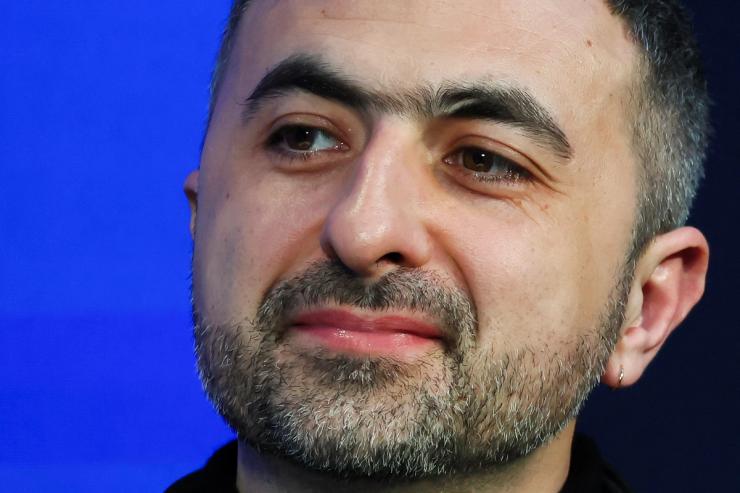
“There’s actually an enormous advantage in being just behind the frontier,” Microsoft AI CEO Mustafa Suleyman told me earlier this week. “We basically get to use all the preview versions of the best models in the world, both for our in-house development and for our first party consumption.”
There’s a generous serving of cope in that statement. Suleyman, who co-founded DeepMind, surely wants to be leading the frontier of AI. But his admission exposes a new AI reality: There’s a market for models that do the job a touch worse than competitors, but run more efficiently.
While the cost per token is dropping, overall AI inference costs are soaring. Why? Because developers are generating exponentially more tokens to drive performance and agentic behavior.
The game of AI right now is about efficiency and availability. (And based on the current constraints of energy, memory, chips and other components — not to mention the Iran war — it will remain that way for a couple of years.)
Microsoft’s ability to get behind-the-scenes access to OpenAI’s models does help its own AI researchers shortcut development of models that only lag the best ones by a small margin. But it’s the measured, deliberate and risk-averse attitude that stands out. And in an era of scarcity and uncertainty, staying right behind the leaders could be a smart play.

Notable
- A team of CalTech researchers claimed this week that it was able to radically compress a large language model without sacrificing performance. “We are creating a new paradigm for AI: one that adapts to diverse hardware environments and delivers maximum intelligence per unit of compute and energy,” PrismML’s chief executive told The Wall Street Journal.