


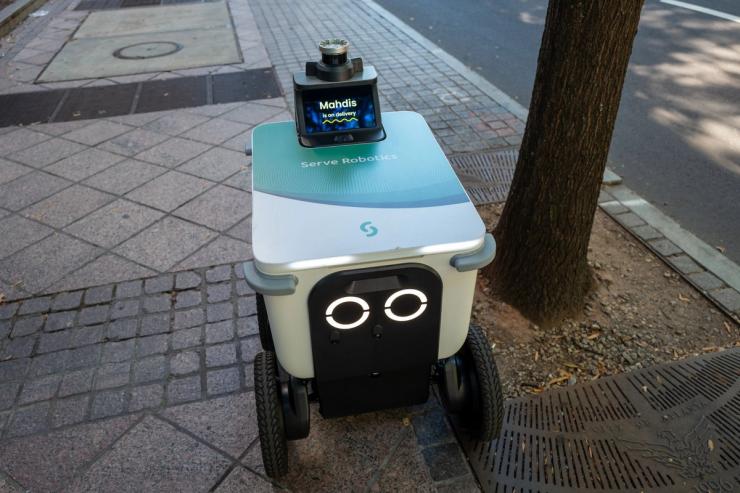
The humans are starting to fight back. One very analog cost robotics companies are now dealing with as their products proliferate in the wild is repair fees for robots who have been kicked, ridden on, or otherwise defaced, Serve Robotics CEO Ali Kashani tells Semafor. Serve, which makes wheeled delivery robots, says it’s a natural issue as humans learn to share public spaces with robots. Unless there is a dangerous situation, the company doesn’t call the police or try to identify the assailant. Right now, the issues only arise in less than 1% of 100,000 trips. The robots are “built to handle being kicked over,” he said. And cleaners remove the graffiti at night “unless it looks cool.”
Competing delivery robot firm Coco, meanwhile, is equipped with an alarm that “tends to deter tampering,” operations manager Jonathan Boeri said, noting the instances are infrequent.
Robot hazing doesn’t happen often enough to be considered a material business risk or a notable cost, the two executives said, but the decision comes as companies face more widespread anti-tech sentiment. And the robot companies’ success hinges in part on people liking the robots.