




Reed’s view
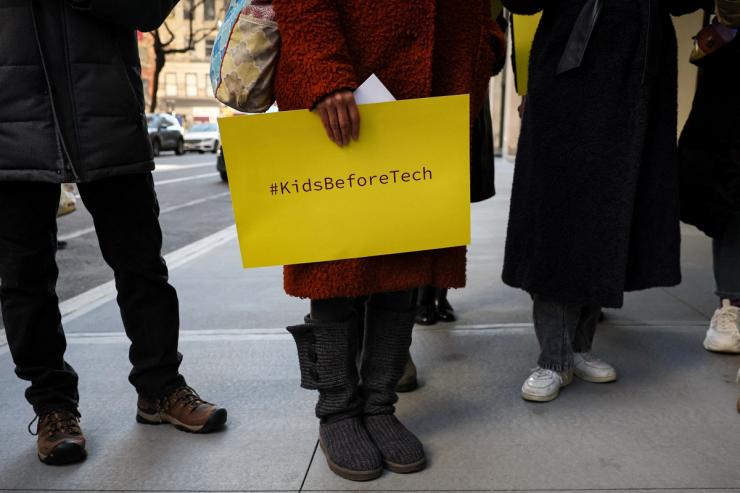
Social media had its “Big Tobacco” moment this week, when a Los Angeles jury found Meta and Google liable for harming a teenage girl with addictive features.
The verdict was a big deal, showing how plaintiffs’ attorneys can sidestep Section 230, which shields platforms from liability for what users post.
But people forget something about the Big Tobacco moment: Big Tobacco didn’t go away. The industry moved into vaping and nicotine pouches. Cigarettes got less popular thanks to a societal shift and greater awareness the products are harmful. The actual lawsuits, which forced warnings on cigarettes decades too late, had little impact.
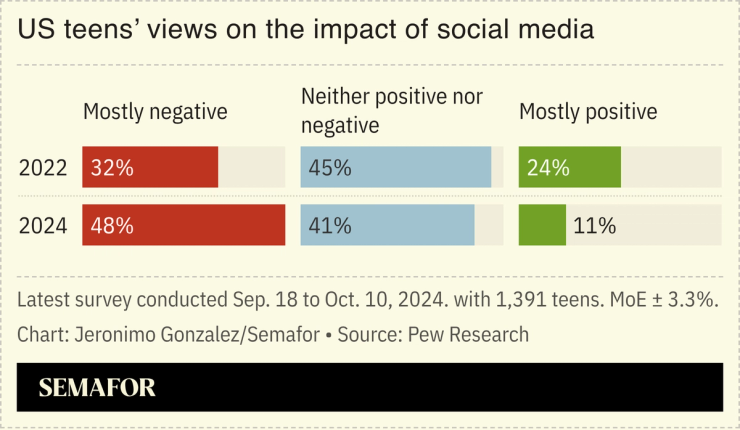
There are signs that social media is headed for a similar quasi-reckoning. Australia, for instance, has already made it illegal for anyone under 16 to use social media. Organic posting by real people is on the decline, replaced by AI and semi-professional “creator” content that resembles television more than the early days of Facebook. And smaller group chats are where real conversations are happening (even online dating is moving IRL again).
The world will always offer us vices and some will have trouble staying away. (Old-fashioned cigarettes, by the way, are making a comeback.)
But an entire generation has grown up with social media and developed scar tissue and coping mechanisms for the technology, meaning their kids now know how sneaky software can learn their habits and hack their brains. It doesn’t mean they won’t use it.

Notable
- Compensation is one thing, Julia Angwin wrote in The New York Times, but the “real win would be if the social media giants were finally forced to design less harmful products.”