



The News
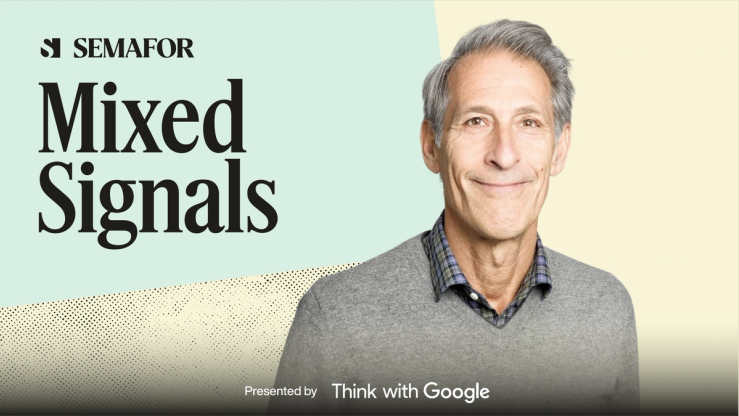
Former Sony Entertainment CEO and current Snap Inc. Chairman Michael Lynton joins Mixed Signals to revisit the decision that led to one of the most consequential hacks in history: approving The Interview, the Seth Rogen–James Franco comedy that provoked a cyberattack from North Korea.
Max and Ben ask why he broke his own greenlight process, and how he managed the fallout as private emails were leaked and careers were upended. They also dive into Lynton’s new book with Josh Steiner, and why he was frustrated by the US federal government’s inaction on its own TikTok ban.
You can listen to the full interview of Mixed Signals from Semafor Media wherever you get your podcasts or watch it on YouTube.

Transcript
Max Tani:
And there was a feeling that you needed to introduce Spider-Man into the Marvel Universe to get some of that audience back in, and that’s really ultimately why the deal was made.
Ben Smith:
Well, Kim Jong Un’s gotta stop taking credit for the revival of Spider-Man.
Max Tani:
He probably does. Welcome to another episode of the Mixed Signals podcast from us here at Semafor Media, where we are talking to the most interesting and important people shaping our new media age. I’m Max Tani. I’m the media editor here at Semafor, and with me as always is our editor-in-chief, Ben Smith. Ben, what’s the biggest mistake that you’ve made in your professional life?
Ben Smith:
I had some early, much-publicized errors on my blog that I won’t get into, back in the aughts.
Max Tani:
Well, people who are interested in those mistakes unfortunately can find them on the internet probably, though a lot of stuff on the internet disappears, so maybe you won’t find some of the really embarrassing stuff.
Ben Smith:
Someone helpfully added this one to my Wikipedia page.
Max Tani:
Who edits your Wikipedia page?
Ben Smith:
My many fans, apparently.
Max Tani:
Yeah, your many fans, exactly. Well, the reason why we ask is because our guest on the show this week is someone who has thought a lot about their own mistakes, particularly ones that have had enormous ramifications playing out in the public eye. That’s Michael Lynton. He is the former CEO of Sony Entertainment and is the current chairperson of Snap. That’s as in Snapchat and Warner Music. Michael has just co-authored a book with Josh Steiner called From Mistakes to Meaning: Owning Your Past So It Doesn’t Own You. And while the name sounds a little self-helpy and whatnot, Michael’s mistake was actually one that was pretty interesting and that I think many people who listened to the show would be well aware of, and that was his decision to greenlight the movie The Interview, which prompted North Korea to hack and release the emails of Sony employees.
North Korea decided to take this measure, this extreme measure, because The Interview featured a scene in which Seth Rogan and co-star James Franco assassinated Kim Jong Un. The North Koreans were not happy about that, threatened Michael, and eventually released these emails. This saga started because of one mistake that Michael said was just from his desire to seem cool in front of very popular celebrities, and ended up having these major, major geopolitical consequences, and changed his life and the trajectory of Hollywood forever. Ben, it was a remarkable saga that Michael actually hasn’t talked a lot about before releasing this book.
Ben Smith:
Yeah. He led through it with this incredible optimism, and it’s really interesting to now see really how dark it was from the inside.
Max Tani:
Yeah. And this hack and the release of the emails raised a lot of questions, which have actually been subsequently explored afterwards in other high-profile hacks about the nature of hacked materials, how news and media organizations should handle them, whether it even really matters anymore, given that everyone is their own personal media brand and private sleuth. So we wanted to ask him about that, and we of course wanted to ask him about the state of Hollywood today. We wanted to ask him about Snap, the company of which he’s the chairperson, and the future of music in a world where AI replication has gotten so good. Ben, did I miss anything? Anything else we want to talk to Michael about, before he hops on with us?
Ben Smith:
I mean, that’s a lot. Might be a mistake to ask him all those things.
Max Tani:
That’s true. We’ll try to make as few mistakes as possible in this interview, but we have to take a short break and we’ll be back with more from Michael right after this. Michael, thank you so much for joining us, and congratulations on the book.
Michael Lynton:
Thank you for having me.
Max Tani:
I wonder if we could just start with what, in your chapter of this book, in some sense is the original sin, which is a table read in 2013 with Seth Rogan. Can you just tell us that story?
Michael Lynton:
Yeah, of course. We were presented with the script of a movie called The Interview, which is about ...
Max Tani:
And you were then running Sony.
Michael Lynton:
I was then running Sony Entertainment. Amy Pascal was running the movie studio side of things, so Entertainment comprised movie, television, and music. And at the time, we had a very strict process in place to greenlight movies which is pretty accepted in the industry. At a certain point, you get all the relevant, important functions around a table ... finance, marketing, creative ... and you come to a collective point of view about whether or not you want to go forward with this. In this particular moment, we had made a bunch of R-rated comedies with Seth Rogan, all of which had been successful. Universal also had made a bunch of R-rated comedies, and so we had two homes, two places to go. Every script, therefore, was at some point competitive.
We were presented with this movie The Interview, which is about sort of two hapless journalists, Seth Rogan and James Franco, who under the direction of the CIA go off to North Korea ostensibly to do something, but really to assassinate Kim Jong Un, and everybody on the creative side of our business in the studio wanted to make the movie. And we were under time pressure to do so, because if we weren’t going to say yes, Universal would probably say yes, so we decided to have this table read. And to set the scene, it was in a big room. You have all the cast around a table. You have all the creative staff who’s there as well from the studio. Amy’s there. Everybody’s dressed very casually and I walk in, and I am not only in a suit, I am The Suit. I am the last person remaining who is skeptical about whether we should make this or not. That’s the reason why we’re having the read-through.
And under normal circumstances, at the end of a read-through, we would’ve said, “Okay, fine, that was great,” if it was a successful read-through. “Let’s go back, and we’ll come back to you in a day or two and tell you whether we’re doing this.” In this case, I got caught up in the moment at the end when everybody was saying and high-fiving each other like, “That was really funny,” and, “Let’s go do this.” I, for the first time in a decade ... I’d been in the job for about 10 years ... said, “Yeah, let’s go do this, let’s make this,” and that was proved to be a gigantic mistake, because what ensued was the North Korean government wound up hacking our entire system. It was the biggest cyber attack on a corporate I think ever at that point, certainly by a foreign power, and it brought us to our knees and destroyed many people’s careers and ruined a lot of things.
Max Tani:
I’m surprised to hear that you thought that Universal was interested in making this as well, given the risks of this kind of assassination scene.
Michael Lynton:
I don’t know how Universal would’ve responded, and I don’t know whether we were being agented at the time or whether they were genuinely interested. I think from our vantage point, we probably would’ve flagged it in a meeting such as the one I described earlier, because the public policy people would’ve been there and our general counsel would’ve been there, and as a Japanese company, we had a specific relationship with North Korea. At the time, actually, Prime Minister Abe was negotiating with the North Korean government to try and retrieve the bodies of these hundred hostages, these children who had been abducted from the streets of Japan back in the ’70s. I had no knowledge of this, but it was a very tense moment between the Japanese and the North Koreans in a relationship that traditionally is tense.
Max Tani:
Afterwards, presumably you have to go and tell people that you decided to greenlight this, and you do talk about having some doubts and there was some debate after you greenlit it. Why do you feel like you stuck with it, even though you made that mistake in the moment?
Michael Lynton:
Yeah, so it definitely gnawed at me a little bit. When you say we had to tell people, we didn’t regularly communicate back to Tokyo with a movie that was of this size. I think it was a 30 or $40 million movie. It didn’t require any approvals or anything out of Tokyo. And in truth, it first became a real problem only after we had finished the movie and we put out the first trailer, and that was the moment where we started getting threatening notices from the North Koreans or people who said they were the North Koreans, because we didn’t have an official channel of communication. And at that point, I really felt strongly that you needed to put the movie out.
I’d had some experience with something vaguely similar, because I had come into Penguin a few years after they’d published The Satanic Verses. And in that case, if you’ll remember, everybody had the fatwa put on their head, and in fact three people died. The difference was that the publishing industry was incredibly supportive of Penguin, who was the publisher at the time, and I just felt very strongly that you don’t get to pick your battles over censorship. Once you decide you’re going to do something, you’re under an obligation to do it, especially, actually, if somebody like the North Koreans are telling you you can’t put this out.
Max Tani:
Honestly, reading this chapter, I left thinking, “Was this really a mistake?” I kinda want my studio head to occasionally say, “Damn the torpedoes.” And sure, there’s some tail risk with everything, but this wasn’t exactly a foreseeable risk, and I don’t know. I left thinking like, “Are you sure this was a mistake?” Just because there are bad consequences doesn’t always mean it was a mistake, I think.
Michael Lynton:
Yeah. I would still view it as a mistake, a little bit for the reasons that I was describing a moment ago, which is if you looked at the risks ... whenever you look at a project like this, it’s not just the financial risks, it’s also the other risks that can come to it ... I think it would’ve become pretty evident pretty quickly that to kill, in a movie, the hostile leader of ...
Michael Lynton:
That to kill, in a movie, the hostile leader of a hostile nation, which I’m not sure actually has ever been done before since, was a clever idea and was I think almost certainly a mistake. In fact, when President Obama called me, this is also in the chapter, to apologize for something, he was the first one to bring my attention to the fact that he viewed this as probably a mistake, and I had to agree with him.
Ben Smith:
I hadn’t thought of this, but there is a tacit foreign policy veto across Hollywood, in a way. People are very careful with the Chinese, they’re careful with the Russians. This situation made it visible a bit, but do you think that in a way, what we’re seeing in the movies is a bit shaped by the studio’s fear of being hacked?
Michael Lynton:
No. I think that’s a different question. I think that hacking is one thing and that’s in the extreme. I think what most studios look at is where they can distribute the movie. And Russia, at one time, no longer was a very good market for the studios. China still remains a good market. And I think they are careful about what they put in their movies to make sure they still have access to those markets.
Max Tani:
Right. There is no North Korean market, so you weren’t necessarily concerned about that, but of course Kim Jong Un was still the leader of the real foreign country.
Michael Lynton:
Right. Different thing.
Max Tani:
Yes.
Michael Lynton:
But I remember the very first Spider-Man going all the way back to the Sam Ramey version. You probably don’t remember this. I wouldn’t either. Had Spider-Man lifting up an American flag, we never did that post that moment because that was not well received outside the United States in that moment. And so the whole question, and this is a separate conversation and the one we’re having about the book is about how is soft power now showing itself in American movies when you can’t basically beat your chest with patriotism at the moment and have access to international markets the way you once could.
Ben Smith:
There’s something you said after the hack that really stuck with me about how when you were leading through this crisis that your formula for survival was to be ridiculously optimistic and that you just every day told people like, “This is going to wind up being the best thing that ever happened to us.” And I remember people telling me about that and how effective you were in that moment. Does that mean it took you a while to realize it was a mistake because you had to force yourself to believe in it? Or was it immediately obvious to you?
Michael Lynton:
Well, it was certainly immediately obvious after I had that phone call with President Obama, but it was obvious to me prior to that. I think my attitude about optimism was a movie studio is very much like a small college campus. The Sony law was about 40 acres. You have about 7,000 people there and everybody’s very visible to everybody else, certainly the person running the places. And in those moments when everybody is confused and down, the folks and authority need to be present and upbeat. And sometimes that optimism can be a little false, meaning you’re generating it, you’re faking it for the moment. But no, I had a pretty clear understanding that I’d made a big mistake by allowing this thing to go forward.
Max Tani:
So Michael, you have a family full of journalists, but I’m curious, how do you think that the journalists handled the hack? There was obviously a lot of bloggers and people at the time who were going through pretty damaging and personal stuff. I think Gawker was doing daily updates from this thing. I remember that quite well. I’m curious what you thought about how the media handled the hack.
Michael Lynton:
Poorly, in my view. I think, and Ben, I can’t remember where you were at the moment. Were you at the Times at that moment?
Ben Smith:
I was at Buzzfeed.
Max Tani:
Did you guys write about this, Ben?
Ben Smith:
I’m sure we did. I’m sure there’s stuff I feel bad about, but I should have gone back and looked. We were not as aggressive as Gawker, for sure.
Michael Lynton:
In general, when it comes to the media on this stuff, these emails were private emails that were disclosed illegally. And to set the scene, what the North Koreans were doing at the time was they would bring together a cache of emails. You as a journalist would have to type in Die Sony. When you type that in, the emails would be released to you and then you could go through them, do a dumpster dive on them, and you would come out with salacious material because there was a lot of emails from movie stars and other folks. And to me, that was just the lowest form of journalism. And it was a funny thing because I would talk to a variety of different journalists both at more established places like The Wall Street Journal and less established places like the sites you’re referring to.
And they didn’t feel good about it, but they kept saying, “Well, our competitors are doing it, so we have to do it.” Or they would say, “Well, it’s already been published on Gawker, so we’re just reprinting something that Gawker has already published.” And every time you would say to them, “Come on guys, you signed up for a higher calling than this.” They would shrug and they’d say, “Yeah, but this is what our editors want and this is how we can get people to read our pieces.” So in general, I thought they’d behave poorly in the whole thing.
Ben Smith:
I remember the moment and thinking, “What do we do with this thing?” I think in the end, we were pretty squeamish at Buzzfeed, which I think I’ve not always been that position, but I think I feel good about in retrospect.
Michael Lynton:
My recollection, that was the case. Yeah.
Ben Smith:
This hack has since then, obviously, the DNC emails, the Epstein files has become a routine part of journalism. And it does give often intelligence services a way to set the agenda, decide what the story’s going to be. Epstein is the thing of the moment. How should people like us be thinking about these huge disclosures of emails that are mostly just thousands of people’s private emails? How should we think about them?
Michael Lynton:
I haven’t been a student of what actually has been presented. I would say a couple of things. First of all, these are emails that are, my understanding of it, being officially provided by the Justice Department for the public to look at. That’s a very different thing.
Ben Smith:
Well, I don’t know, the government releasing them for political reasons of its own. It’s not that different, but yeah, go ahead.
Michael Lynton:
And there you have it. And I was about to say, and you also have a government, I would say, that didn’t really redact them very well. So I think some people who got caught up in it, particularly people who at the time were underage, who never should have been caught up in it, whether it be their likeness. And to some respect, I think that the journalists have not been behaving great with that. They should self-redact on those type of things, particularly when people are underage.
Max Tani:
I actually think that one of the interesting consequences here, because the Sony hack happened right before the DNC hack and the release of those emails as well, and those two events happening in quick succession. I think the other consequence has just been that fewer important people put things in email. I think that we’ve seen it over and over. Do you think that that’s the case? Do you think that other people have learned from your mistake in that way, Michael?
Michael Lynton:
I would say yes and no, which is a very unsatisfying answer. So the number of people I know now, and you probably have the same, who will say, “Meet me on Signal,” is a lot, but it sometimes feels the equivalent of somebody who’s ordering an enormous meal and then a Diet Coke because by the same token, I know those same individuals are writing emails, which they’ve told me they regret writing and they’re writing them as of a month ago. So I think both things are true at the moment.
Ben Smith:
Yeah, I’m still on some crazy email chains.
Michael Lynton:
And where you are.
Ben Smith:
Please forward me more if you got them.
Michael Lynton:
Okay.
Ben Smith:
In terms of consequences of the hack, I mean, I think these things are often unpredictable basically. And it had consequences on the creative side. It sounds like Spider-Man basically got revived into part because of fan pressure that came out of the hack, but then if I have that right, and then I just saw the writer of the film, Sinister Six, which was never made, he also just made Project Hail Mary. He was complaining in some interviews that the hack had killed his film at Sony. How did that play out? Because it sounds like you had to make a bunch of green light decisions based on things that came out of the hack.
Michael Lynton:
No, I don’t think that’s right. I think the world of Drew Goddard, and he was very involved with the studio at the time, and obviously he’s had an enormous success with Project Hale Mary. No, I think those projects were evaluated on their own and they were found not to be good enough to make. I don’t think that the hack had anything to do with it quite candidly.
Ben Smith:
But there was a sense, at least it was written at the time that you cut a deal with Universal over reviving Spider-Man in part because of fan pressure out of the hack.
Michael Lynton:
No, that’s not accurate. So what my recollection, it wasn’t with Universal, it was with Disney, which owned Marvel.
Ben Smith:
Sorry, with Disney, yeah.
Michael Lynton:
And what happened over the course of the years between the previous Spider-Man and the one we were trying to make was that the importance of the Marvel universe had grown. You had these huge Marvel movies that were showing up, Avengers and others, and we had to keep retelling the origin story of Spider-Man every three episodes, and it was complicated to how to make that fresh. And there was a feeling that you needed to introduce Spider-Man into the Marvel universe to get some of that audience back in. And that’s really ultimately why the deal was made for them to co-produce it. And that’s why Tony Stark showed up in the next Spider-Man was because of that deal.
Ben Smith:
Well, Kim Jong Un has got to stop taking credit for the revival of Spider-Man.
Michael Lynton:
He probably does.
Max Tani:
Well, we have to take a short break, but we’ll be back with more from Michael right after this.
Ben Smith:
... With more from Michael right after this. One final question on the sort of thesis of the book. It’s like a book by and for people who believe in therapy. I was just thinking about the sort of Converse case, which in some sense is the Donald Trump case. I remember there’s this great line in Confidence Man, the Maggie Haberman book where somebody says to him, “You’re a very shallow person.” And he says, “Of course, that’s one of my strengths.”
Part of me read the book and thought, “I don’t know how much you’re getting at all this reflection.” I think a lot of CEOs will read this and be like, “Yeah, I don’t spend a lot of time reflecting on my mistakes.”
Michael Lynton:
That may be the case. I know a few of them. And I would say for the most part, look, what Josh came to me with when we started this whole project with A Walk on the Beach, we had known each other and were close friends for a long time. The hack had happened sort of five years previously and he said to me, “Michael, every time I raise this subject with you, you avoid talking about it.”
And I have my own mistake I made that I don’t feel comfortable talking about. And I know that that’s not healthy. And I know that when I walk around, I think everybody’s looking at me thinking about the mistake I made, despite the fact that it was many, many years ago and you probably feel the same way. We got to get out from underneath that. And so the process of going through this with him, and we brought on a terrific woman out of Johns Hopkins, Alison Papadakis, who’s a professor of psychology there. And we started interviewing people about their mistakes, some of them well-known, not so well-known.
But the process of unpacking these mistakes and trying to understand what was the emotional origin of what got you to this place, I found incredibly therapeutic. And it’s true. It was a big burden on me, and it was a welcome respite to get it off my chest a little bit, more than a little bit. It takes some courage. It certainly is very helpful to have a process and a partner to do it with.
And I don’t know, despite you could be the CEO of a big company, you could be not the CEO of a big company. And I think the process of looking at your mistakes and trying to understand why you made them, and equally, if not more importantly, how to deal with the shame and the regret that you sort of carry around with you after the mistake is a very healthy and good idea. It was certainly very helpful to me.
Max Tani:
For people in leadership positions or maybe just people in general, where’s the line between acknowledging and confronting your mistakes and trying to learn from them and wallowing in them and overlearning the mistakes so that maybe you don’t take a risk in the future for fear of repeating that same mistake?
Michael Lynton:
Right. And that’s the not doing something because you fear the consequences of it, that in and of itself is a mistake. It’s like the librarian who wants to keep every book on the shelf for fear that if you lend a book, you’ll never get it back. Well, that sort of defeats the purpose to a library. If you’re a librarian, you probably should take that risk.
I think if you have somebody at the top of an organization who’s willing to admit to a mistake and say, “I’ve made a mistake, here’s what it is.” It does a couple of things. First of all, it’s helpful to them along the lines I’ve just described, but it’s also a message to the organization that it’s okay to admit that you’ve made a mistake and to bring your colleagues in on that. And it’s probably a helpful way to avoid making more mistakes in the future.
To your point about wallowing, I’m not suggesting for a minute, despite the reference to psychoanalysis and all the rest, which there is a component of that, I suppose, to the book, but I’m not advocating wallowing it. There’s no reason that you have to go on and on and on about it to an organization. It’s simply acknowledging that you made the mistake, explaining how you’re going to deal with the mistake, and moving on.
Ben Smith:
To move back to the media business, because this is a media show, you chair the boards of Snap and of Warner Music. What are the mistakes that the chairman of a board makes, particularly in the media business right now?
Michael Lynton:
I mean, I think a board chair is designed to do just that, is to chair the board, not run the company, not give instructions to management, nothing like that. So, the mistakes would be around how the board itself behaves.
I think part of the mistakes can just be down to issues of governance, meaning are you actually asking the right questions in the right moment of your management? And that oftentimes doesn’t happen, particularly if you have a board who is not that familiar with the media business and doesn’t know what questions should be asked, I would say. The other side of it, I would say, is the board chair is there to keep control of the board and make sure that they don’t get themselves too involved with the business. And I’ve seen that happen too on occasion, where you get a random board member who suddenly decides they want to become very involved with the business and the board chair should be holding them back and saying, “That’s not the role of the board here.”
Ben Smith:
You’ve been in that role at Snap through its IPO, way up and way back down. The stock’s at like four or five bucks now. Did that company, did Evan make a mistake or was this just a tough environment?
Michael Lynton:
I think it was more that it was a tough environment. I think when you look at what happened with our competitors, Meta specifically, and Google, they just became that much bigger and you sort of see what’s happening in the advertising landscape. A version of what’s happening more generally in tech is that the big just gets even bigger. And if you look at other companies that are like size to Snap, whether it be Pinterest and others, it’s just that the pie was smaller. So, I don’t think there was any specific mistake there, no.
Max Tani:
Yeah. Though it is at the same time that TikTok entered into the US market. Was there something that you think that they did right, maybe that Snap missed?
Michael Lynton:
No. Well, I mean, they definitely had a specific format, which both Snap and Meta have a version of. They had this very powerful algorithm, which took a long time for people to understand how it works and to a degree replicate it. So, those two things, one was a very technical thing that they’d figured out that others hadn’t. And you have to remember, if we didn’t have the current administration in place, we wouldn’t have TikTok. I mean, we were sort of thinking to ourselves, “Congress passed a law, the president ratified it, the Supreme Court by a vote for six to three, came out and said, ‘This is okay. The NSA said it’s important to happen.’” And then for some reason, we still have TikTok hanging around. So, that to me is the bigger question. Why is that the case?
Ben Smith:
It’s unusual times. You’re also chairman of the Warner Music Board, and you’ve been broadly right in the middle of the digital transition around music for almost your whole career. And the music industry has often been the canary in the coal mine of new digital business models, again, really since the beginning.
Michael Lynton:
Almost always. Yeah.
Ben Smith:
Yeah. And I guess in particular, do you think that what Warner has sought to do to ensure that artists are compensated for AI uses of their work, is that a template for film, TV, news? Are there things you’ve learned there that are more broadly applicable?
Michael Lynton:
Yes and no. Sorry to keep answering yes and no.
Ben Smith:
Wow, that’s your favorite answer.
Michael Lynton:
Yeah, well, okay-
Ben Smith:
It’s a very measured, careful, no mistakes answer.
Michael Lynton:
Yeah, yeah. There’s definitely things to learn. Let’s just put it that way. Music is typically first when it comes to technology stuff because the files are smaller and therefore it happens earlier in the life cycle of a technology. I think the idea that the models can train on material that is licensed subject to the artist approval is an appropriate model. And that’s the model that Warner is pursuing and that artists should be compensated to the degree to which that licensed material trains the model and is then making use of their material, for sure.
I do think though that there is a greater experience or habit of consumers manipulating music going right back to forming early playlists than is the case in the movie or television business. So, I think the audience is, by definition, more inclined to want to have another version of a song than would be the case of another version of a television episode. We all know that to be true.
But the underlying model, this notion that the large language models, or any model for that matter, requires a license to train off of a piece of IP and that whoever created that IP should then be compensated for that, that I think is an appropriate model, yes.
Max Tani:
One of the biggest stories of the year has been this ongoing saga with Warner Brothers, Discovery, Paramount, Netflix. A lot of attention has been paid to the Paramount side, but I’m really curious what Netflix does after this. What do you think that they’re going to do now that the Warner Brothers deal has fallen through for them?
Michael Lynton:
I mean, I have no idea. I think they have a very winning model, obviously. I think their technology is probably better than anybody else’s, which has helped them enormously over time, and they have this global footprint with a lot of local content.
The thing that they were missing, I suppose, was more volume because the capacity to consume on the platform is endless, and they needed more tent poles, big franchises. So, my suspicion is they will try and either buy more or get more in the marketplace somehow, but as they-
Michael Lynton:
... get more in the marketplace somehow. But as they said, it’s a nice-to-have, not a need-to-have. I think this was, judging from a distance because I’m not involved, this was much more important for Paramount to have and not be stuck in a middle position than it is for Netflix to have, who was in a leading position.
Ben Smith:
In that moment when everyone was racing to build a streaming app, Sony was really the exception, your old shop. You don’t remember whether these conversations were in the air when you were there. But I’m curious how that decision looks now, that Paramount builds an app, Sony doesn’t, and just focuses on making movies and selling them.
Michael Lynton:
Again, I’ve been away for the company for a decade. What I can tell you at the time was, yes, there was a lot of conversations around turning particularly the PlayStation Network into a form of streaming. And the thing that not many people know is that a third of all the Netflix subscribers for a long period came off of that PlayStation Network. They paid us-
Ben Smith:
Wow.
Michael Lynton:
... for almost a decade a significant bounty to bring people over to Netflix. So we definitely knew that the audience playing games on PlayStation Network were movie and television watchers.
Max Tani:
Michael, sorry to interrupt. Was that just because people were using their PlayStations like they used Roku, where it was like, “This is a thing that I can get the Netflix app on here and it’s going on to my TV?”
Michael Lynton:
Yep.
Max Tani:
Is that why? Okay.
Michael Lynton:
So there was a lot of conversation about shouldn’t we be in this business and shouldn’t... And by the way, there’s also a history with Sony. If you think about it, going back to the music side of things where, given the size of the music company that Sony has, we should never have allowed Spotify into the business. We should have had our own platform there too, or each of the music companies should have.
But I think what happened at the time was Sony was not as in as strong a position as it is today financially, and it wasn’t devoted to media the way it is today, because it was still very much a consumer electronics company in addition to being a media company. And they were not, understandably, willing to devote the billions of dollars that would be required to start one of these things up. Between the financial component and the focus of the company, this is just not something that they wanted to pursue.
We modeled it, we did that extensively. Zack Van Amburg and Jamie Erlicht, who are now at Apple, they were very engaged with doing this before they left for Apple. It was the decision of the company. Whether that was the right or the wrong decision, I don’t know enough to know. I know that in the current position of brokering, that’s worked out well for them financially. Whether in the long term that’s viable, I can’t speak to it. It looks as though they’re one of very small number who don’t have a streaming platform, and that may be a disadvantage over the long term.
Ben Smith:
One last question, Michael. Do you ever wake up and wish you were running a movie studio again?
Michael Lynton:
No. No, I did it. I was there for about 15 years. I had a great time. I worked really closely with Amy Pascal and others. No is the short answer. First of all, it doesn’t feel as much fun as it did at the time. At the time, it was a lot of fun. And secondly, I did my time and now I’m enjoying myself doing other things.
Max Tani:
All right, Michael. Well, we really appreciate you taking the time today.
Michael Lynton:
Thank you.
Max Tani:
Thank you, Michael.
Michael Lynton:
Thanks for having me.
Max Tani:
So Ben, we were just talking during the break about how you disagree with some of what Michael said around his theories about mistakes and what one should take away from them. And why do you disagree?
Ben Smith:
Oh, I guess, this is probably just a mark of poor character, but I guess I feel like in my own career, I have benefited from not reflecting too much. And particularly in journalism, I think often there is a... You can overthink the consequences. The job is to publish things that you know and you can get really tangled up if you start to wonder whether people ought to really know this thing or not.
Max Tani:
That’s really interesting. I think that that’s probably true. And I think as you get deeper into a subject too, it becomes more true because you get to know people more and you get more obsessed with that question. Whereas when you’re just starting out and you’ve got a scoop, you’re like, “Who cares? This is great. Let’s get this information out there.”
Ben Smith:
Well, I don’t want to go too far in this because as I say it, I’m like, yikes, I’m really an executive now and I should go reread Michael’s book and reflect on what my childhood is going to lead me to make my next mistake. So I’ll go off and do that after this.
Max Tani:
Let’s focus on the actual substance here and the interesting media questions at play. Michael was very, very frustrated with the way that the news media handled the Sony hack. And this is not a question that is dead. This is a internal debate that’s happening all the time. Ben, during the interview, you mentioned the Epstein files. Right after the Sony hack, of course, there was the Democratic National Committee email hack and release, where a lot of these same questions about what should be public and what shouldn’t were out there and debated again. Meanwhile, the general public and the internet has no such qualms about how they think about this stuff. Plenty of independent creators and people in the fragmented media ecosystem are running wild with all sorts of this types of information. It seems like the only people who still care about gatekeeping any of this is those of us who are left in the legacy media or legacy-media-adjacent media companies.
What do you think about Michael’s prescriptions? And where do you fall providing the information that’s real and that’s out there and that’s available versus why should we be talking about this and focusing on this?
Ben Smith:
Yeah, it’s funny because as you say, it’s just a much less consequential question now. Who cares whether or not journalists go rooting around these files and finding embarrassing stuff? Random people on Twitter will. And I think everybody just needs to develop antibodies to this is a ugly, private thought that someone expressed to one friend and probably shouldn’t be interpreted like a public statement. And I think that’s a hard thing for people to get their heads around, but it’s a human reality.
As a journalistic matter, I’ve just refreshed my memory. Buzzfeed was pretty... We didn’t go rooting around people’s personal lives in the Sony hack when I was there. And we spent a lot more time, Katherine Miller, who’s now at the Times, and I spent a lot of time thinking about how to cover the DNC hack. And I remember the thing that we wound up with was, look, the fact of the hack and the motives of the hackers are actually a much bigger story than anything in the hack. That’s true of the Sony hack too. The details are all inconsequential. The fact that North Korea waged cyber war on a big Japanese company, that was the big story. Similarly, nobody remembers anything that was in the DNC leaks. The hack itself was more important.
Of course, how do you then deal with that? We dealt with it by trying to say that in the second or third paragraph of the stories we did and trying to be fairly restrained about stories. But when there is a revelatory stuff in these things, like, “Here’s the secret speech that Hillary Clinton gave to Goldman Sachs and has been trying to keep from everyone, and here it is,” that is still news.
Max Tani:
It’s interesting.
Ben Smith:
And so I think you’ve seen some outlets, the Times I’d say in particular, step back and do these big conceptual stories and try to use the emails not as a little got you here and there, but as something more satisfyingly revelatory about how the world works. And I guess I do think that in an environment where, whether you like it or not, these things are public and people on social media are all over them, that is a real function for the professional media.
Max Tani:
I think ultimately the lesson, and we talked about this during the interview a little bit with Michael, I think the lesson that many of us have learned from all of these series of hacks and releases, and you’ve been a part of some of them, my emails as a young-ish reporter in my early twenties were part of the DNC hack and I think really shaped the way that I think about this, which is that all electronic communication, everything that we put out there has a risk, has a serious risk of being released into the world. And I actually do think that a lot of people in major professional environments have internalized that, particularly ones that have been adjacent to these big moments. I think that people really, really did learn from what ended up being a mistake that Michael made to seem cool.
Ben Smith:
And so anyway, yes, kids, set your Slack retention times to two weeks, if you take nothing else from this episode.
Max Tani:
Well, that is it for us this week. Thank you so much for listening to another episode of Mixed Signals from us here at Semafor Media. Our show is produced by Danny Fidel with special thanks to Josh Billinson, Rachel Oppenheim, Anna Pizzino, Daniel Hoeft, Garrett Wiley, Jules Zern, and Tori Koor. Our engineer is Rick Kwan, and our theme music is by Steve Bohn. Our public editor is Kim Ju Ae, I think the eventual supreme leader who hopefully will not hack us for even talking about this episode again.
Ben Smith:
If you’re listening from North Korea or anywhere else, please follow us where you get your podcasts and subscribe on YouTube.
Max Tani:
And if you’re in Pyongyang or elsewhere, you can always sign up for Semafor’s Media Newsletter, which is out every Sunday night.