




Clay Chandler’s view
The US is fighting Iran with one hand while funding it with the other — and accelerating the growth of a yuan-based financial corridor that it’s becoming too big to ignore.
In the space of a single week, the US struck Iran’s Kharg Island, temporarily lifted sanctions on Iranian oil exports, allowed Iranian tankers carrying crude to pass freely through the Strait of Hormuz en route to China, and faced off with Chinese officials in Paris for trade talks. Beneath the chaos, something new is taking shape: A secretive global architecture for trading oil that operates outside US dollar-denominated markets.
Iran began building that network in 2018, when US President Donald Trump, in his first term, unilaterally withdrew from the nuclear deal that gave Iran relief from certain US sanctions in exchange for a pledge to dismantle its nuclear program.
The US pressured allies to diversify away from Iranian oil; Tehran retaliated by turning to China as its main export market, evading US sanctions by launching a clandestine “shadow fleet” of tankers to ship oil supported by hundreds of maritime vessels operating under false identities, manipulated tracking systems, and fraudulent documentation.
Payment flows through China’s Cross-Border Interbank Payment System — a yuan-denominated alternative to SWIFT — through barter arrangements in which Chinese companies build airports and refineries in Iran in exchange for oil via a network of front companies, which the US Treasury has tried for years to sanction with limited effect.
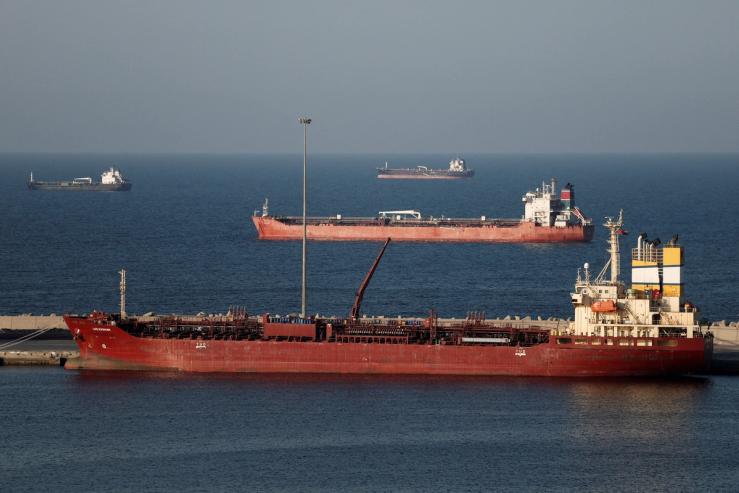
Since the war began, Iran has sent at least 11.7 million barrels of crude to China through the strait, according to TankerTrackers.com — every barrel outside the US dollar system moves freely, while Emirati, Kuwaiti, and Saudi tankers sit stranded. Iran has also floated the possibility of conditioning broader access to the strait on yuan settlement — a proposal that would formalize what is already happening in practice.
This infrastructure, stress-tested in wartime, seems unlikely to disappear after the fighting stops.
For leaders of global businesses, the question is not whether the petrodollar is dying. Instead, it’s whether the cost of operating exclusively within dollar-denominated systems is rising relative to the alternatives, and if it’s worth the price.

Notable
- Reopening the Strait of Hormuz is far harder than shutting it, The New York Times notes. Iran’s geography, dispersed missile systems, and use of mines mean even a major US military operation would struggle to secure the route without a political deal.