




The News
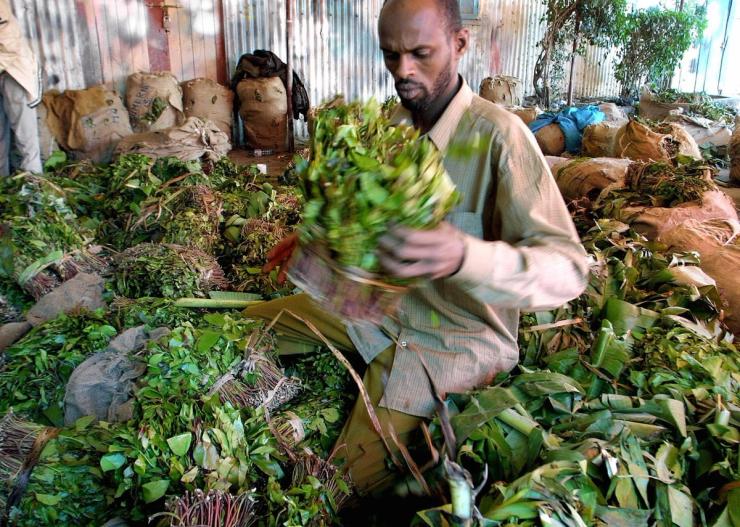
Kenya is set to reopen its land border with Somalia in April, ending a 15-year closure that has divided families and choked trade, in a breakthrough influenced by an unlikely lobby group: The farmers of khat, a leafy plant that is a potent stimulant when chewed.
Khat (Catha edulis) is a legal crop in both Kenya and Somalia. However its active compounds, which can trigger euphoria or alertness, are technically listed as psychotropic substances, creating a complex legal gray area in Kenya.
The border between the two countries was closed in Oct. 2011 after repeated attacks by the Islamist group al-Shabaab and Kenya’s military intervention in Somalia. The closure forced Kenyan khat traders to route exports to Somalia through costly air shipments, which drove up prices and left farmers at the mercy of cartels who levied unofficial commissions.
But 15 years later lobbying efforts by khat farmers and traders have helped bring the closure to an end. Together they petitioned Kenya’s interior ministry to reopen the border to facilitate road exports of khat. Kenyan authorities finally ratified the request in February, formally approving the resumption of the trade through three border points.
Nyambene Miraa Farmers and Traders Association (Nyamita) chairman Kimathi Munjuri told Semafor that the sustained lobbying by khat associations was central to the decision to open the border. He said lobbying included direct engagement with senior government officials including the deputy president, who hails from the khat-growing region. The interior ministry’s own letter confirming the reopening, seen by Semafor, explicitly references Nyamita’s petition as the trigger.

Know More
Khat — known as miraa in Kenya — generates roughly 13 billion Kenyan shillings ($100 million) per year in Kenya, according to the country’s Agriculture and Food Authority, and supports an estimated 1.4 million livelihoods. Before the border closure, at least 20 tonnes of khat were exported daily by road, valued at around 5 million Kenyan shillings ($39,000) per day.
“We have been in official trade negotiations between Kenya and Somalia,” Munjuri told Semafor. “We have been in liaison with agencies of Somalia’s government to push for the reopening of the border.”
Somalia is Kenya’s largest khat export market. Kenya’s Cabinet Secretary for Agriculture Hon. Mutahi Kagwe revealed that Kenya exports between 13 and 17 tonnes of the plant to Somalia daily, which has a street value of around $50,000.
The border reopening is also the first real test of Somalia’s membership in the East African Community, which it joined in March 2024.

Joseph Maina’s view
Khat is more than an agricultural commodity in Kenya. It is a political economy. Khat anchors a regional economy that is centered in Meru County on the slopes of Mount Kenya where thousands of smallholder farmers depend on it as their main income. The supply chain involves numerous players from farmers to pickers, brokers, transporters, exporters and market traders all moving the leaves daily, making the plant one of Kenya’s more significant horticultural products.
That economic weight comes with political consequences. The crop’s pricing, export access, and regulation have repeatedly featured in parliamentary debates and khat has played a key role in campaign pledges.
The crop’s pull extends to the highest levels of national politics — presidential hopefuls have made a point of visiting Meru to publicly declare their support for the trade, with pledges to open new markets, defend growers, and confront foreign bans. Some have gone further, publicly chewing khat on the campaign trail, a gesture that signals solidarity and which has become something of a ritual in Kenyan electoral cycles, with aspiring leaders competing to demonstrate the sincerity of their commitment to khat farmers and traders.
Ultimately, reopening the border will counter smuggling through legal trade, which has been one of the government’s concerns, betting that shared profits and busy markets will do more to keep the region safe than a closed fence ever could.

Room for Disagreement
Two previous attempts to reopen the border — in July 2022 and again in 2023 — collapsed amid renewed al-Shabaab attacks. There is no guarantee that reopening the border will keep the region safe. “Opening the border brings challenges such as logistics, monitoring and infrastructure,” reported German broadcaster Deutsche Welle. “Poor roads and banditry risks make traveling overland in Somalia and northern Kenya difficult.”

Step Back
Khat’s influence spreads beyond Africa. The UK’s classification of it as a Class C drug in 2014 closed a major export market, prompting protests and diplomatic engagement from Kenyan officials. Subsequent trade negotiations with Somalia have likewise drawn in national leaders seeking to protect the industry.

The View From Tanzania
“If managed effectively, the move could unlock new trade flows, integrate Somalia more firmly into regional markets and strengthen East Africa’s position as an interconnected economic bloc,” said Peter Nyanje, a Tanzanian political and economic analyst.

Notable
- The UK has pledged $12 million under a new security framework with Kenya aimed at formalizing border management and countering transnational crime, as part of a broader strategy to counter cross-border threats.