




Tim’s view
Signals are piling up that the Trump administration’s “energy dominance” paradigm is reaching its limits.
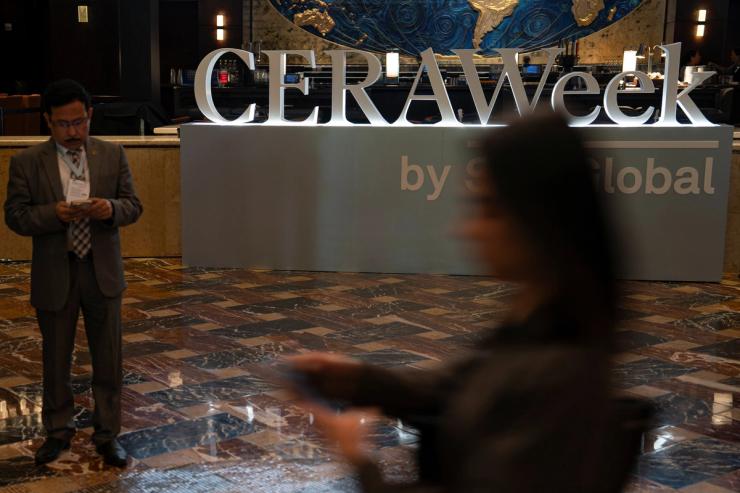
The message Energy Secretary Chris Wright is spreading at CERAWeek, for example, is a bit contradictory. On one hand, the war in Iran is “a short-term disruption” that shouldn’t worry consumers. Yet in closed-door meetings with energy executives in Houston this week, he and other US officials have prodded them to increase production, according to people with knowledge of the conversations. “‘Drill, baby, drill’ is a big part of energy dominance,” Jarrod Agen, who chairs the White House Energy Dominance Council, said during a side event here. “We haven’t heard any pushback on wanting to produce more.” But oil companies learned hard lessons during the shale boom of the 2010s about the risks of chasing short-term price signals, and more pushback could be coming soon. “We’ll have to see how this situation resolves itself, and when, and what are the leftover ramifications from that,” Clay Gaspar, CEO of independent driller Devon Energy, told the conference on Wednesday. “The one thing I know for sure is adding and subtracting rigs is absolutely value-destructive.”
Beyond the uncertain price signal itself, the deeper issue is that energy dominance can ultimately cannibalize itself, Jeff Currie, chief strategy officer of energy pathways at private equity group Carlyle, told me: “The higher the volatility, the less incentive to invest, which then creates under-investment, which increases the volatility. It’s a vicious cycle.” There are other worrying signals: The oil market is now firmly in ‘backwardation,’ a condition in which near-term contracts are priced far higher than long-dated ones. That’s one indication that physical shortages, rather than bad vibes alone, are being priced in (the reverse effect happened during the pandemic, when spot prices plunged because of evaporating demand). And the widening spread between prices in Asia and those in the US means the US, with plenty of its own production, is increasingly an energy island, isolated from the global market.
In one sense, that could be a sign “energy dominance” is working: The US can do what it wants and suffer relatively light consequences, and I doubt the White House will shed any tears about higher prices in China. But the market tightness is spreading, Currie said, and he predicted it will hit Europe by next week. That undermines the argument Wright has often made — that energy dominance offers protection to allies, too.

Notable
Meanwhile, the EPA administrator said the agency is issuing a temporary emergency fuel waiver to allow gas stations in the US to sell high-ethanol content gasoline as the energy department expects “potential for a disruption to the American fuel supply.”