




Reed’s view
AI companies are rushing to avoid being seen as driving up the cost of electricity — perhaps the biggest immediate political threat to their business, for all the more apocalyptic warnings.
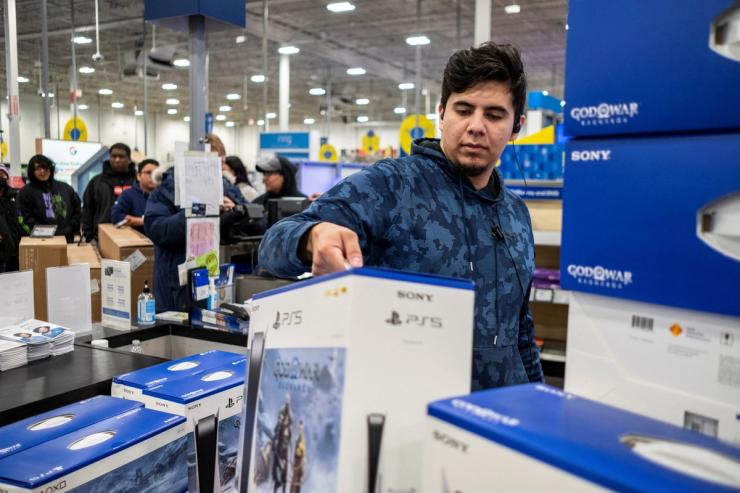
But the affordability backlash is on the brink of exploding in another sector of the economy, where the AI boom is already raising the price of consumer electronics.
Take the SanDisk 4-terabyte SSD, a popular device for photographers. It used to cost $500. Now, because AI data centers have created a memory shortage, it goes for $1,200.
Demand for compute power is only increasing, and many of the products that go into building massive compute factories, like chips, memory, and copper, can’t just be ramped up overnight, or even in a matter of years.
Meanwhile, AI companies are competing fiercely to lock up components years into the future, willing to pay insanely high premiums. And still, there isn’t enough compute to go around, as evidenced by OpenAI’s decision to shut down video generation tool Sora Tuesday, mainly to free up compute resources.
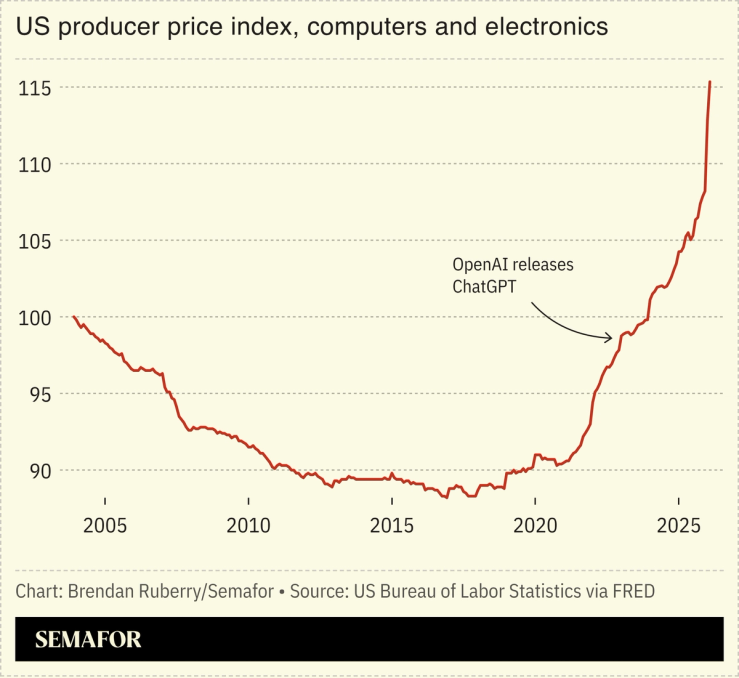
The sense of an affordability crisis has become central to US politics in an age of inflation. The focus so far has been on eggs, rent, and electric bills, which President Donald Trump promised in the State of the Union will be kept safe from AI pressures. But politicians and technologists alike might want to start worrying about AI’s impact on the price of your smartphone, your PlayStation, and your car.
The entire economy and global supply chain is being reoriented right now around a single commodity — the token — and most people are only vaguely aware it is happening, or how it will affect their lives.

Notable
- Relief isn’t on the horizon. In December, market intelligence company International Data Corporation predicted the effects of the memory shortage “could persist well into 2027.”