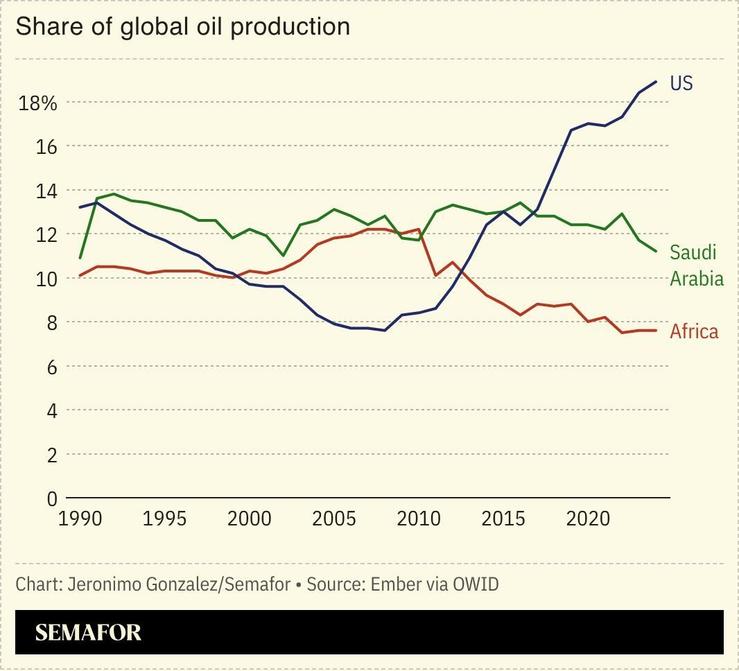
Nigeria’s controversial decision to scrap fuel subsidies left the country better prepared to capture a windfall from spiking oil prices, and protect consumers from higher costs, the top energy advisor to President Bola Tinubu told Semafor. For Nigeria, rising oil prices are a mixed blessing: As Africa’s top producer of crude, it stands to gain more from exports, but since the country still relies heavily on imported refined products it remains highly exposed to price shocks — drivers in particular, as well as the large number of people who rely on diesel generators for electricity.
Getting rid of fuel subsidies — which Tinubu did upon taking office in 2023 — means more risk for consumers, with a presidential election coming in January. But it also makes Nigeria a more attractive destination for energy investors, Olubukola Verheijen, Tinubu’s special advisor on energy, said on the sidelines of CERAWeek. Since Tinubu became president, she said, the country has locked in more than $8 billion in new drilling projects, with another $20 billion under development.
There are no plans to reintroduce fuel subsidies, Verheijen said, even though for now pump prices are 50% higher than they were before the Iran war started. Tinubu’s administration, she said, is counting on the market to solve that problem on its own. “We’ve been very deliberate in designing our economy to be much more disciplined and commercially driven,” she said. “The reforms we took were designed to drive our own energy security agenda and decouple from exactly this kind of volatility.”