



Oil executives and the Trump administration offered divergent outlooks for the global energy market. Oil prices plummeted Monday after US President Donald Trump pushed off the deadline by which he said the US would carry out attacks on Iranian power plants if the Strait of Hormuz isn’t reopened. But they remain about 40% higher than they were before the Iran war started.
Speaking to the CERAWeek conference — the energy sector’s marquee annual event — Monday morning, US Energy Secretary Chris Wright described the recent price volatility as “a short-term disruption now that will lead to a multi-decadal benefit for global security,” adding that “markets will do what markets do” and drive more drilling to come online.
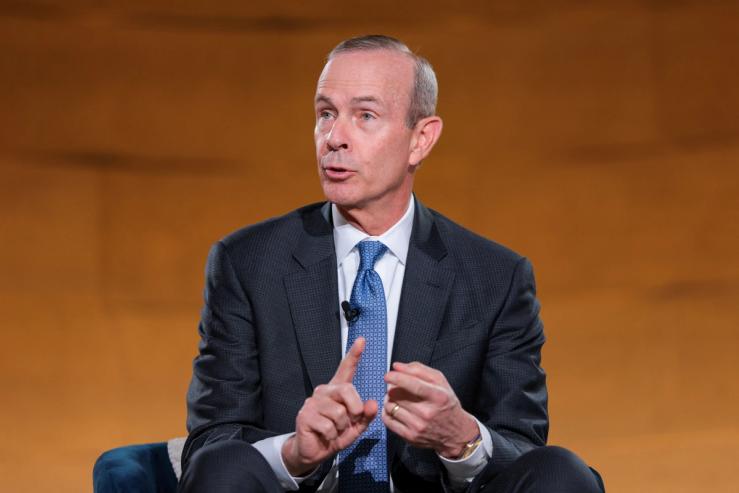
Chevron CEO Mike Wirth was more skeptical. The price signal, he said, “could re-stimulate some growth, or not.” And he warned that prices are likely to go higher even if the Strait reopens relatively soon, as Gulf countries work to bring damaged and shuttered production equipment back online and countries compete to refill their strategic reserves. “The markets right now are trading on scant information and perception,” he said. “There are real physical manifestations of the closure that aren’t fully priced into the future curve.” TotalEnergies boss Patrick Pouyanne largely echoed that sentiment, warning that issues with global energy supplies lasting more than three or four months would present an enormous risk to the global economy.
They are far from alone in that assessment in the corporate world: United Airlines’ CEO said in a staff memo last week that oil prices could rise as high as $175 a barrel: The international benchmark is just above $100 now, after the Trump-induced plunge. And one energy CFO, speaking to CNBC, said his firm is plotting out three scenarios: A reopening of the Strait of Hormuz this month, a reopening in the summer, or a closure through the end of the year. Given broader uncertainty, his firm is dwelling on “what’s the worst thing that can happen here.”