



The News
House and Senate Republicans are descending into cross-Capitol infighting, again, at a perilous time.
House GOP hardliners are trying to defeat popular Senate-passed bills to cajole the party’s senators into passing new voter ID and citizenship requirements that don’t have the votes to pass the Senate. Even senators who support the voting bill are scratching their heads and wondering why.
“It doesn’t do any good to call out the other side of the Capitol. I’m not sure who those guys even are. I listen to what the speaker says, otherwise, I don’t pay much attention,” Sen. Roger Marshall, R-Kan., told Semafor. “I try not to tell them how to do their job. They don’t tell us how to do our job.”
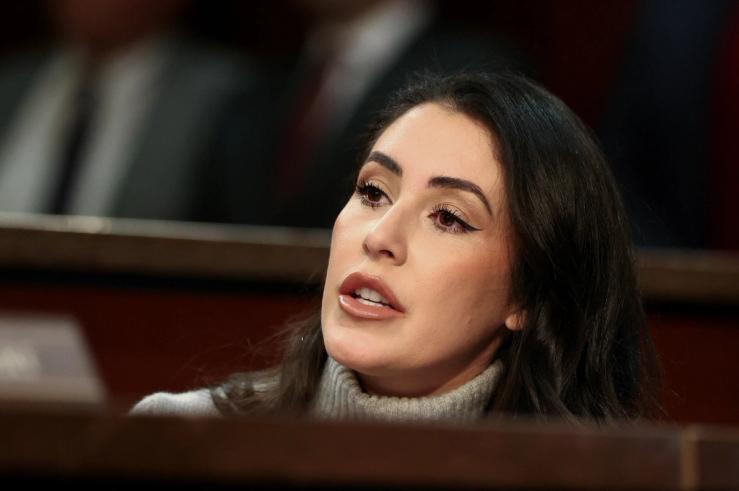
That’s not quite true for Rep. Anna Paulina Luna, R-Fla., who spoke for her fellow House conservatives by slamming the Senate for “a show debate. They’re literally tap-dancing … I think they’re going to get primaried.”
The House’s right flank failed to bring down a Senate-passed small business bill on Tuesday, showing that Speaker Mike Johnson can call its bluff. But 40 Republicans still opposed the innocuous legislation, spelling trouble ahead when anything bigger gets a vote.
It’s the latest sign that President Donald Trump’s party is sagging under the weight of his push for the voting bill. Trump sees it as critical to ensuring the GOP hangs onto power in November, but the bill is also sapping the party’s electoral momentum by complicating its ability to get additional priorities through Congress.
“Oh, my goodness. We all need to catch our breath, tone it down a little, and realize that we’re all doing the best we can. And maybe not light each other up,” advised Sen. Cynthia Lummis, R-Wyo.
As more House Republicans vow to slow down any Senate bills as long as the voter ID plan remains bottled up in the Senate, national-security and affordability goals of the president could be next on the list to fall apart.
The bipartisan housing bill passed last week by the Senate includes limits on private investors owning single-family houses — a top Trump priority that’s now in peril. Conservatives could also create problems for next month’s expiration of a surveillance law that already polarized the party.
Luna is assembling a coalition to vote down the reauthorization of the surveillance law unless the voting bill is attached to it. Even more laid-back Republicans like Rep. Jeff Van Drew, R-N.J., said they agreed with the sentiment.
“I’m going to be as much of a contrarian as I can on this,” he said.

Know More
There’s an old saying in the House that the other party isn’t the enemy — it’s the Senate. Senators, for their parts, view House members like the Mad Men meme: They don’t think about them at all.
“There hasn’t been a whole lot of thought as to what the House threats are, because we have our own challenges. Let them take care of their one-seat majority,” one Senate Republican scoffed to Semafor.
The House-Senate tension is real in both parties but tends to flare when the same party controls all of Washington. The two chambers fought bitterly over how to pass Trump’s agenda last year, bickering for months over whether to use one big bill or two smaller bills. Since then, much GOP battles have been with Democrats over funding the government.
But that’s changed now that Trump has ratcheted up his demands to pass legislation requiring proof of citizenship to vote, pairing it with restrictions on universal mail-in voting and trans men in women’s sports.
Before the current beef, the House GOP had already taken down an aviation safety bill that had passed the Senate unanimously. There’s another factor slowing down the Senate’s housing bill: the House majority is feeling jammed by the other chamber.
“My understanding is, they’re feeling a little snubbed,” Rep. Jim Himes, D-Conn., said of his House Republican colleagues.
Yet Senate Republicans seem to believe that if they show real effort in trying to pass Trump’s SAVE America Act, the House and Trump will be satisfied and the housing bill will be signed into law.
“We’re taking on their bill, which is important to everybody, and they should take on our bill, which is also important to everybody,” said Sen. Bernie Moreno, R-Ohio. “They don’t have to sit there and eat popcorn and watch from the stands. They can get to work as well, and pass the housing bill. It really matters.”
House Republicans insist that only results will move them. And they scoffed at anyone trying to prioritize legislation other than the voting bill.
“This is the only thing that Republican voters care about right now,” said Rep. Brandon Gill, R-Texas. “They don’t care about anything else that we’re working on.”

Room for Disagreement
The party’s agenda has another potential problem, one bigger than the House-versus-Senate dynamic. Trump himself has vowed not to sign any other bills until the voter ID measure passes (with an exception for funding the Department of Homeland Security).
“It doesn’t make a lot of difference, because the president’s not gonna sign any bills till we pass it,” said Sen. Tommy Tuberville, R-Ala., of the House. “They’re a non-factor.”

Burgess and Nicholas’ View
The Tuesday vote on the Senate’s small business bill demonstrated how untenable it is for either chamber to blockade the other. But it also showed just how little room for error Republicans have for the rest of the year. Just a couple of defections can take down a party-line vote in the House, and those are routine on procedural votes.
From the housing bill to a potential supplemental spending bill for the Iran war to the expiring surveillance law, House and Senate Republicans need to closely coordinate over the next seven months.
If they can’t, they risk making their own midterm campaign an even tougher task.

Notable
- Democrats felt the House-Senate tension from the minority after a short-term deal got reached to fund the Department of Homeland Security, Politico reported at the time.
Eleanor Mueller contributed.