



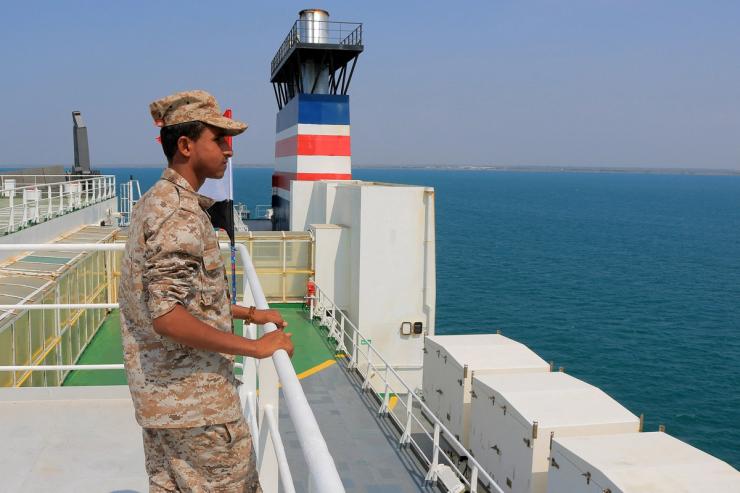
The war between the United States, Israel, and Iran spread almost as soon as it started. In two weeks, at least 11 territories from the Mediterranean to the Arabian Gulf have come under attack from Iran or its proxies in retaliation for the US-Israel strikes. The Horn of Africa — a strategic point — could yet become a new theater.
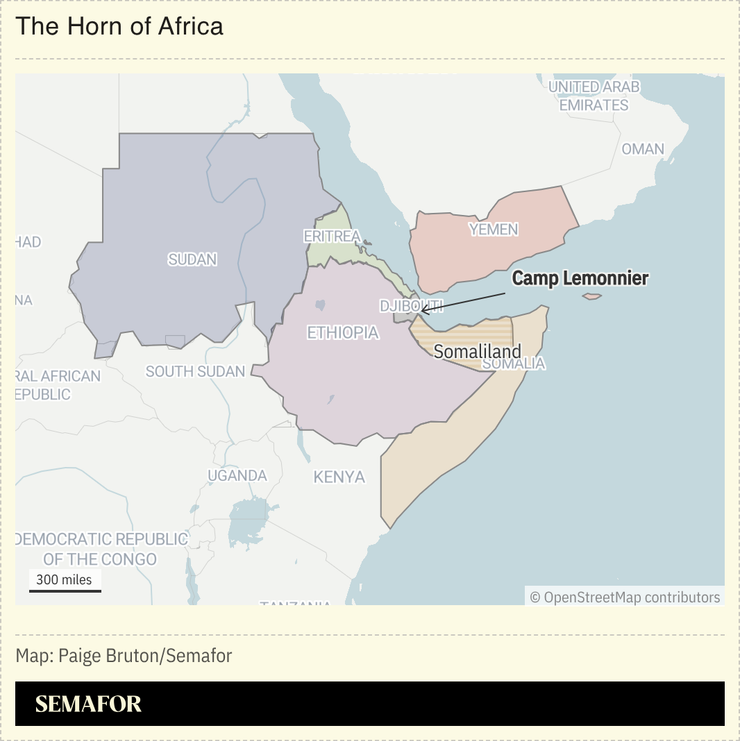
Djibouti is already exposed. It hosts the largest US military base in Africa: Camp Lemonnier, a key logistical hub for American operations in the Horn of Africa and the Gulf. Next door, Somaliland is emerging as a potential host for an Israeli security presence. Both sit at one of the world’s most important maritime chokepoints, where the Red Sea narrows into the Gulf of Aden. Meanwhile, the wider Horn of Africa is grappling with fragile states, active jihadist insurgencies, and territories whose sovereignty is contested or unrecognized.
To the north, in Yemen, the Houthi movement has so far been unusually restrained since the US-Israeli strikes on Iran began on Feb. 28, despite being an Iranian proxy. In opposition to Israel’s war in Gaza, the group spent nearly two years attacking commercial shipping in the Red Sea, disrupting a significant portion of global commercial trade. This provoked a Washington-led multinational armed response.
After months of airstrikes, the Houthis agreed to a ceasefire with the US, which could explain their caution. But their leadership has warned they could still get involved. The current war is already disrupting global oil supply from the Strait of Hormuz. Adding another Red Sea blockade — along the path of roughly 15% of global trade — would be disastrous.
The Horn of Africa has largely avoided becoming a direct theater for the kind of great proxy conflict playing out in the Middle East, but that may be changing. The same logic that made Yemen useful to Iran — a weak state, a strategic coastline, and local grievances — applies to parts of East Africa.
If the Houthis eventually retaliate, Camp Lemonnier would be a target of interest. It earns Djibouti $63 million a year in rent — significant revenue for one of the continent’s smallest states.
In neighboring Somaliland — internationally recognized as Somalia’s territory — Israel has already identified a potential foothold to counter the Houthi threat. In December, Israel became the first UN member state to recognize the breakaway region as an independent country and is reportedly exploring the possibility of a Red Sea security base.
Somaliland’s sustained peace has appealed to foreign powers, along with its ideal location for Red Sea surveillance. This is what drew Israel, and the United Arab Emirates before it, to consider establishing a foreign military outpost. But it also risks drawing the territory into conflict — something it has long avoided. The Houthis say they’ll consider Israel’s proposed presence in the region a military target. Somaliland needs investment and diplomatic recognition, but it will now have to be more alert to the risks of getting this from Israel.
Hosting foreign military powers brings clear financial and diplomatic benefits. But for Djibouti and Somaliland it may also carry risks. As the Iran war widens, bases that once symbolized security may become liabilities.
That is the trap now facing both territories. Djibouti cannot easily turn away a lucrative tenant that underwrites its regional significance while Somaliland cannot afford to spurn the first UN member state to recognize its existence.
The Horn of Africa has long been coveted for the same qualities that make it vulnerable: its coastline, its chokepoints, its weakness. What is changing is that the war those qualities were always expected to attract has finally arrived. For Djibouti and Somaliland, the question is no longer whether to get involved — it is whether they have any real choice.
Tomi Oladipo is an award-winning journalist who covers global affairs with a focus on African security, geopolitics, and digital media.