




The News
US President Donald Trump’s administration is pivoting toward military-led governments in West Africa, with a senior State Department official making the second trip to the Sahel in a month and Washington nearing an intelligence-sharing deal with Mali.
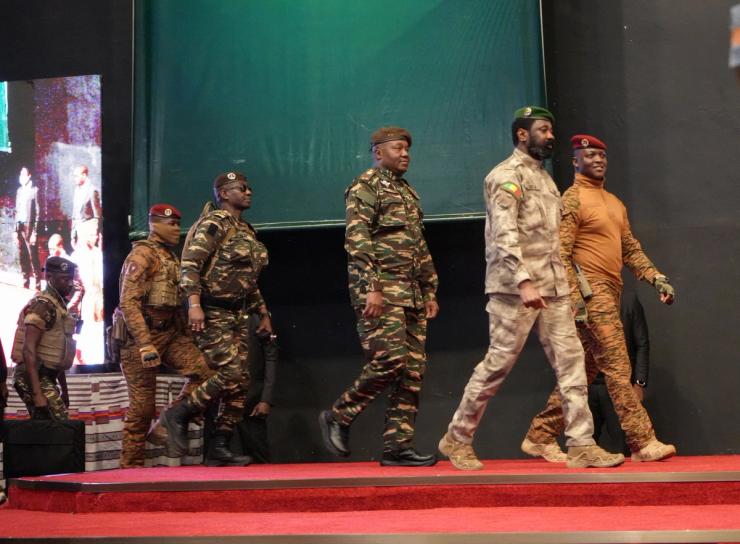
Nick Checker, head of the State Department’s Bureau of African Affairs, met with officials in Burkina Faso and Niger — following his trip to Mali last month. The visits show intensifying diplomatic engagement with the members of the Alliance of Sahel States, a coalition of military-run governments that have largely shut out Western powers.
Efforts toward normalization with the juntas are “not an endorsement” of how they came to power, Checker told Semafor ahead of the trip’s announcement. He said the focus reflects “pragmatic cooperation” leaving room for a credible transition to democracy over time.
The State Department trip came as Reuters reported that the US is nearing an agreement with Mali that would restore American operations over the country’s airspace as Al Qaeda-aligned jihadists continue to seize Malian territory. Last month, the administration made a major overture to Bamako by lifting sanctions on Mali’s defense minister and other senior officials accused of ties to Russian mercenaries. The sanctions removal was met with criticism from Sen. Cory Booker, D-New Jersey, at the hearing for Frank Garcia’s nomination to become assistant secretary of State for African Affairs.
The push reflects twin priorities to rebuild a counterterrorism footprint in a strategically important subregion where jihadist insurgencies have expanded for years, and to secure access to critical minerals.

Know More
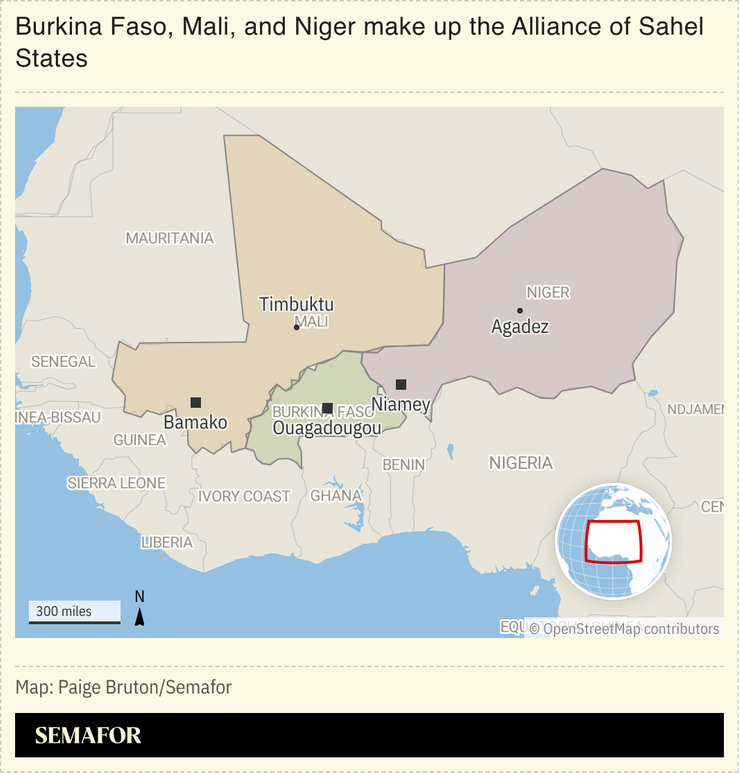
The shift marks a sharp break from the Biden-era approach, which used sanctions and public pressure to push junta leaders toward democratic transitions. After Niger’s 2023 coup, Washington conditioned continued support on limiting partnerships with Russia and Iran — an approach junta leaders dismissed as condescending. The friction culminated in the 2024 expulsion of US forces from Niger, including a strategically vital drone base at Agadez.
Critics of that approach argue it backfired, pushing Sahel states toward Russia and China while hollowing out US influence. They say policy should prioritize American interests while acknowledging that many West Africans have supported the coups out of frustration with prior governments.
Others warn the new posture carries its own risks. “The Trump administration has upended the decades-long, bipartisan consensus to support democracy globally,” said Alexander Noyes of the Brookings Institution. “This is a mistake that will substantially decrease America’s hard and soft power.”

Step Back
Observers view the normalization drive both in terms of security and in the context of a wider push by the American government to secure supplies of critical minerals around the world.
Rama Yade, a former French human rights minister and director of the Atlantic Council’s Africa Center, told Semafor that “what matters is Sahel’s natural resources,” yet acknowledges broader geopolitical factors. “[B]eyond the worldwide decline in democratic standards, a window of opportunity has opened up due to the terrorist threat — which the Russians have failed to avert—leaving Sahelian regimes short on options.”
Cameron Hudson, a former White House official in the George W. Bush administration, suggests the US prioritization of security interests is “just as much about sending a signal to the rest of the continent and rest of the world that the US is willing to work with anybody to advance US interests.”

Notable
- Russian forces have taken a step back in Mali as the Wagner Group has officially withdrawn in favor of the Russian state-backed Africa Corps. In a discussion in DC, Mali’s ambassador to the US denied Russian forces’ role in active combat.