


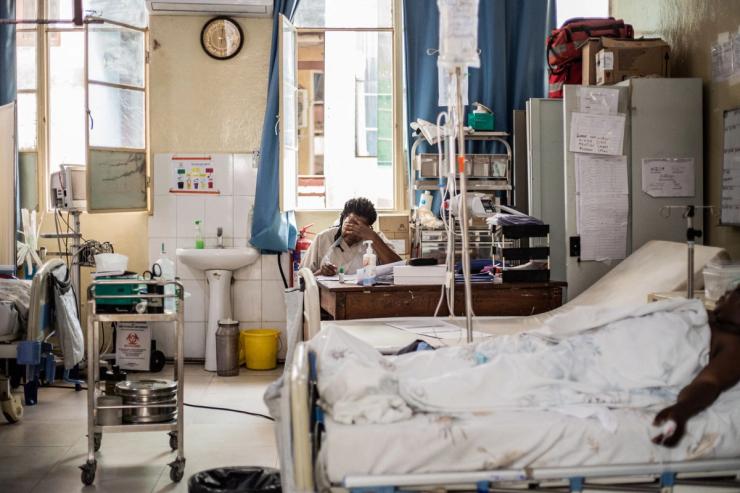
Expansive mining operations in DR Congo by the world’s largest cobalt production company sparked a health crisis in host communities that included pneumonia and stillbirths, an investigation found.
Chinese company CMOC produces nearly half of the world’s cobalt, via operations across two mines in Lualaba province in southeast DR Congo. Residents of one of the mine’s surrounding communities have contracted severe respiratory illnesses following continued exposure to levels of sulfur dioxide gas in the air “well in excess of international standards,” the report found, based on a review of more than a thousand medical records.
The company, whose growth has doubled annually over the past five years, expanded a plant as large as the size of 500 soccer fields to produce 30,000 tons of copper-cobalt mixed ore daily. But that expansion was “at the heart of the public health crisis that has allegedly harmed nearby communities and the workers who labor in the facility,” according to a three-year study by Environmental Investigation Agency US, a Washington non-profit, and PremiCongo, a non-profit in DR Congo. CMOC, responding to the findings, said concentrations of the gas were within applicable regulatory limits and there was no data to support a link between the mine’s expansion and health in local communities.