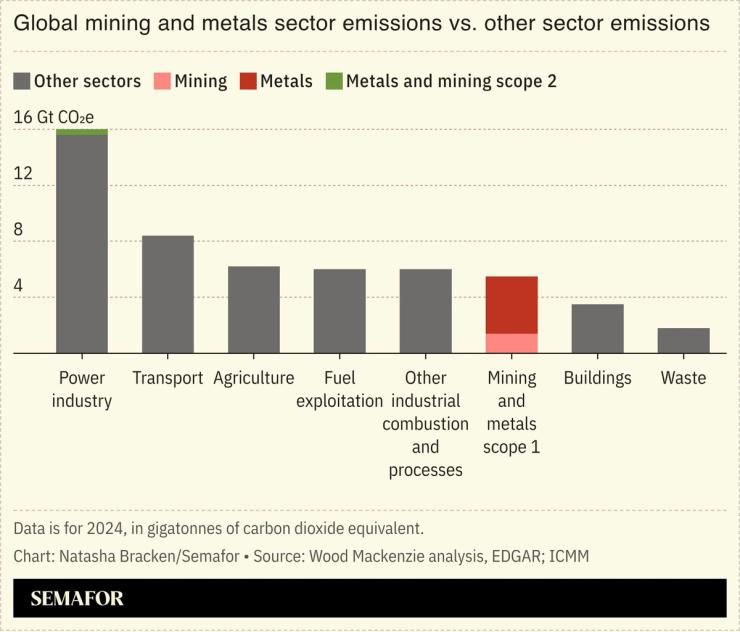
Mining and metals accounted for roughly 11% of global scope 1 and 2 greenhouse gas emissions in 2024, with a large majority originating from Asia, highlighting the sector’s role as both a major emitter and a linchpin of the clean energy transition.
Within the sector, metal production accounts for 8% of total emissions, while mining, driven largely by fugitive emissions from coal, makes up the remaining 3%. Steel and aluminum production, alongside coal mining, are responsible for 93% of the sector’s emissions, according to the International Council on Mining and Metals.
Yet the sector and its largest emitters are also among the most important to achieving a net-zero future. More steel will be needed for wind turbines, more aluminium for lightweight EVs, and thermal coal consumption is expected to rise in the short term as electricity demand surges. The main challenge, then, is producing more while emitting less, through emerging solutions including shifting from coal-fired blast furnaces to electric furnaces in steelmaking; and, in aluminium production, powering smelters with clean electricity and developing new processes that eliminate carbon from the smelting stage, the report’s lead researcher said.