




Alexis’s view
The Iran war looks set to upend economies across Africa, with global oil prices rising to around $120 a barrel and no end to the conflict yet in sight.
Looking across the continent, the junta-led nations around the Sahel — Burkina Faso, Mali, and Niger — seem particularly vulnerable to the impact of what The Wall Street Journal says is shaping up to be “the most severe shock to energy markets since the 1970s.”
Military governments swept to power in those nations, emboldened by public frustration at the failure of democratically elected administrations to defeat jihadist insurgents. The trio left regional economic bloc Ecowas, severed ties with former colonial power France, strengthened relations with Russia, and formed their own security group, the Alliance of Sahel States.
But now those countries are in jeopardy. All three are landlocked, making them particularly vulnerable to global economic instability. And, having broken away from Ecowas, they’re particularly isolated, unable to benefit from any collective action taken by the bloc to safeguard its economies. They were already vulnerable because of “the retreat of Western donors who used to fund part of their budgets,” Ulf Laessing, the Bamako-based director of the Sahel Programme at Konrad Adenauer Foundation, a German think tank, told me. Their main international partner, Russia, is fighting its own war in Ukraine and, as Laessing also pointed out, is yet to offer meaningful assistance.
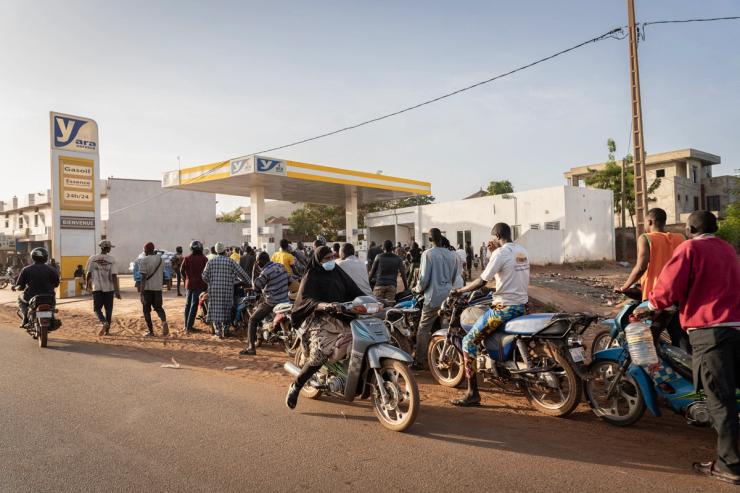
Perhaps of greatest concern to the junta leaders will be the fact that they’re each contending with a febrile security situation. Late last year, an al-Qaida affiliate’s fuel blockade of Bamako crippled Mali and exposed the government frailties. Mali typically imports more fuel than it needs because fuel tanker convoys from Senegal and Cote d’Ivoire are frequently attacked by insurgents. Burkina Faso, meanwhile, is fighting on multiple fronts, putting it “at the epicenter of the Sahel’s security crisis.”
The domino effect following Muammar Gaddafi’s fall in Libya unleashed the weapons and insurgents that have destabilized the Sahel for more than a decade. Now, a fresh round of global shocks emanating from the Arab world looks set to deepen those problems.

Notable
- The war in Iran is likely to pull attention away from recently-resumed US counterterrorism efforts in the Sahel, Foreign Policy wrote, potentially leading to an uptick in jihadist violence.