




The News
Kajsa Ollongren, the European Union’s special representative for human rights, doubts that the US-Israeli war in Iran will result in regime change in the country.
“There doesn’t seem to be a plan in place for a regime change, and we also know from other countries that regime changes are extremely difficult if they don’t come from within,” she told Semafor in an interview following meetings with State Department officials and US lawmakers in Washington late last week.
Ollongren also warned of the deteriorating security situation in the Middle East and the war’s adverse effects on human rights in Iran and the broader region. At the same time, she expressed cautious optimism of the human rights situation improving in Venezuela — the site of an earlier Trump administration military operation.
In this article:

The View From KAJSA OLLONGREN
This interview has been edited for length and clarity.
Morgan Chalfant: What is the trajectory of human rights in Iran amid this US-Israeli military operation, and particularly the death of Iran’s supreme leader?
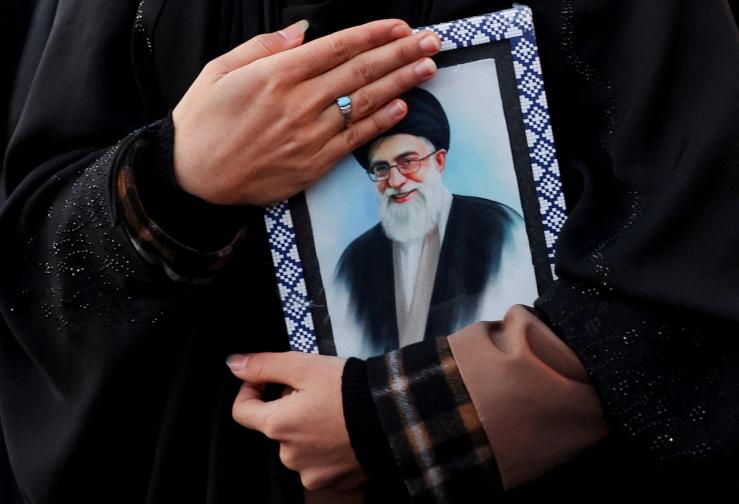
Kajsa Ollongren: There is no doubt about the fact that human rights were in a very bad place in Iran in the first place. The second thing is that now that the Israelis and Americans started this war, they have succeeded in decapitating the regime, but the regime is still there because the war has spread.
Because Iran is of course retaliating, and it’s hitting many countries in the region. And this was exactly, I think, the fear that many had — that if you would want to take on Iran, it could have consequences that are really serious and very big also from a human rights perspective. Because as war always does, it puts civilians in harm’s way; and so, war in itself is often a threat to human rights and the security and protection of people.
We don’t know in what direction this is going to go. And also for Iran itself, where the regime is apparently still in charge of the armed forces even with the successful actions by the Israelis and the Americans. And it’s a big country. Also, for the stability of the country itself, there doesn’t seem to be a plan in place for a regime change, and we also know from other countries that regime changes are extremely difficult if they don’t come from within.
How worried are you about the broader instability in the region?
We were already of course worried because of Gaza and the West Bank and Syria trying to rebuild, Lebanon trying to rebuild. We were hoping, also, for a process where Hezbollah could be disarmed, where the Houthis would be less influential because they have less capabilities coming from Iran.
But now, I think we are really back again at a really insecure, unstable situation in the whole Middle East.
Did Iran come up in your meetings?
Of course, we are happy to see that the regime was decapitated. But now the big question mark is, what’s next? What’s the plan? How can we in any way hope for a better future for the people of Iran?
Did you get any sense from the administration that there is a plan?
No, but I would not have been speaking to the right people for that.
How would you assess the human rights situation in Venezuela post-Maduro operation? Is there an opening for improving things?
I do think there is an opening and there have been signs of goodwill on their side — the release of political prisoners, for instance. But I’m still careful not to be too overly optimistic about this, because I’ve been hearing from civil society that those that have been released have been released under certain conditions that are very restrictive.
And so, of course, what you would like to see is political prisoners released without restrictions, being able to access passports and being at liberty to go where they want to go. So I think, yes, small steps; and hopefully we will see more improvement there soon.
How would you assess the Trump administration’s focus on human rights as a whole? Do you feel like there are pieces lacking there?
I think we have some concerns that we were used to working with the United States as really maybe the biggest democracy fighter of all. So really being very active in other countries to promote democracy, also freedom for independent journalism and media elsewhere. They were an important funder of various initiatives for independent media. And all that has disappeared because of the defunding of USAID. That’s a big gap that Europe cannot fill because the US is a big country. But we do try to focus on some of these topics because we feel it is really important to uphold certain values that we feel are important.

Notable
- Iran’s foreign minister told NBC that Iran will “allow nobody to interfere in our domestic affairs” when asked about President Donald Trump insisting that he play a role in choosing the next leader.
- A classified US intelligence community assessment concluded that large-scale war on Iran would be unlikely to result in regime change, The Washington Post reported.