




Tim’s view
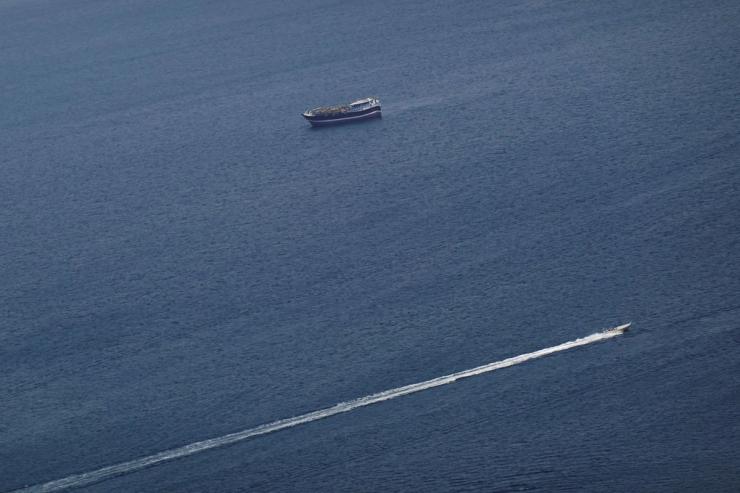
The biggest question in global energy markets this week is how willing and able Iran will be to enforce the closure of the Strait of Hormuz, and defense experts are warning not to underestimate the country’s capabilities.
On Monday, a senior Revolutionary Guards official told state media that the strait, which carries about 20% of global oil and LNG traffic, is “closed” and that Iranian forces “will set those ships ablaze” if they try to pass. Time is a critical factor: If Hormuz traffic is disrupted for a week or so, market prices should settle down quickly, and at around $80 per barrel, prices are still much lower, inflation-adjusted, than they were during most of the war in Iraq. But a closure much longer than that could trigger the biggest energy bottleneck in decades, with dire consequences for consumers.
Iran has a few options for enforcing this closure, defense experts told me. They could confront tankers directly with their own warships, but that would increase their vessels’ vulnerability to engagement with US forces, which, President Donald Trump said on Sunday, have already sunk nine Iranian warships.
The second option is to use land-launched missiles and drones to target passing ships. As of Tuesday morning, at least seven tankers, including one of Iran’s own, have been damaged in this way. Attacking those missile launchers is a high priority for the US and Israel; according to Israeli media, half have already been destroyed.
The third option is to lay sea mines in the Strait, which would make the situation “much more complicated,” Jonathan Panikoff, a former senior US intelligence official and director of the Atlantic Council’s Scowcroft Middle East Security Initiative, said. In the past, Iran has even used civilian vessels to lay mines, Mark Montgomery, a retired US Navy rear admiral and senior fellow at the Foundation for Defense of Democracies, told me. Sinking a few warships won’t solve the problem, he said: “We really need to destroy all Iranian Navy storage, logistics, and command facilities, so there’s a lot of work to be done.”
In the meantime, US Secretary of State Marco Rubio said the administration will announce on Tuesday measures to blunt the impact of price spikes on American consumers — but reportedly will not consider selling oil from the Strategic Petroleum Reserve.

Notable
China is, for now, well insulated from oil supply shocks stemming from the conflict in Iran, as Beijing has spent months stockpiling crude to prepare for possible disruptions, with enough to cover 200 days of imports.