




The News
Drone strikes in retaliation for the US-Israel attack on Iran have hit multiple Amazon data centers in the United Arab Emirates and Bahrain, raising concerns about the physical security of data centers across the region.
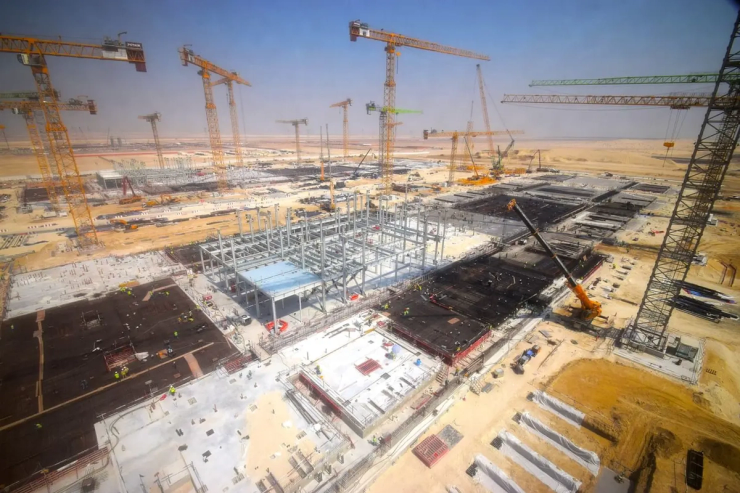
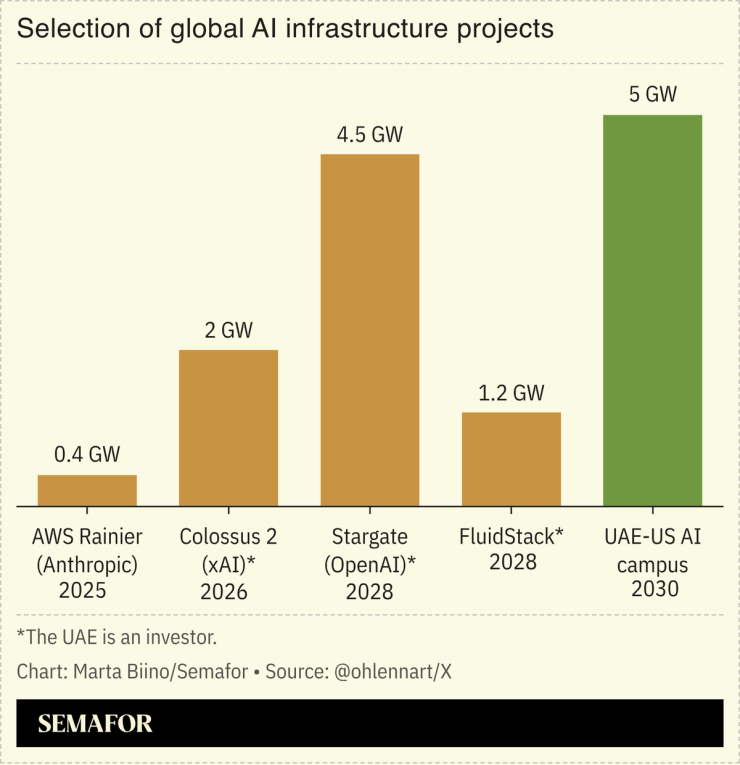
The Gulf has sunk billions of dollars into building AI infrastructure — touting access to swaths of land and huge quantities of cheap, clean energy — in hopes of becoming a global hub for AI. Global tech companies like Microsoft, Amazon, and Nvidia have followed, as well as private-equity giants like KKR. The problem is, a lot of these data centers are soft targets that can easily be damaged by missiles and drone attacks.
“The physical risks have increased substantially” for data centers in the Middle East, said Murat Kantarcioglu, a computer scientist at Virginia Tech who specializes in data security.
Even before the war, companies had begun taking measures to protect their global infrastructure against politically motivated and other attacks. But the hardened assets come at a premium.
Building new data centers in underground, nuclear-hardened bunkers, which some companies began doing recently, costs more than $2,000 per square foot in the US, according to Larry Hall, who owns Kansas-based bunker real estate firm Survival Condo. That’s twice the cost of constructing a facility from scratch above ground, and building in the Middle East can be more expensive depending on the terrain, he said.
Given the average data center spans the size of a Manhattan city block — or London’s Trafalgar Square — an underground concrete shelter of that size might go for $200 million, and that’s before factoring the costs to cover energy, cooling, and servers. Still, most of Survival Condo’s clients are looking for facilities smaller than that. The cheapest facility the firm has priced was for an existing 54,000-square-foot bunker costing $45 million.
The cost per facility may be a drop in the bucket given the massive funds tech companies plan to invest on AI buildout, but putting data centers underground — after fighting for land above ground — introduces a new level of complexity that could slow down tech developments. Hall estimates it would take more than three years to build an underground facility, compared with the one and a half to three years for above-ground data centers. It also requires advanced technologies for energy production and cooling, and complicates maintenance and expansion.

Know More
Few data-center companies are actually taking the leap to build underground. Many, however, are implementing a series of security features for their above-ground facilities based on the location’s risk profile, said John Bekisz, vice president of security consultancy Guidepost’s data center and critical infrastructure practice.
Protecting against missile attacks “has not been the top priority,” he said, but there have long been concerns about domestic and foreign terrorism — in the form of car bombs and smuggled explosives, for example — that data centers are defending against. Security measures include blast-proof windows, doors that can resist forced entry, cameras, fences, and vehicle barriers. Security guards have also begun using AI to help them more quickly detect threats, and some data centers have implemented drones to expand their surveillance field of view, as well as autonomous vehicles and wheeled humanoids to patrol facilities, he said.
Wartime attacks on data centers will, in turn, change their security landscape as a whole, he said. As they are increasingly seen as critical infrastructure, governments will become more involved in their security, implementing minimum security standards and audits, he said.
Still, bunkers and above-ground physical security measures can only go so far in protecting a facility, Virginia Tech’s Kantarcioglu said. The cheapest way to protect data is to duplicate it and store copies in different regions, especially for cloud providers like AWS and Google, whose facilities are so large that putting them underground would be costly and adding additional security measures to existing data centers would take significant time and effort, he said.
While it is often more affordable to store data in the same region — because the data transfer is cheaper — he recommends paying more to move copies to a different location for maximum security.

Notable
- Data centers in the Middle East need to be built with similar government-led protections as energy assets, Jesse Marks argues in a Substack post. “The physical AI stack is no more inherently vulnerable to ballistic missiles than an oil refinery or a desalination plant, both of which Gulf states have long defended as critical national infrastructure,” he writes. “The operational question is whether data centers are being integrated into those existing defense umbrellas or treated as commercial real estate outside the security perimeter.”