




Ben’s view
They say that if you don’t like Dubai, you won’t like the future.
That’s usually a note of cultural snobbery — the shiny, booming expat city is a place for “social media hotel-gym reviewers called things like Brianna” and “people who eat at Nobu on a non-ironic basis,” a Financial Times columnist sniffed recently. I suppressed a little of that snobbery last month to admire the largest fountains in the world, at the base of the world’s tallest building, amid a thrilled global crowd, and to drink Peronis on the deck of a luxury hotel at a party hosted by Monocle, the house brand of transnational luxury.
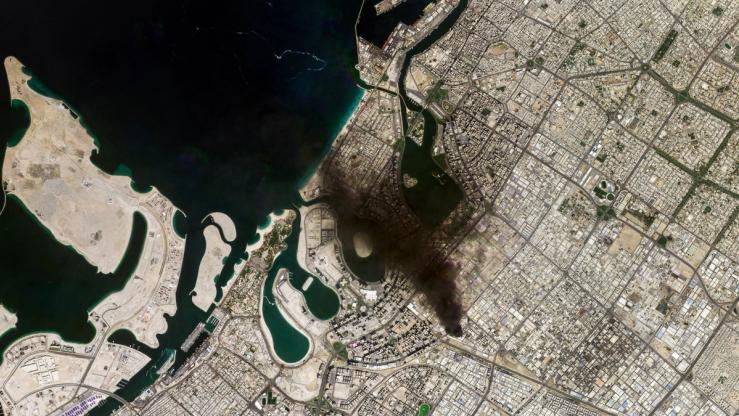
But Dubai represents a different future, too: a vulnerable outpost of global capital, insanely exposed and yet defended to the hilt by American power. The drones and missiles that got through the UAE’s impressive, American-made air defenses consummated what had always been a lingering, aggressively suppressed sense of vulnerability. At that Monocle party, we looked out on the “seven star” Burj Al Arab hotel; on Saturday, it was hit by debris from an intercepted drone.
These places have never felt closer to Washington, where foreign policy philosophies — the transatlantic security architecture, the “pivot to Asia” — have been replaced by the frantic pursuit of global capital. The Trump Cabinet is packed with finance, real estate, and energy executives with deep ties to the region. As the regional crisis escalated last month, members of Congress tweeted fond personal reflections on various Gulf monarchs.
Foreign policy thinkers can debate the philosophy of this new United States — whether it’s now an empire, a hegemon, or something else. Trump, as personalist and improvisational as Mohammed bin Salman, has no interest in resolving that identity crisis.
Trump ran on a promise to withdraw American commitments around the world and launched a global trade war on vaguely isolationist lines. Now his old promises are being thrown in his face by both populist Republicans and Democrats as he takes aggressive military action around the world.
But one way to see Trump is as a basically reactive figure. The thing he’s reacting to is a new global order whose outlines are emerging regardless of US tariffs, populist ideologies, or policy pronouncements. Taiwan and Dubai aren’t important because the US government made them so; they’re vital hubs in a network shaped by US hyperscalers and private equity funds, as well as quieter Chinese companies and investors. They’re hubs of a new order in which the centers of wealth and power have shifted decisively south and east.
Trump’s America has mostly shed its moral commitments around the world, but it’s still an unabashed defender of global capital. Now the question for America First is the same one many empires face: How far do you go to defend your vulnerable, far-flung outposts?
In this article:

Room for Disagreement
Stephen Walt in Foreign Affairs described Trump’s foreign policy as “predatory hegemony”: “The bottom line is that acting as a predatory hegemon will weaken the networks of power and influence on which the United States has long relied and which created the leverage that Trump is now trying to exploit… Maybe not today, maybe not tomorrow, but a backlash could come with surprising swiftness. To quote Ernest Hemingway’s famous line about the onset of bankruptcy, a consistent policy of predatory hegemony could cause US global influence to decline ‘gradually and then suddenly.’”

Notable
“It’s a different approach to war,” the former John McCain adviser Richard Fontaine, who now leads the Center for a New American Security, wrote, noting that the attack was launched with “no attempt to build a national consensus behind war, no ground component to attain overwhelming force, no clear objective. Instead Trump has preserved the flexibility to adapt based on how things unfold.”