




Alexanderia Baker-Haidara’s view
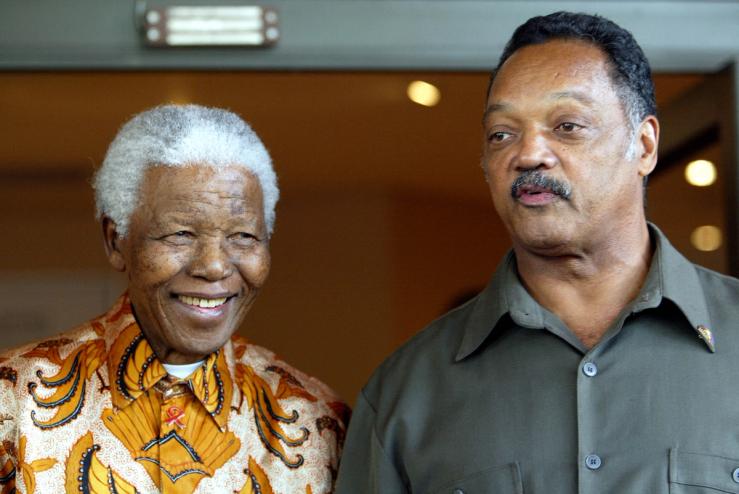
The passing of Rev. Jesse Jackson this month comes at an inflection point. Much of the modern US-Africa policy architecture he helped lay the foundations for is being methodically unraveled under US President Donald Trump’s second-term agenda.
Start with the most jarring symbol: the shuttering of the United States Agency for International Development. For six decades, USAID functioned as Washington’s development backbone on the continent — imperfect, often bureaucratic, but central to US influence in health, education, and governance. In the 1990s, when Jackson and a bipartisan coalition reframed Africa as strategic terrain rather than charitable afterthought, dismantling that infrastructure would have been politically inconceivable.
Jackson understood something many policymakers still miss: America’s racial politics at home shape its credibility abroad. “America’s past racial ideology led to a disregard not only of African Americans, but of the entire African continent,” he said in 1997. For him, civil rights and foreign policy were inseparable.
It was Jackson’s activism that helped drive pressure on the Reagan administration and US corporations to divest from apartheid South Africa. Later, as US President Bill Clinton’s special envoy for democracy and human rights in Africa, he pushed electoral reform and civil society at a time when multiparty politics was spreading across the continent.
There is a sharp irony in today’s rhetoric. The Trump administration’s “trade, not aid” mantra echoes Jackson’s own long-standing argument, dating back to his groundbreaking 1984 Democratic National Convention speech. Jackson believed durable partnerships would come through market access and investment, not dependency. That logic helped lay the groundwork for the African Growth and Opportunity Act, which expanded duty-free access to US markets and anchored a new era of commercial diplomacy.
But slogans are not strategy.
AGOA has been granted only a one-year extension, injecting uncertainty into supply chains that require long-term predictability. Anti-diversity directives have narrowed how Washington frames engagement with majority-Black nations. And the dismantling of USAID has frozen or delayed programs that took generations to construct — from HIV/AIDS prevention to democratic institution-building.
Having served at USAID in Nigeria last year, I saw how fragile those gains were even before this retrenchment. African democracies are faltering, some ceding ground to Russia and China. In 2025, Africa had 10 elections, with Cameroon, Tanzania, and Côte d’Ivoire erupting into political violence — the institutional ballast that once steadied US engagement is lighter. Meanwhile South Sudan edges toward a humanitarian crisis.
The drift carries consequences. By midcentury, one in four people on Earth will be African. The continent’s economic weight and geopolitical relevance are rising, not receding. To downgrade Africa in US strategy is not a cost-saving measure; it is a long-term gamble with American influence.
Jackson argued that moral authority and economic strength were intertwined. His legacy is not nostalgia for a more activist era. It is a reminder that US–Africa policy was deliberately constructed — by campaigners, lawmakers, and diplomats who believed the continent mattered to America’s future.
Today, that belief feels less bipartisan and more contested. Whether Washington rebuilds a coherent, credible Africa strategy — one grounded in trade certainty, institutional capacity, and mutual respect — will determine whether Jackson’s vision endures or becomes a relic of a different political age.
Alexanderia Baker-Haidara is a former US diplomat with the State Department.

Notable
- A reporter reflects on Jesse Jackson’s “enduring dignity” in an audio segment for NPR.