




Amena’s view
Venezuela wants its oil industry back. Its interim president Delcy Rodríguez also wants sanctions relief and sovereignty while preserving the nation’s identity as an anti-imperialist state.
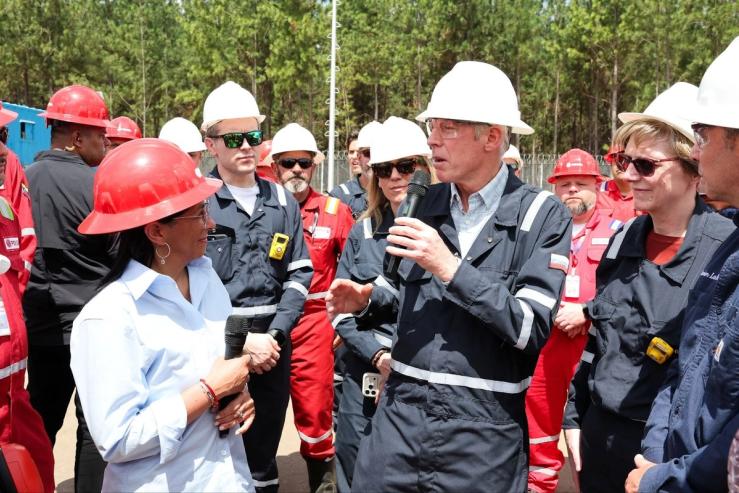
I’m in Caracas — a 24-hour trip from my home base in Dubai — as part of a visit organized by the African Energy Chamber, and have met with private-sector executives, ministers, top officials at state oil company PDVSA, and Rodríguez. Our trip came shortly after US Energy Secretary Chris Wright visited, and at a moment when Venezuelan officials are opening channels to Washington while insisting that the US extraction of President Nicolás Maduro was illegal.
Across Caracas, posters calling for Maduro’s freedom line the streets. The capital itself feels suspended in time, with aging infrastructure and worn buildings. The streets are clean though, a sign of order and resilience. During our delegation’s meetings, officials were hopeful and repeated the same point: Maduro’s Jan. 3 kidnapping didn’t trigger changes within the government. The event is accelerating efforts to negotiate economic relief.
Government and business leaders share a sense of optimism that a window of opportunity is opening. Some said US sanctions could be lifted within days, creating a sense of urgency among local companies and foreign investors seeking early positioning.
Energy is the prize. Venezuela holds the world’s largest crude reserves, but decades of mismanagement, sanctions, and underinvestment have sharply constrained output. A new hydrocarbon law announced in late January aims to simplify bureaucracy and expand participation models, offering joint ventures, licenses, and production-sharing agreements that provide investors clearer operational control and marketing rights. Several international oil majors including Chevron, Eni, Repsol, and Shell are assessing what role they can play in the country’s capacity buildout plan.
There is also strong interest in Caracas in attracting capital and technology from Gulf states including Saudi Arabia, Qatar, Oman, and the UAE, part of an effort to create a South-South cooperation model that reflects today’s multipolar energy reality.
Venezuela estimates its current production capacity is roughly 1.1 million barrels per day (bpd), and officials said 1.5 million bpd is a feasible target for this year. Beyond that, the country will need extensive and consistent investment to build new infrastructure to support further increases.
PDVSA’s longer-term ambition is to reach 3 million bpd within five years. What surprised me most was hearing industry executives suggest production costs could be squeezed down to $15–$20 per barrel on average, and even below $10 per barrel in some projects. Independent consultants put the cost at $50–$60 per barrel, making much of the extra output uneconomical.
Forecasts aside, the opportunity is real, and first movers may have the advantage. But sustaining momentum will take more than economics — the largest investments will come only after sanctions are lifted, the hydrocarbons law is implemented, political stability is established, and corruption and red tape are reduced. Without that, Caracas may see many visitors but few dollars coming in.
Amena Bakr is the Head of Middle East Energy & OPEC+ research at Kpler, an independent global commodities trade intelligence company.

Notable
- Venezuela’s reformed hydrocarbons law provides better commercial and legal terms for foreign investors, but the lack of clarity on “executive discretion” will make investors hesitant to enter the market, according to energy consultants Wood Mackenzie.