




The News
Wall Street’s top federal prosecutor wants more corporate executives, and fewer faceless entities, in the dock.
The Southern District of New York is changing a longstanding approach to corporate fraud prosecutions, hoping to incentivize companies to flip on their executives and let the government bring individual charges instead of simply fining corporate parents.
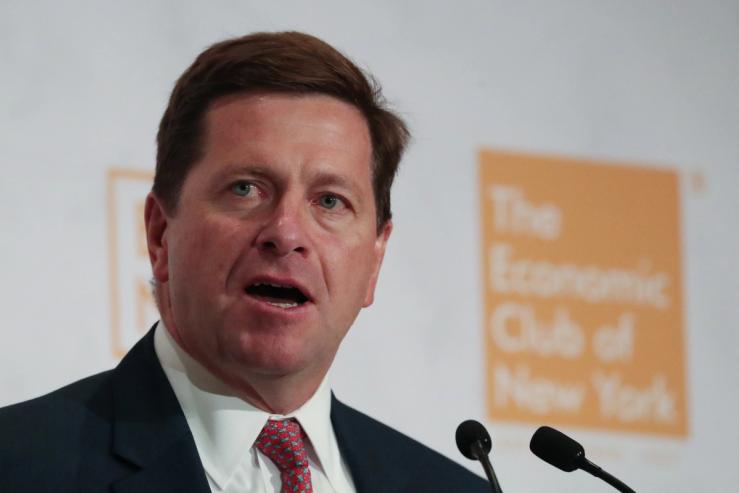
Jay Clayton’s new approach rewards companies for early and full cooperation, including turning over evidence they gather about exactly who did what.
Corporate corruption cases are particularly ripe for individual accountability, Clayton said in an interview earlier this month at the Southern District’s Manhattan offices. “Responsibility for bribes should not be only at the company level; people pay bribes,” he said. It should be “rare” that a company is charged for violating the Foreign Corrupt Practices Act and no individual charges are brought, he said.
Companies must also quickly repay victims, who can wait years for fines to be paid and doled out by lawyers.
“After self-reporting, the only thing companies need to worry about is making victims whole and being maximally cooperative, including providing information about who did what,” Nicolas Roos, chief of the SDNY’s Securities and Commodities Fraud Task Force, told Semafor.
The Obama DOJ pivoted to focusing on individual prosecutions, requiring an “all-or-nothing” obeisance from companies hoping for leniency, though that policy was eased during President Donald Trump’s first term.
In this article:

Liz’s view
Corporate fines, and the occasional guilty plea by the farthest-flung subsidiary company lawyers can finagle, is a deeply unsatisfying form of justice. Fines are paid by shareholders, and the buck rarely stops where it should. The fact that almost nobody went to jail in the aftermath of the 2008 financial crisis — despite piles of emails detailing individual misdeeds — helped fuel populist political turns in the US and Europe.
Clayton’s pivot delivers a firmer hand. But like the former corporate lawyer he is, offers a carrot: Companies will likely jump at the chance to announce that they aren’t being prosecuted and avoid long investigations that can hang over their stock price.
One case to watch is UnitedHealthcare, which says it’s cooperating with a Justice Department investigation into whether it systematically overbilled Medicare. The company said in a securities filing that it “proactively reached out to the Department of Justice after reviewing media reports.” Records of who approved billing practices is the kind of evidence Clayton seems to be after. (It’s unclear which regional DOJ office is handling the case; the company is based in Minnesota, and Medicare would likely fall to the DC branch, though the Southern District of New York’s oversight of banks gives it a long arm.)

Room for Disagreement
Companies don’t necessarily need an incentive to scapegoat, at least among their junior and more expendable ranks. Morgan Stanley fired two traders in 2022 amid a federal probe of the firm’s stock-trading business, but kept the scandal — for which it ultimately paid $250 million and avoided prosecution — from rising further up the executive ranks.

Notable
- Todd Blanche, the Justice Department’s No. 2 officials, has also encouraged his line prosecutors to pursue charges against people, in addition to squeezing companies.
- The Obama administration’s efforts, ushered in by the Yates Memo, yielded scant results, a Duke Law School study found.