




The Signal Interview
In the AI era, Omar Abbosh notes, “almost anybody can make up anything.” That encourages Pearson’s CEO to believe that the prospects for one of its most profitable businesses are bright. The self-styled “lifelong learning company” is known to generations of students for its textbooks, but about 80% of its earnings now come from assessing the skills of people in formal education, and in professions from nursing to cybersecurity.
Pearson’s “enterprise learning” division drives a relatively small slice of the London-listed group’s revenues. But Abbosh sees an opportunity to turn it from a vocational qualifications business into a partner for companies looking to equip staff with new skills “so that they can augment their roles with AI, rather than hoping that AI does everything, which it will not.”
Pearson’s push into workplace reskilling comes as predictions of the technology eliminating jobs are jostling with calls for “pro-worker AI.” As CEOs such as JPMorgan Chase’s Jamie Dimon prepare “huge redeployment plans” for staff whose functions can be performed by AI agents, Abbosh is betting that they will get the greatest results by readying employees for a future of human-AI collaboration.
Don’t listen to AI companies on AI
As investors push CEOs to show that they are both deploying AI scale and getting a return on their investments in the technology, the temptation is to say, “Well, maybe I can just do some automation and cut costs and reduce headcount,” Abbosh says. But simply handing roles that humans once performed to AI agents is not yielding the productivity gains executives hoped for, he says, because it does not give them new business models or new revenue growth. What’s more, he warns, that approach risks sparking a “techlash” from employees who feel disempowered and disconnected.
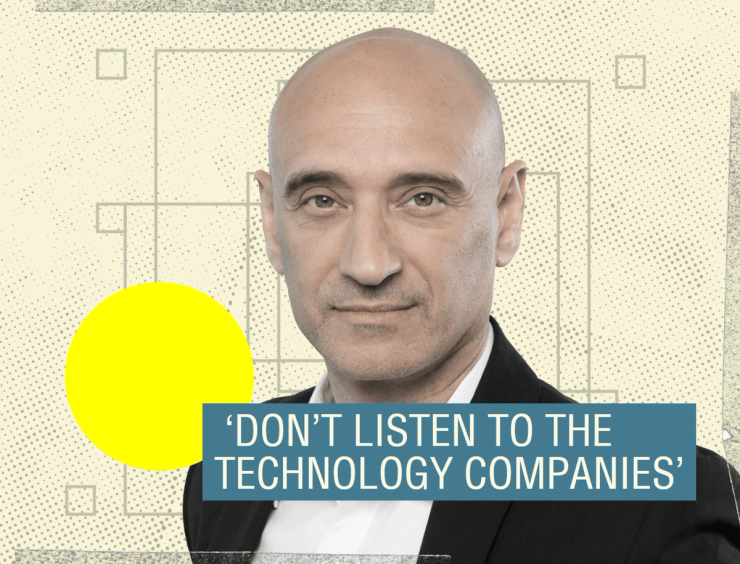
“What I’m running around telling all the people I’m talking to is, don’t listen to the technology companies on the future of AI and jobs, because they’re not qualified,” Abbosh says. The former president of Microsoft’s Industry Solutions business is no Luddite, but he adds that when a tech company says, “I’m building a machine that will be God,” it may have more success in raising capital. “But it’s also fear-inducing and likely wrong.”
Employers “need to be very mindful about the rate of AI diffusion, and how it really works with people,” he says. Pearson has commissioned research claiming that using the technology to eliminate drudgery and enhance employees’ work could have trillions of dollars of economic upside. But it also argues that companies’ traditional methods of training their people to do new things are not up to the challenge that AI poses.
Shifting from training courses to ‘learning cartridges’
“The CEO now has to become the chief of learning and development,” Abbosh says. “In the past, that role reported to HR. In the future, it’s a mission-critical role, because you have to bring your people with you on this journey” if you want to change your company’s way of working.
Pearson is pitching customers a so-called DEEP framework for diagnosing where AI can augment work, by embedding learning, evaluating progress, and prioritizing education as a strategic investment. But behind the snappy branding lies a simple principle: “Meet people where they are at work.”
When Abbosh talks about “embedding learning,” for example, he means weaving training seamlessly into people’s workflows. One example is Communication Coach, a tool Pearson built initially for people who are non-native English speakers, which gives feedback to Microsoft Teams users after each meeting on how to adapt their language to have more impact.
Rather than taking your people away from their day jobs to study a new skill that they will soon forget if they don’t use it routinely, Abbosh says, “give them these little learning cartridges as they go.”
Disruptions and distractions
Pearson has had to build an enterprise sales force from scratch, but Abbosh sees the corporate market as “pure upside and growth” for a business that once focused on institutional education customers.
As he targets this new market in partnerships with AI hyperscalers and IT services companies including IBM and Cognizant, he insists that AI will not disrupt any of Pearson’s existing revenue streams.
“If you cease to innovate, you will be disrupted, no matter who you are, no matter what industry you are in,” so Pearson must continue to innovate and adopt new technologies, he says.
But, he adds, education systems are “very mindful” of the risks technology can pose. Education policymakers are already concerned that digital devices can become “weapons of mass distraction,” he notes, and suppliers with new software and content have to ensure it is aligned to existing curriculums, standards, and teaching methods.
Abbosh is making the case that AI will increase demand for educational and training content, whatever other disruptions it brings.
“As long as there’s demand for a thing, then the fact that you drive down the cost of expertise just means you’ll do more of it,” he says, citing the economic theory known as the Jevons paradox.
“A lot of people are making these false predictions, as if it’s doom tomorrow. It’s just wrong,” he says. “Humans have a whole set of comparative advantages, even if AI is better at everything.”

Notable
- Labor markets are evolving faster than education, training, and talent systems can adapt, the World Economic Forum warned recently. With an estimated 22% of jobs at risk of disruption by 2030, urgent investment in human capital is needed to sustain growth, it argued, saying that more spending on skills could boost GDP by $6.5 trillion.
- Accenture has told investors that it expects all its staff to “retrain and retool” to build the AI capabilities its clients need from them. It will be “exiting people” who are unable to adopt the new skills.