




Cameron’s view
As African leaders gathered at the annual African Union summit in Addis Ababa last week under the seemingly non-urgent theme of “water sustainability,” there was only passing acknowledgement that “silencing the guns on our continent remains a challenge.”
Yet the cadence of conflict — and the threat of new war — hung low over the horizon. It never felt proximate enough, however, to darken the mood of the festivities.
Ethiopian Prime Minister Abiy Ahmed was keen to show off his clean and modern metropolis, financed and looking like a “mini-me” version of his Emirati backers in Dubai. As host of the three-day summit, Abiy’s heads of state guests showed deference by making no mention of his increasingly bellicose calls for sea access — and the indirect threat to Eritrea, its neighbor. Nor was there talk of Asmara’s response: The mobilization of troops on the border and expanding external support to Tigrayan, Amhara, and Oromo dissident groups.
There are also reports of a massive Ethiopian troop mobilization, the emerging exodus of civilian populations from the border region, and the muzzling of international media trying to shine a light on the steady march to war: An unspoken and uncomfortable calm before the storm.
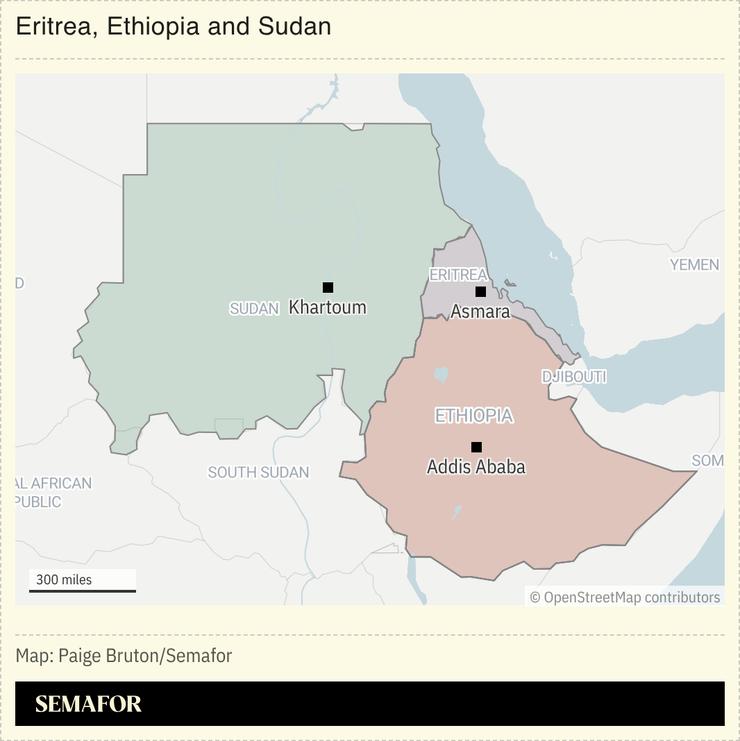
As the AU summit concluded, I took a two-hour flight to neighboring Khartoum. There, I asked Sudan’s military leader, General Abdel Fattah al-Burhan, what he made of the instability surging to the country’s east. I also asked about reports that the UAE had commandeered an Ethiopian military base near Sudan’s border to supply the Rapid Support Forces militia, with whom he has been locked in a nearly four-year war.
Might Sudan get drawn into an Ethiopia-Eritrea conflict or them into Sudan’s?
“We want nothing to do with Ethiopia’s war and we don’t want them involved in ours,” he told me. When I asked about the reports of weapons coming to the RSF from Ethiopia, he said: “I have requested many times to visit Addis to discuss this with the Prime Minister, but he has not yet responded.”
Such a visit could be the ticket to turning down the temperature in a rapidly accelerating sub-regional showdown whose costs will be borne by the sub-region’s approximately 200 million people.
Burhan understands the price of war. As he is fighting to drive the RSF from central Sudan back into the western Darfur region, he is also trying to rebuild his capital that is a smoldering pile of ruin.
The International Organization for Migration reports that more than 1.3 million Khartoumites have returned in recent months but are struggling to access public services or earn incomes.
Until a ceasefire is signed and the US succeeds in brokering a deal among the Gulf states who back Sudan’s opposing forces, Sudan is likely to be locked out of any reconstruction funds that will be essential for stabilizing the country and restoring livelihoods.
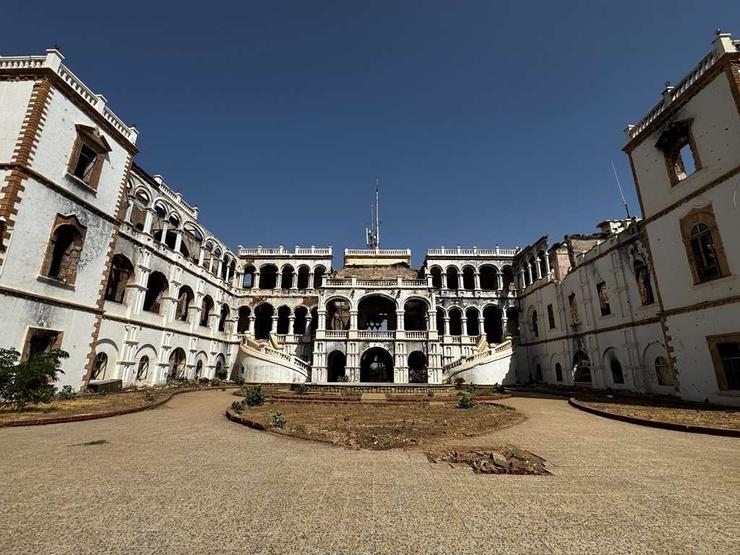
After three days of driving through the capital, it was clear that Khartoum’s development has been set back decades. The symbols of its rich history: the British colonial-era palace, the national archives, and state museum have been all but erased.
With the war increasingly breaking down along the country’s predominant Arab and African ethnic groups, Sudan faces the task of rebuilding a national identity along with all the other trappings of a state. Meanwhile, Ethiopia is at risk of losing those same things as its history and identity appear on a collision course.
The AU would have been the ideal organization to draw a line between these two neighbors and use its voice to help one find peace and the other avoid war.
Instead, the elephant in the room at last week’s summit went unremarked, increasing the odds that the sub-region takes another lap on the cycle of violence and insecurity it seems trapped in.
Cameron Hudson is an independent analyst focused on African peace, security, and governance.

Notable
- The history behind the growing risk of war between Ethiopia and Eritrea is explored by a political science lecturer in The Conversation.