Nigeria’s central bank cut its interest rate by far less than most economists expected in a move to quell inflation ahead of elections next year.
Slowing price rises and higher foreign exchange reserves had prompted predictions of a larger rate cut to shore up growth in one of Africa’s biggest economies.
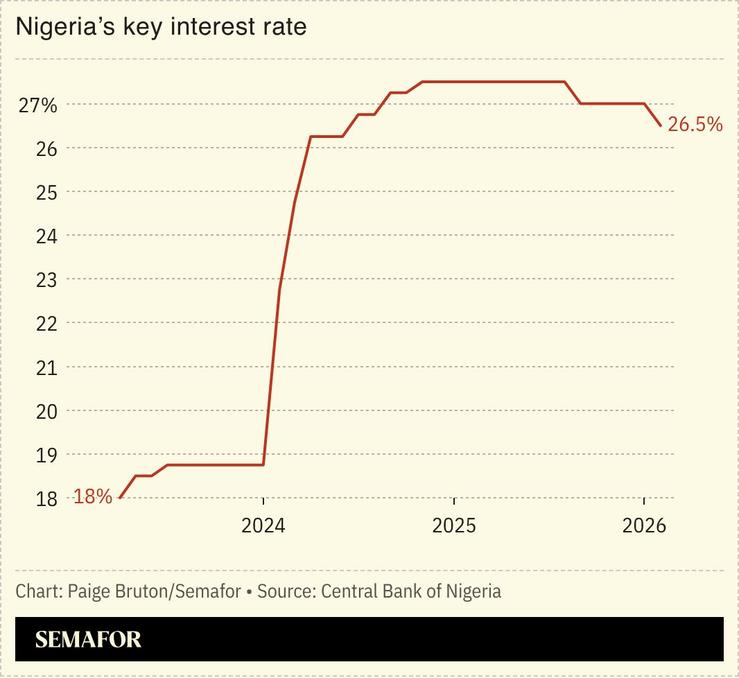
The decision to cut the benchmark rate by just 50 basis points took it to 26.5%.
Razia Khan, Standard Chartered’s head of Africa research, said the “cautious” move reflected “concern over potential global risks and their impact on oil prices,” as well as an “unwillingness to be too complacent on inflation.”
Nigerian President Bola Tinubu’s moves to shore up public finances — such as scrapping costly fuel subsidies — have been praised by the World Bank and attracted foreign investors but sparked a cost of living crisis. Inflation has since slowed — the rate fell to 15.1% year-on-year in January, marking the tenth consecutive monthly decline. But the central bank governor has warned increased fiscal spending ahead of the elections could threaten price stability.