




Tim’s view
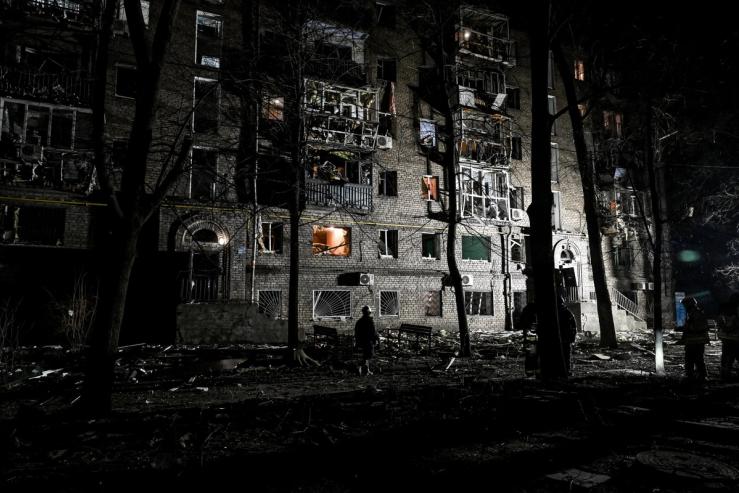
As the full-scale war in Ukraine enters its fifth year, the world has learned what an unprecedented, relentless campaign to target energy infrastructure can, and can’t, achieve.
Russia’s weaponization of energy against Ukraine started months before the invasion of February 24, 2022, when Moscow choked off the supply of natural gas to Europe as a warning about what support for Kyiv would cost. And energy was among the main reasons Russian military planners chose this particular date: It was the day that electric grid officials in Ukraine, Russia, and Europe had jointly agreed to trial a disconnection of Ukraine’s grid from Russia’s.
In what would prove to be a recurring theme of the next four years, Ukraine’s energy engineers were able to move much faster than anyone expected to avert rolling blackouts. But that became more difficult once Russia ramped up its drone, missile, and artillery assaults, eventually carrying out at least 1,894 separate attacks on energy infrastructure between February 2022 and today, according to the ACLED database.
The pace and devastation of those attacks reached their peak this winter. For a few weeks in late January and early February, during the coldest winter in Kyiv in a decade, thousands of households in the capital — mine included — were without heat, with only sporadic electricity, and occasionally without water in a not-always-successful effort by municipal officials to prevent pipes from bursting. For the most part, the heat is back on. But ongoing power cuts continue to be a major drag on the national economy. And European countries are increasingly divided about whether, or how, to help Ukraine fight back. But if the intent of Russian President Vladimir Putin was to force Ukrainians to capitulate, it’s clear that the most expensive, focused, and prolonged military campaign against energy infrastructure in history has failed. “They’re trying to scare us,” Anastasiia Vereshchynska, CEO of the European-Ukrainian Energy Agency, a trade group, told me. “I’m stressed, and I’m tired, and less productive. But there’s no way we are giving up in these circumstances.”
Ukraine has also, by necessity, pieced together a new system that is both more secure and more sustainable than the old one. Most households and small businesses have their own generators and/or battery storage systems. Rooftop and commercial-scale solar is everywhere. The big energy companies have learned hard-won lessons about how to rebuild quickly, how to diversify supply chains, and how to work closely with the military to defend their assets against drones and other novel threats. And they’re replacing the old reliance on Russian fossil fuels with new trade relationships, with the US at the center.
US President Donald Trump may not always seem like a stalwart ally of Ukraine. But Alex Riabchyn, the chief international and sustainability officer of Naftogaz, told me that working on energy deals — he’s in Washington this week shopping for more US LNG — has brought the two countries closer: “We see reciprocity. It’s transactional, but we’re quite happy with it.” And while the frontline situation remains bogged down, the melting ice on Kyiv’s sidewalks this week is a sign that conditions on the energy front are about to improve. “The most positive thing is that spring is coming,” Riabchyn said. “That will improve everyone’s morale.”

Notable
Russia’s oil and gas revenues dropped over the past 12 months, even as the country’s oil exports increased, as sanctions have forced Moscow to sell at lower prices, new data released by the non-profit Centre for Research on Energy and Clean Air found.