




The Scoop
One of the English-speaking world’s oldest publications has contracted an age-related condition: Its audience, too, is aging. Since 2015, the median age of an Economist subscriber has risen from 51 to 61, according to figures shared at a recent meeting and described to Semafor by two people.
Of course, the magazine was never going to be a Gen Z sensation, and has always appealed to what some employees would describe as a “mature” audience. Indeed, those mature readers have made “the paper” — as it’s known internally — one of the most reputable and consistently profitable publications in the history of English-speaking news media.
But the audience stat comes at a moment of transition for the magazine itself, and will pose hard questions for what are likely to be a new generation of investors and managers.
One of The Economist’s longtime owners is selling her stake. The publication’s top editors are jockeying for the editor-in-chief role, a powerful position at a magazine where the writers, rather than the business side, traditionally control the direction of the enterprise. And at the heart of these challenges is one familiar to every media leader: A publication famed for its brilliant, monolithic anonymity faces a moment of intense individualization and personalization.
In this article:

Know More
The Economist has been covering markets, finance, and global affairs since 1843, watching rivals come and go from its perch. It has an unusual, authoritative house style: no bylines, one single, unified voice.
Its longevity can be credited in part to a few smart digital bets over the past three decades. When many publications let down their paywall at the tantalizing prospect of chasing massive audiences online through social platforms, The Economist remained skeptical, choosing a model that emphasized subscription and reader revenue over advertising. The publication expanded its expensive intelligence business aimed at corporate readers, and also struck gold on a few side projects, including its popular podcast.
The result has been consistent profitability: In its interim financial report in November, The Economist Group reported half-year revenue of £170 million, 4% higher than the previous year, with operating profits of £20.2 million, a 23% improvement over the previous year. The publication has 1.25 million subscribers. While some close observers internally have quibbled with the number, noting that it seems to include cheap podcast-only subscribers, it puts the publication in a tiny global top tier, on par with The Atlantic and The New Yorker.
Still, in recent years lingering questions about the paper’s long-term future and stability have emerged, according to eight current and former staff shared with Semafor, driven in part by investors who —through a complex trust — have little control.
Lynn Forester de Rothschild announced publicly last year that she wanted out of the business, after unsuccessfully making the case for higher profit margins and larger dividends, a person familiar with the process said. (Rothschild and Lazard, which is handling the sale, did not respond to multiple requests for comment.)
Her family quietly passed up its own deadline to sell in January, prompting questions about whether the asking price was too high and whether The Economist’s powerful trustees were able to agree on a suitable buyer. No one entity can own more than 50% of the group’s shares, according to the publication’s articles of association.
After the sale process was announced, some global media rivals, including Axel Springer, looked into The Economist, but came away with the sense that the family and the paper are looking for a passive buyer that would please the publication’s trustees and not seek to meddle too heavily in its editorial operations. (Axel Springer has been sniffing around for deals in UK media, and announced last week that it was joining Dovid Efune’s bid to buy the Telegraph.)
While the sale of the Rothschild stake has been delayed, one person familiar with the discussions said there has been significant interest, and a sale will likely be completed in the coming months.
But the pending sale has had another, more immediate impact: It upended the search for a new editor-in-chief.
In the wake of the announcement in October, The Economist’s board asked top editor Zanny Minton Beddoes to stay on for another two years, an unexpected extension of the publication’s informal ten-year term rule. The decision prompted the sudden departure of foreign editor Patrick Foulis, who many believed was being groomed as Beddoes’ successor.
Foulis’ exit inspired mixed emotions among staff. But it was shocking enough for someone to leak it to the media newsletter Breaker — not a small decision in an organization that staff say is not particularly leak-prone, a testament to its strong internal culture and what most described to Semafor as decent pay.
Still, it’s not totally impenetrable: Two people close to the situation emphasized that the decision for Foulis to succeed Minton Beddoes was never close to final, and Minton Beddoes’ goal had always been to present a list of several strong candidates to the organization’s trustees. Three people who spoke to Semafor said the likely frontrunners now include editor John Prideaux, Adam Roberts, Andrew Palmer, and Charlotte Howard, who is slated to become the paper’s US editor in June. She may be the most likely of the candidates to succeed Minton Beddoes at a publication whose business is increasingly reliant on US subscribers and advertisers.
Minton Beddoes remains fairly popular internally. She’s also been a strong public face for an otherwise faceless organization.
But there have been some recent editorial concerns, particularly in the US. Minton Beddoes has attempted to steer the publication rigorously away from the political left, and expressed concerns in meetings about the prospect of Republican readers in the US tuning out The Economist if it appears too liberal or too anti-Trump. The strategy has occasionally caused tension within the newsroom. After the assassination of conservative activist Charlie Kirk last year, the publication ran a piece praising Kirk’s style. That piece irked some staff who felt that it papered over some of Kirk’s controversial statements, and expressed their distaste to leadership during an editorial meeting.
Others have questioned how The Economist can successfully remain a faceless print monolith in an era of personalization. For now, the publication is largely prioritizing operating within its own digital ecosystem. It keeps a hard paywall on its content to encourage users to subscribe, and once they have joined, funnels users towards The Economist’s mobile app and tries to keep them there.
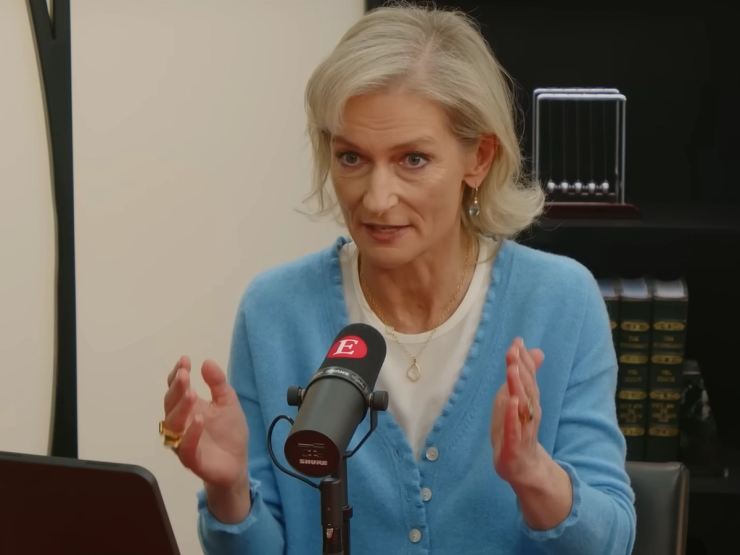
Minton Beddoes and Economist President Luke Bradley-Jones’ solution to the rise in interest in influencer-driven content has been the development of Insider, a video-first editorial series launched late last year intended to make The Economist’s previously anonymous personalities into recognizable digital video stars.
The publication has poured millions of pounds into the effort, building out a TV-quality studio and hiring experienced video staff. Initial results have been modestly encouraging; interviews with world leaders like Israeli Prime Minister Benjamin Netanyahu made news and garnered millions of views across The Economist’s social channels, as well as being available in its own app.
But as a generation of media companies have found, it’s hard to channel social scale into revenue. The company’s leadership had originally conceived Insider as a premium add-on to the Economist’s subscription, but decided that the demand wasn’t great enough to sustain the video series as its own offering, and folded it into the existing magazine subscription. People close to the situation also told Semafor that the publication has been slightly disappointed with its failure to book more world leaders.
“A key driver of overall subscriber engagement and growth is our new Insider video product, which has proven deeply popular with our audience and resulted in unprecedented digital reach,” a spokesperson for the Economist said. “In an era of ubiquitous artificial intelligence, this new artisanal product is showcasing the human intelligence that makes The Economist unique.”

Max’s view
The Economist continues to demonstrate that rigorous, text-based journalism can be a good, steady business.
But having dodged the traps of the social media news era, The Economist now faces looming long-term structural challenges that may be more difficult to avoid.
As talented journalists go independent on Substack and YouTube and other legacy publications like The New York Times lean into personalization in nearly every element of their business, The Economist has resisted change. That could limit the publication’s reach at a time when news consumers increasingly want their news from individuals rather than institutions, and could continue to be a recruiting challenge — Economist staff have long grumbled that it is harder to get on TV or get poached for another job after writing under a pseudonymous byline.
Still, podcasts, newsletters, and now video shows, all hosted or written by Economist personalities, are taking up an increasing share of effort and investment.
It also remains an open question whether the publication can continue to position itself as the flagship anti-populist, pro-free-trade publication at a time of rising global populism on the right and left. The paper, which endorsed Vice President Kamala Harris in the 2024 US presidential election, continues to find itself aligned with the Democratic Party — not the most comfortable home for a publication that has historically championed big business, low taxes, and small government.

The View From ‘The Paper’
In a statement to Semafor, a spokesperson for The Economist noted that the company had delivered strong results in subscriptions, revenue, and profit, and the organization had grown its subscriber base in 2026.
It also emphasized that while its median core subscriber base has gotten older, its additional subscriptions including its “Pro” and Podcasts+ subscribers have “successfully brought in a significantly younger cohort of users, ensuring The Economist is reaching the next generation of customers.”
“The Economist continues to produce world-class, award-winning journalism in multiple formats,” the spokesperson told Semafor.