


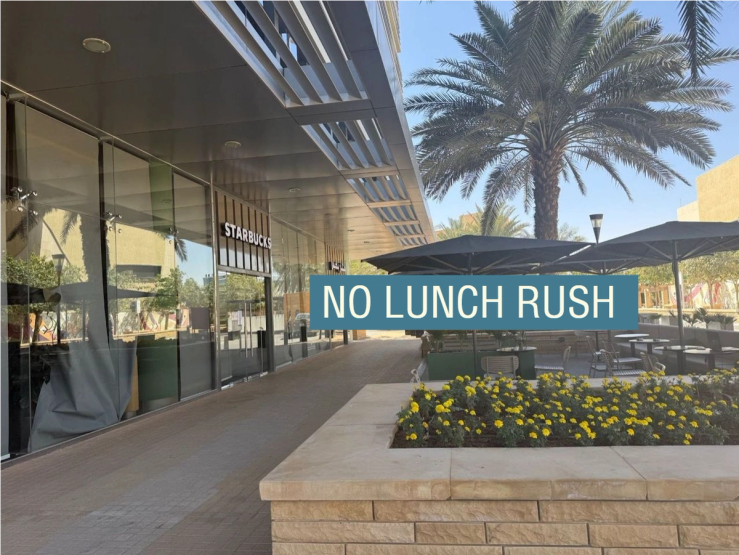

The Scene
Riyadh residents are finding that eating out during daylight hours is getting slightly easier as the Muslim month of fasting begins, in the latest sign of the city gradually loosening social restrictions to attract more foreign workers.
While many mall food courts are closed in the day during Ramadan, some restaurants and cafes are choosing to open and serve food, or offer takeaway service for visitors or those ordering through food delivery apps. Some hotel restaurants, which previously would only provide room service to guests, are also staying open.
While still far from a wholesale opening, it’s a step change from previous years when Ramadan fasting was strictly enforced in the Saudi capital. But it remains a sharp contrast from neighbouring UAE, where restaurants and cafes remain open throughout the month. Dubai loosened Ramadan restrictions in 2021 in a bid to kickstart its tourism industry after COVID lockdowns. Visitors to the city now barely notice any changes during Ramadan.
A handful of eating establishments in Riyadh’s King Abdullah Financial District, the city’s business hub, were open on Wednesday and Thursday as Ramadan began. Most were closed until iftar, the meal taken at sunset when Muslims break their fast.
At least one cafe in the diplomatic quarter, an area housing foreign embassies and diplomats, is open this year. Staff at several cafes said this was the first time they had opened during Ramadan. The open eateries were sparsely filled and had attracted a mix of Saudis and expatriates.

Know More
Traditionally conservative, Riyadh has been rapidly transforming under Crown Prince Mohammed bin Salman. A decade ago fasting was strictly enforced: All restaurants were closed during daylight hours under the watchful eye of religious police who also ensured no one was eating or drinking in public.
The Mutawa, as the religious police are known, had their powers significantly weakened in 2016. That was followed by a series of social restrictions being overturned, including an end to the ban on women driving in 2018, allowing stores to remain open during prayer time from 2021, and permitting unrelated men and women to mix in public.
Now, Riyadh hosts music concerts, desert raves, and a store where non-Muslims earning more than $159,000 a year are allowed to buy alcohol.
The city’s population is forecast to grow to 9.6 million by 2030, by which time expatriates will outnumber Saudis, according to a 2024 report by real estate consultancy Knight Frank. The government is also investing heavily in making the city a more desirable place to live, building parks and entertainment areas.
As is often the case when the country eases social restrictions, government policy about serving food and drinks during Ramadan is unclear. It seems that there is no longer an official ban and it is up to individual businesses to decide if they want to open or not.
The government’s Center of International Communications didn’t respond to a request for comment. There hasn’t been any official statement about the law with regards to alcohol sales since the first stores opened up for well-paid expatriates in November.

Notable
- Newcomers to Dubai may struggle to notice Ramadan at all these days, as the city has gradually adapted to the month of fasting moving into peak tourism season, Frank Kane wrote in AGBI.