


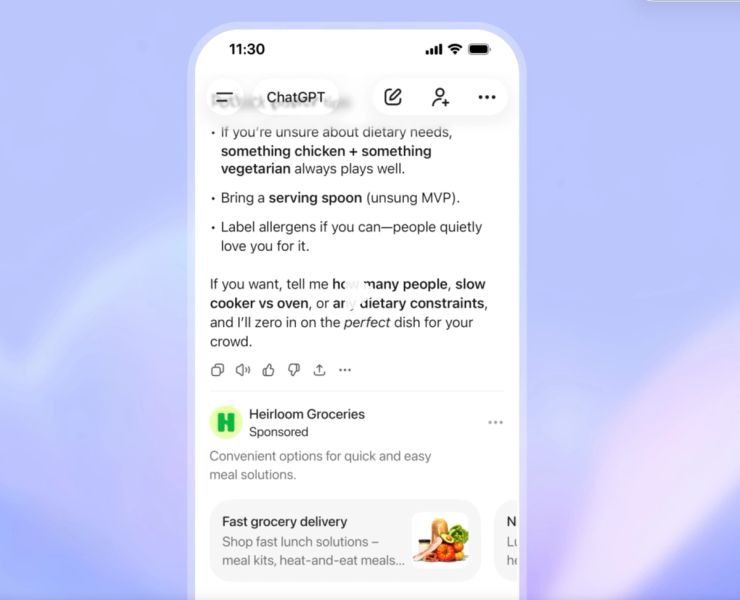
Knowing your audience is one thing, but how you want to appear to them seems trickier for AI firms. While OpenAI recently began testing ads in the free version of ChatGPT to expand its revenue streams, Perplexity has reversed course, winding down its advertising push late last year and saying it won’t rely on ads in the future.
“The challenge with ads is that a user would just start doubting everything ... which is why we don’t see it as a fruitful thing to focus on right now,” a Perplexity executive told the Financial Times. Perplexity was an early adopter of testing sponsored answers that ran alongside its chatbot responses. “A user needs to believe this is the best possible answer, to keep using the product and be willing to pay for it,” the executive said.
The split decisions on advertising is becoming a point of contention for AI firms, as seen during Anthropic’s Super Bowl commercial swiping at OpenAI, and CEO Sam Altman knocking back.
Anthropic has signaled it won’t pursue ads as a business model, and Google, whose AI business is underpinned by ads in traditional search, hasn’t yet added them directly into Gemini, though it shows ads in some other AI-powered products. However, the debate over ads has become much larger than one business decision versus another: it’s a form of virtue signaling about how each AI company views engaging with its audience and what the future of AI-powered information gathering looks like.