




Alaa’s view
Saudi Arabia’s announcement that some of its best-known companies will invest $5.3 billion in Syria’s communications, aviation, and water infrastructure will hardly move the needle for the war-torn country. But the dollar figure here isn’t the story.
What matters more is how this fits into a broader plan to tackle one of the world’s most complicated nation-building efforts since the US-led invasion of Iraq more than two decades ago.
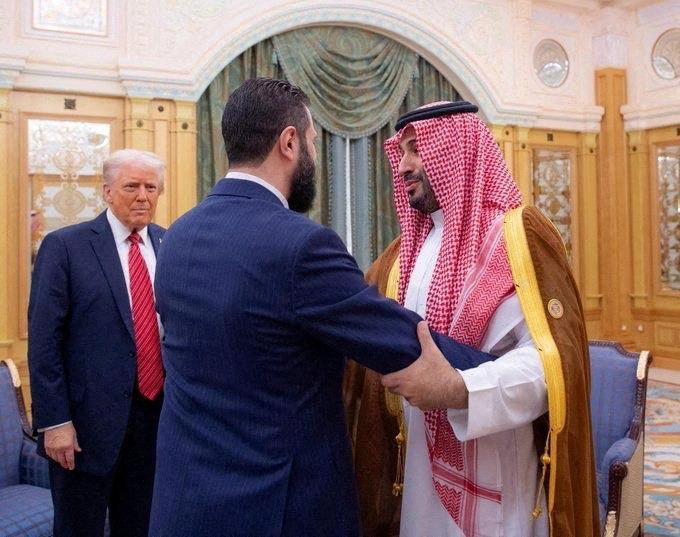
Saudi Arabia’s interest in propping up the new administration in Damascus is not difficult to explain. The ouster of Bashar al-Assad brought down a key pillar of Iran’s regional influence. The kingdom — and others — have moved in quickly to fill that gap. Another Saudi priority has been to stop the flow of illegal drugs manufactured and smuggled by Assad’s narco-state into the Gulf. The UN says that trade has now been severely disrupted, and one Syrian official tells me it’s pretty much dead.
Even so, the job is too big for Gulf countries to carry out on their own — which is why Riyadh was keen to involve global powers and international financial institutions from the get-go.
Syria’s reconstruction needs are staggering by any standards. The World Bank’s “conservative” best estimate is $216 billion. That puts it in the same ballpark as what was spent rebuilding post-Saddam Iraq, and above the US-led Marshall Plan for Europe after World War II even in today’s dollars.
Looking for inspirational lessons from elsewhere in the surrounding region doesn’t yield much encouragement. The US failed to rebuild Afghanistan after it invaded the country following the 9/11 attacks. It also made a mess in Iraq, overseeing years of brutal violence, mismanagement, and corruption. Lebanon’s reconstruction drive after the 1975-1990 civil war was fueled by a borrowing binge that ultimately proved unsustainable for a country hampered by endemic corruption, toxic politics, and frequent conflicts with Israel.
Last week, in discussion with officials from Syria, Saudi Arabia, and international organizations involved in, or close to, the situation, there was a clear-eyed view of the challenges: a turbulent political landscape, the huge scale of damage to physical infrastructure, and the dire state of Syrian institutions. This may help explain why stakeholders in Syria’s recovery are proceeding cautiously.
This approach rests on four key factors.
- Security first. Restoring security and political stability is the prerequisite for everything else to work.
- Sanctions off, growth on. Removing international sanctions was achieved last year largely due to Saudi lobbying. That is expected to spur double-digit economic growth in 2026 as Syria reconnects with the world.
- The state has to function. Rebuilding the capacity of Syria’s main economic institutions — including the finance ministry and the central bank — is now the focus of the International Monetary Fund.
- Measure the damage, then mobilize money. An accurate mapping of Syria’s reconstruction needs is essential to mobilizing international aid.
That is the plan. None of it is guaranteed and the strategy faces multiple risks that could derail the recovery at every turn.
For example, while the government of President Ahmed al-Sharaa has managed to curb the overall levels of violence, we’ve seen episodes of sectarian conflict. The Gulf, and the world beyond, favors dealing with a strong ruler who can muscle his way through necessary reforms unlike, say, the situation in neighboring Lebanon. But the fact remains that al-Sharaa doesn’t yet have full and uncontested control over Syria’s territory.
Nor do strongmen have a pristine record as economic stewards. Egypt’s economic record under President Abdel Fattah El-Sisi, a former army commander, has yielded mixed results, requiring not one, but two, large IMF bailouts.
And then there is the political economy risk. Prominent experts such as Yazid Sayigh of the Carnegie Middle East Center have warned that investment deals without a transparent recovery plan risk a return to Assad’s crony capitalism.
Saudi sources and international officials seem more optimistic that this time could be different. Riyadh is putting more emphasis on rebuilding state institutions and insists that large-scale financing must be done under the watchful eye of the IMF and the World Bank. While that by no means guarantees success, it may give Syrians a better fighting chance.
Alaa Shahine Salha is a senior executive at Saudi Research & Media Group and an economics contributor for Asharq Business with Bloomberg. He previously served as Bloomberg News managing editor for the Middle East and managing editor for economics in Europe.

Notable
- Syria’s reconstruction costs are conservatively estimated at $216 billion by the World Bank, but they could rise as high as $345 billion, according to an assessment published in October.